MOST · attractionsTartu
← City home

Places to visit in Tartu

Explore the city’s places of interest, with photos, descriptions and addresses.

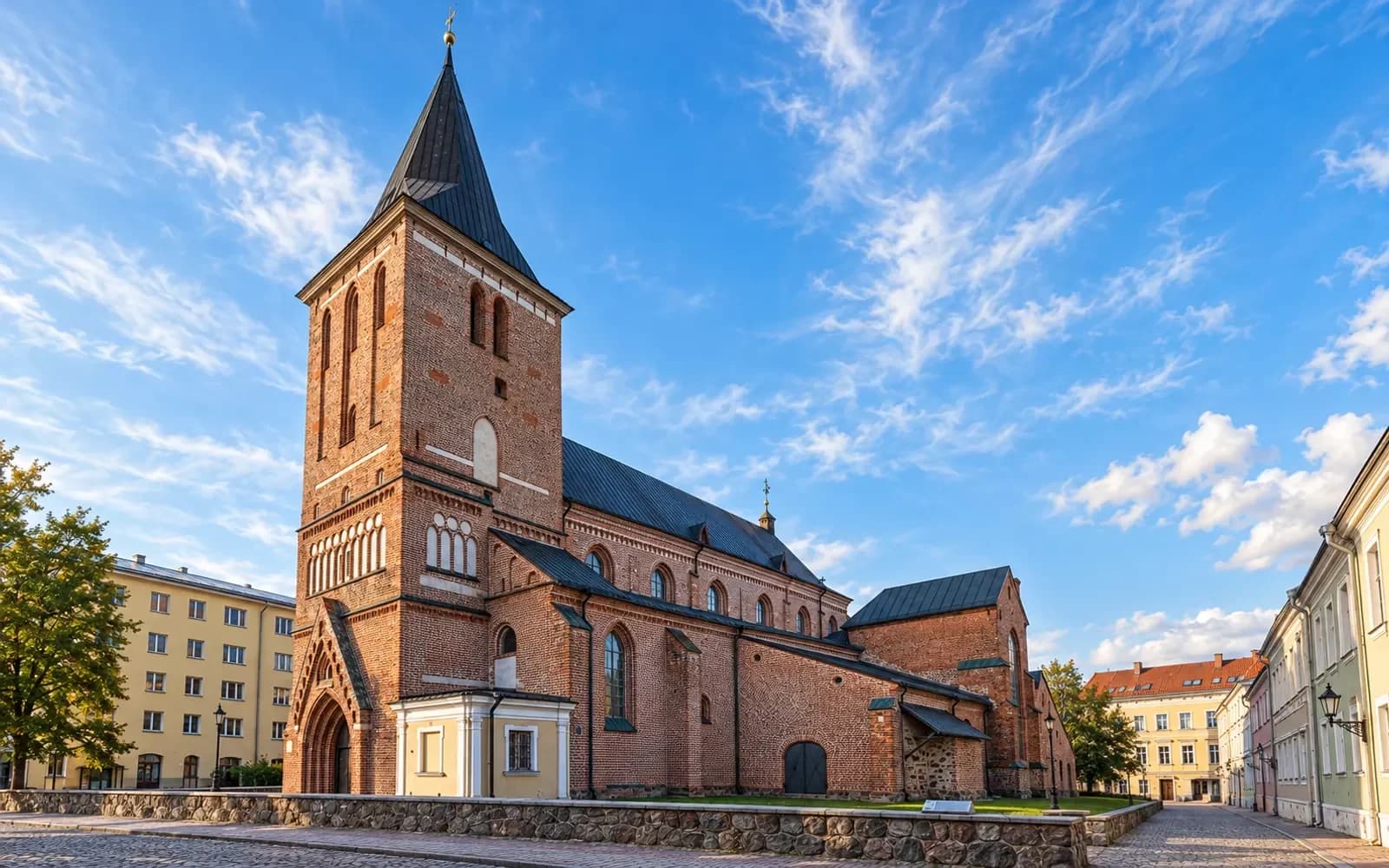
St. John's Church in Tartu

History & architecture

St. John's Church in Tartu

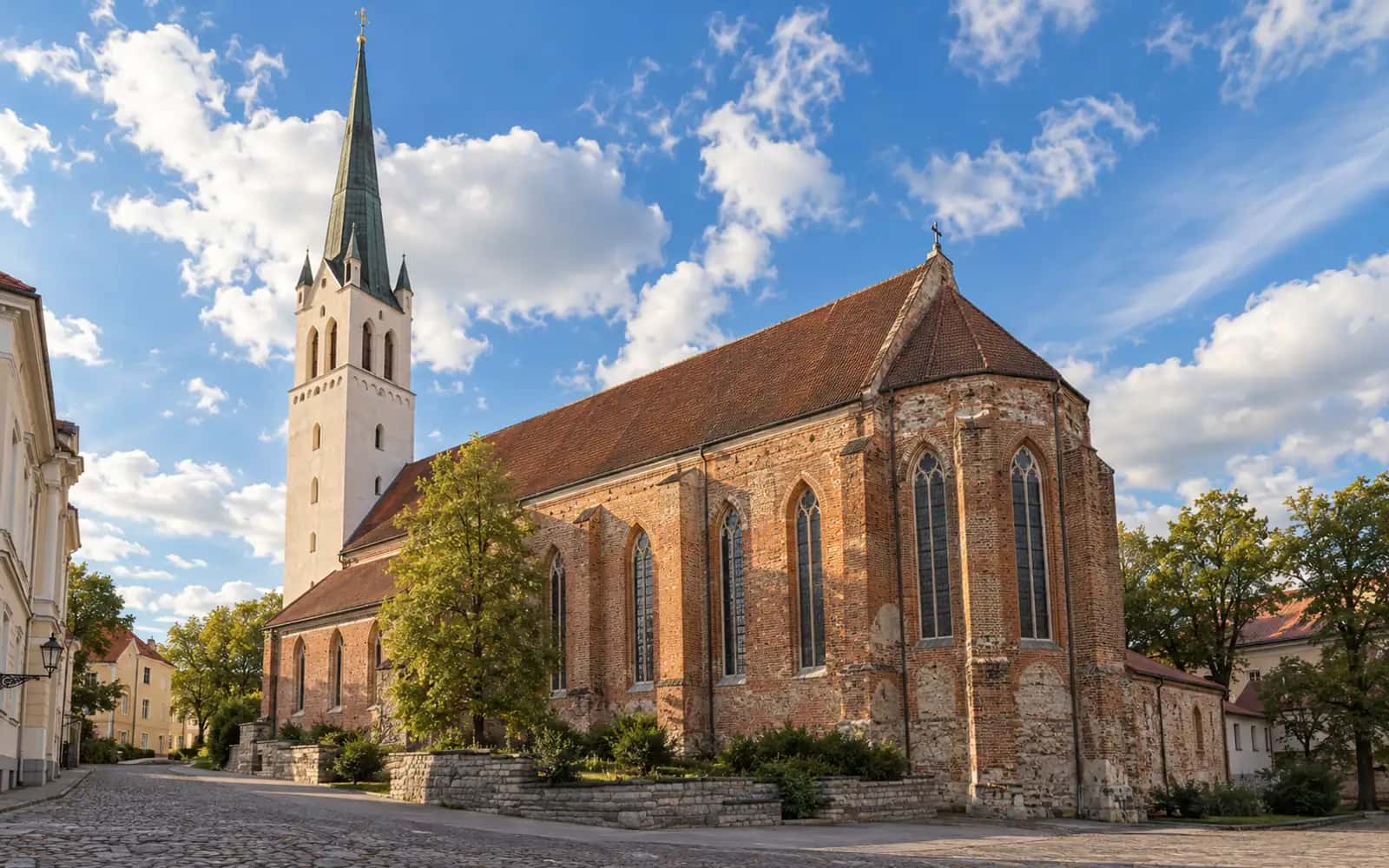
St. John's Church in Tartu is a medieval Gothic place of worship on Jaani Street in Tartu's old town. The church dates from the 14th century and is known for its exceptional terracotta sculptures, which depict human figures and adorn the historic brick architecture. The surviving sculptures give the building a special place in Estonian art history. The church has undergone a thorough restoration and today serves as a venue for both services and concerts. Visitors can see the nave and, at suitable times, climb the tower for a view over Tartu's old town. The church is one of the town's most characteristic medieval buildings.

Jaani tn 5, Tartu

Read more →
Angel's Bridge in Tartu

History & architecture

Angel's Bridge in Tartu

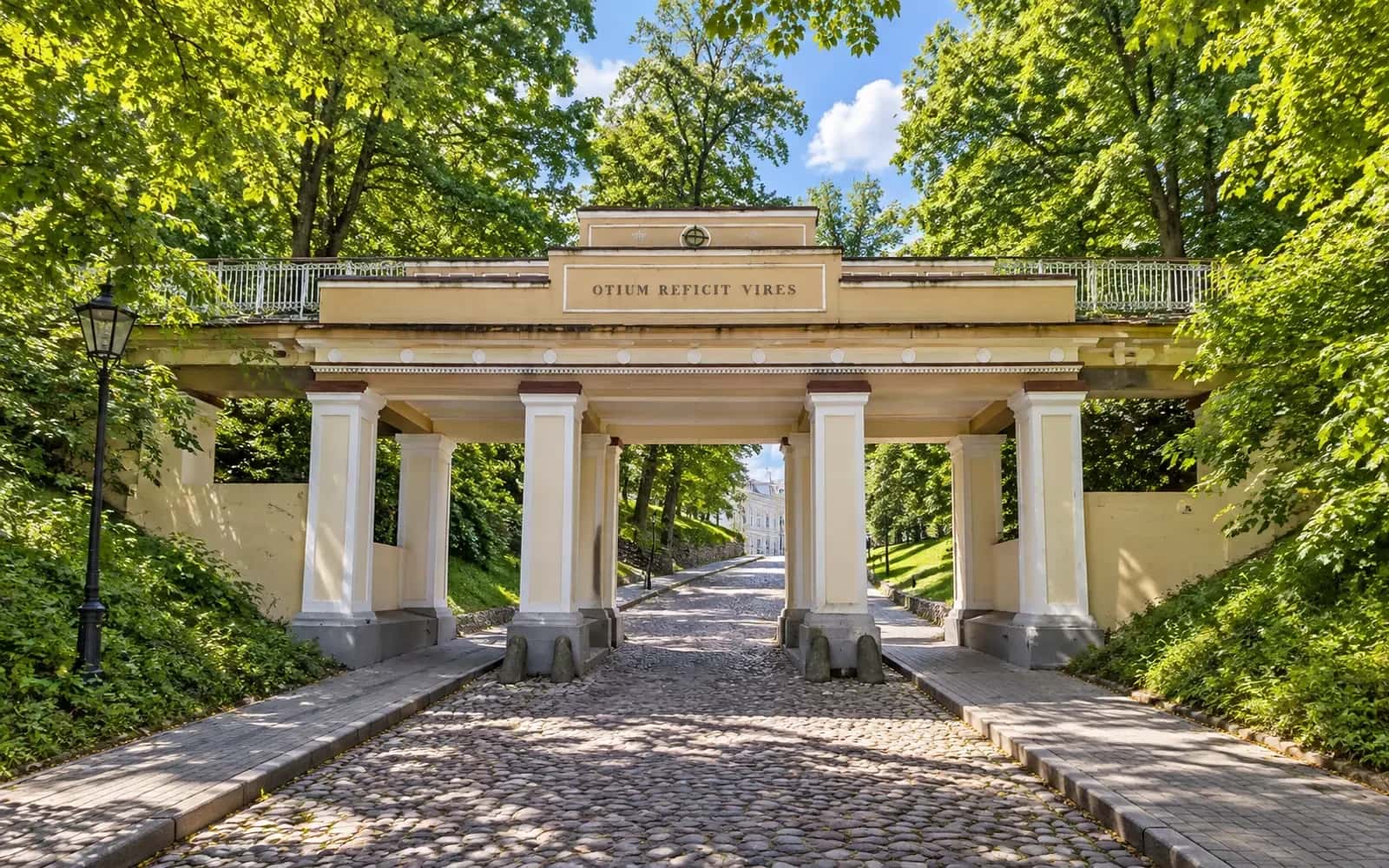
Angel's Bridge in Tartu is a historic footbridge on Toome Hill that connects sections of Lossi Street lying at different heights. The bridge is decorated with a bas-relief of Georg Friedrich Parrot, the first rector of the University of Tartu, and the Latin inscription "Otium reficit vires", meaning "rest restores strength". Angel's Bridge is among Tartu's best-known architectural monuments and an important part of Toome Hill's historic park landscape. The bridge and its surroundings offer views of green slopes and footpaths. The very different-looking Devil's Bridge is nearby. It can be seen on an everyday walk.

Lossi tänav T9, Tartu

Read more →
St. Peter's Church in Tartu

History & architecture

St. Peter's Church in Tartu

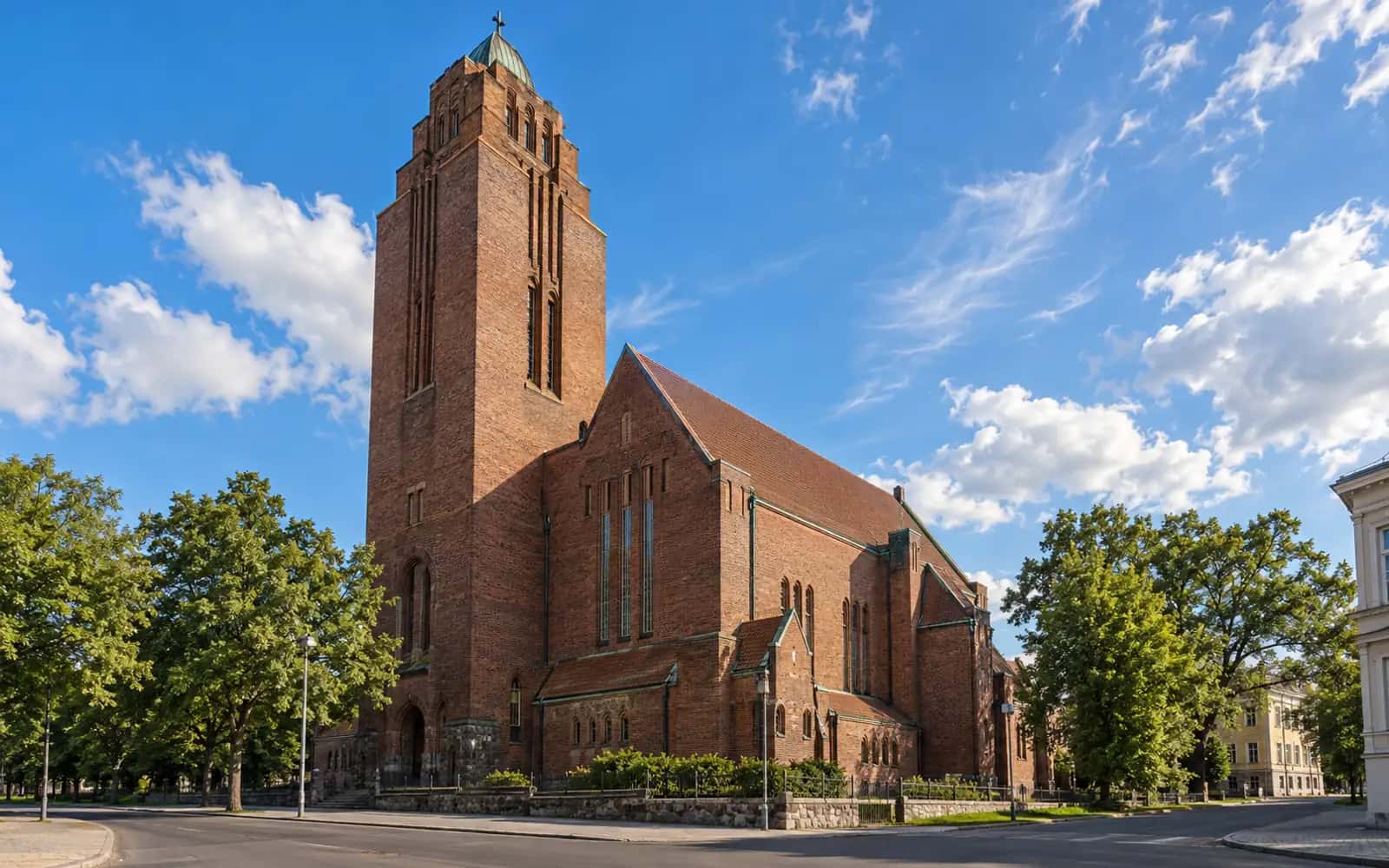
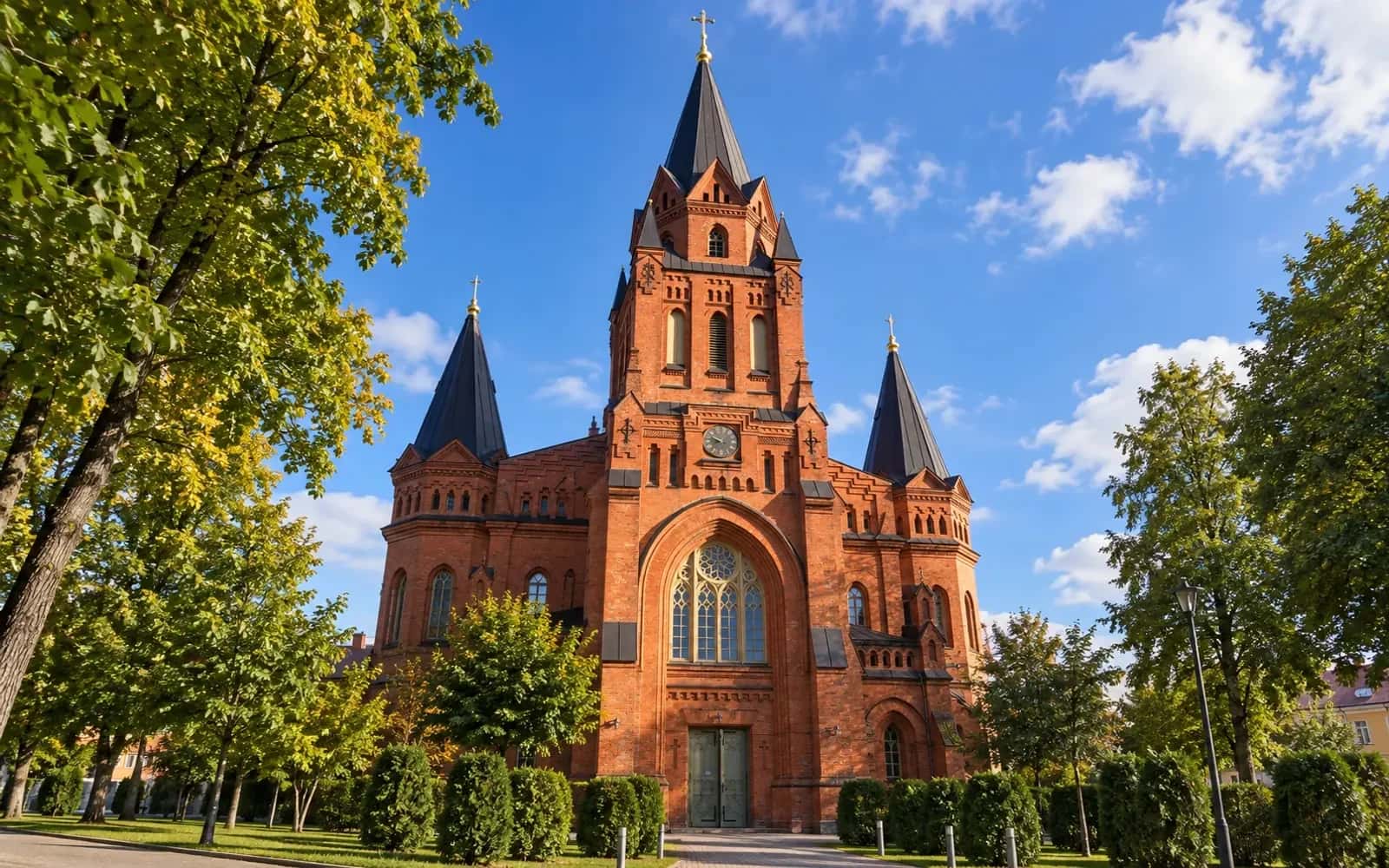
St. Peter's Church in Tartu is a neo-Gothic Lutheran church built at the end of the 19th century on Narva maantee in Tartu's Ülejõe district. Designed by the architect Viktor Schröter, the red-brick building stands out with its tall tower, pointed-arch windows and spacious nave. Inside, the wooden galleries, the historic organ and Johann Köler's altarpiece "Christ Calling" deserve attention. The church was built for a growing Estonian-speaking congregation and is today an important part of Tartu's religious and architectural heritage. The exterior can be viewed from Narva maantee; when visiting the interior, keep the congregation's activities and services in mind.

Narva mnt 104, Tartu

Read more →
Devil's Bridge in Tartu

History & architecture

Devil's Bridge in Tartu

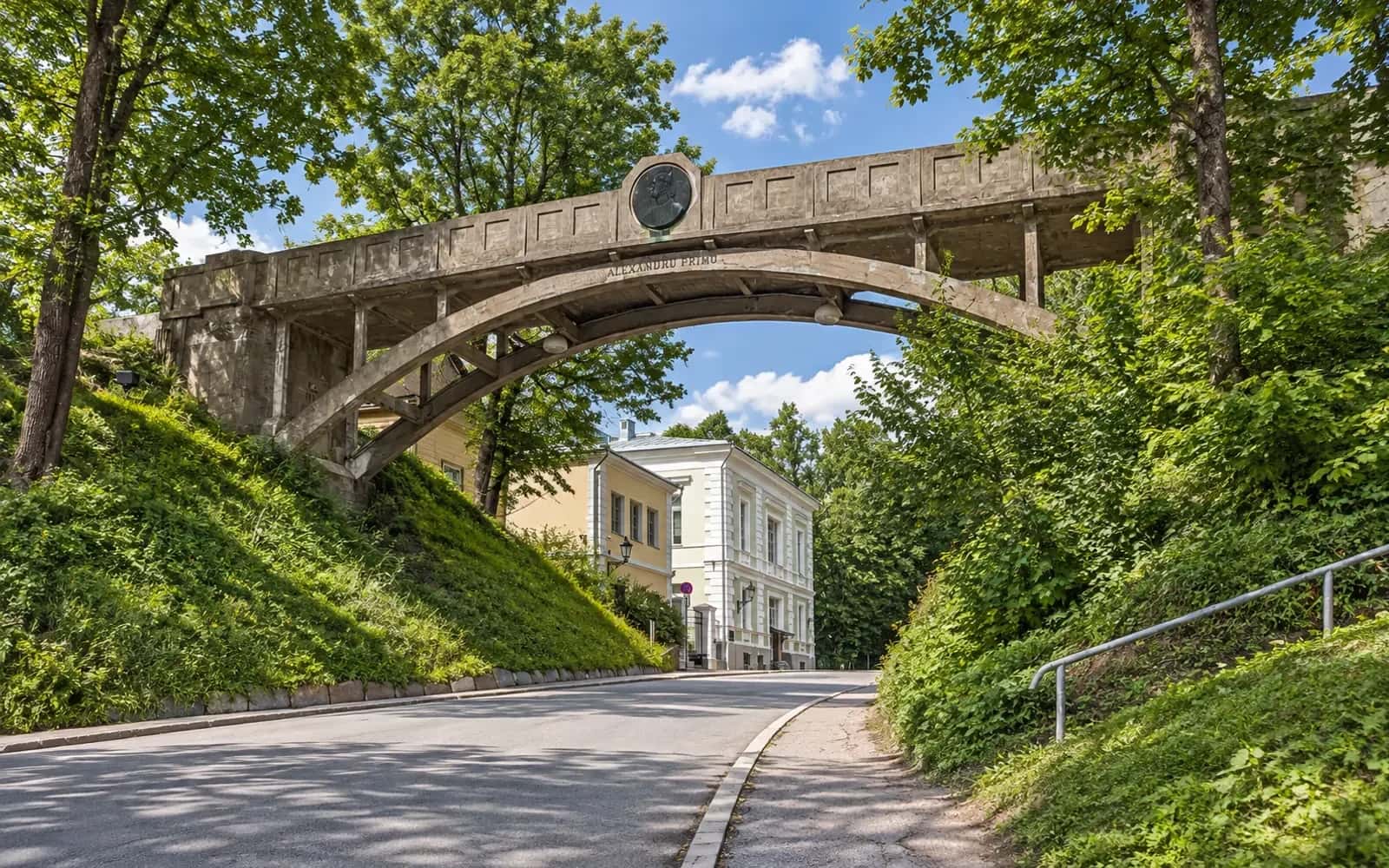
Devil's Bridge in Tartu is a historic concrete bridge on Lossi Street on Toome Hill, completed in 1913 to mark the 300th anniversary of the Romanov dynasty. The bridge is decorated with a bronze relief of Emperor Alexander I bearing the inscription "Alexandro Primo". Devil's Bridge is one of the few early 20th-century concrete bridges surviving in Estonia, and together with the nearby Angel's Bridge it forms a distinctive architectural pair. The darker-looking bridge fits in among Toome Hill's tall trees and historic buildings. It can be viewed both while walking across it and from below, where the bridge's structure and the surrounding landscape stand out especially well.

Lossi tänav T19, Tartu

Read more →
Eduard Tubin Monument

History & architecture

Eduard Tubin Monument

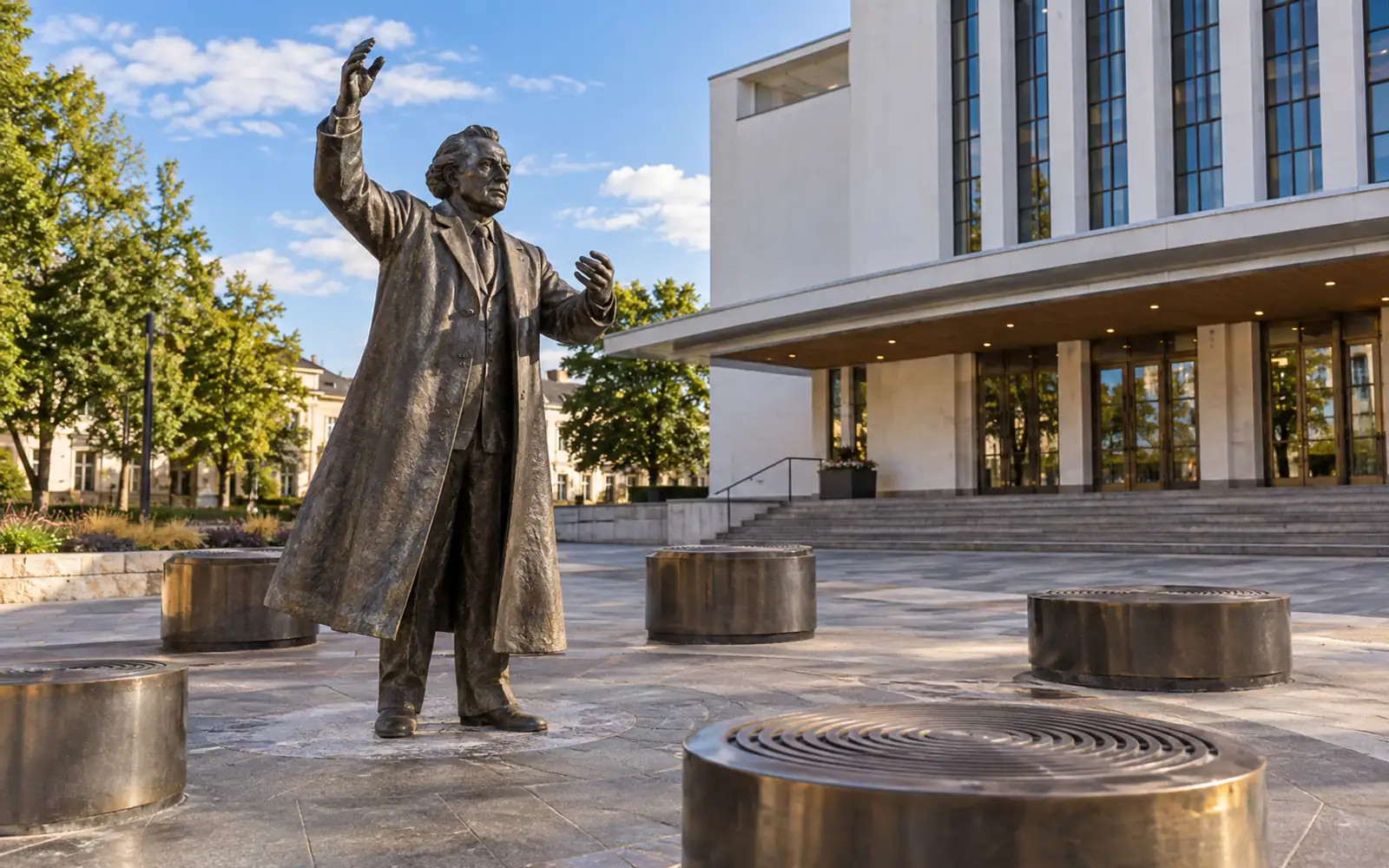
The Eduard Tubin Monument stands next to the Vanemuine Theatre in Tartu and is dedicated to the Estonian composer and conductor. The bronze figure shows Tubin conducting an orchestra and is accompanied by a music-inspired sound installation. The sculpture was created by Aivar Vahtrapuu and Villu Valk, and the sound design is by Louis Dandrel. The memorial brings together public art and music history and offers a distinctive stop near the theatre. Tubin's work is an important part of 20th-century Estonian music. The monument can be viewed in the cityscape without attending a performance, and it is a separate artwork from the Vanemuine theatre building.

Vanemuise tn 6, Tartu

Read more →
St. Paul's Church, Tartu

History & architecture

St. Paul's Church, Tartu

St. Paul's Church in Tartu is an Art Nouveau church on Riia Street whose national romantic architecture sets it apart from the city's other churches. The building features geometric forms and details typical of its era, and its bell tower holds two steel bells made in Germany in 1922. The tower with its glass dome offers a view over the city, but access to it is charged separately. The church also has a crypt, a columbarium and a bookshop. A visit can be combined with a walk around the Riia Street area, bearing in mind services and the church's usual routine.

Riia tn 27, Tartu

Read more →
Friedrich Georg Wilhelm Struve Monument

History & architecture

Friedrich Georg Wilhelm Struve Monument

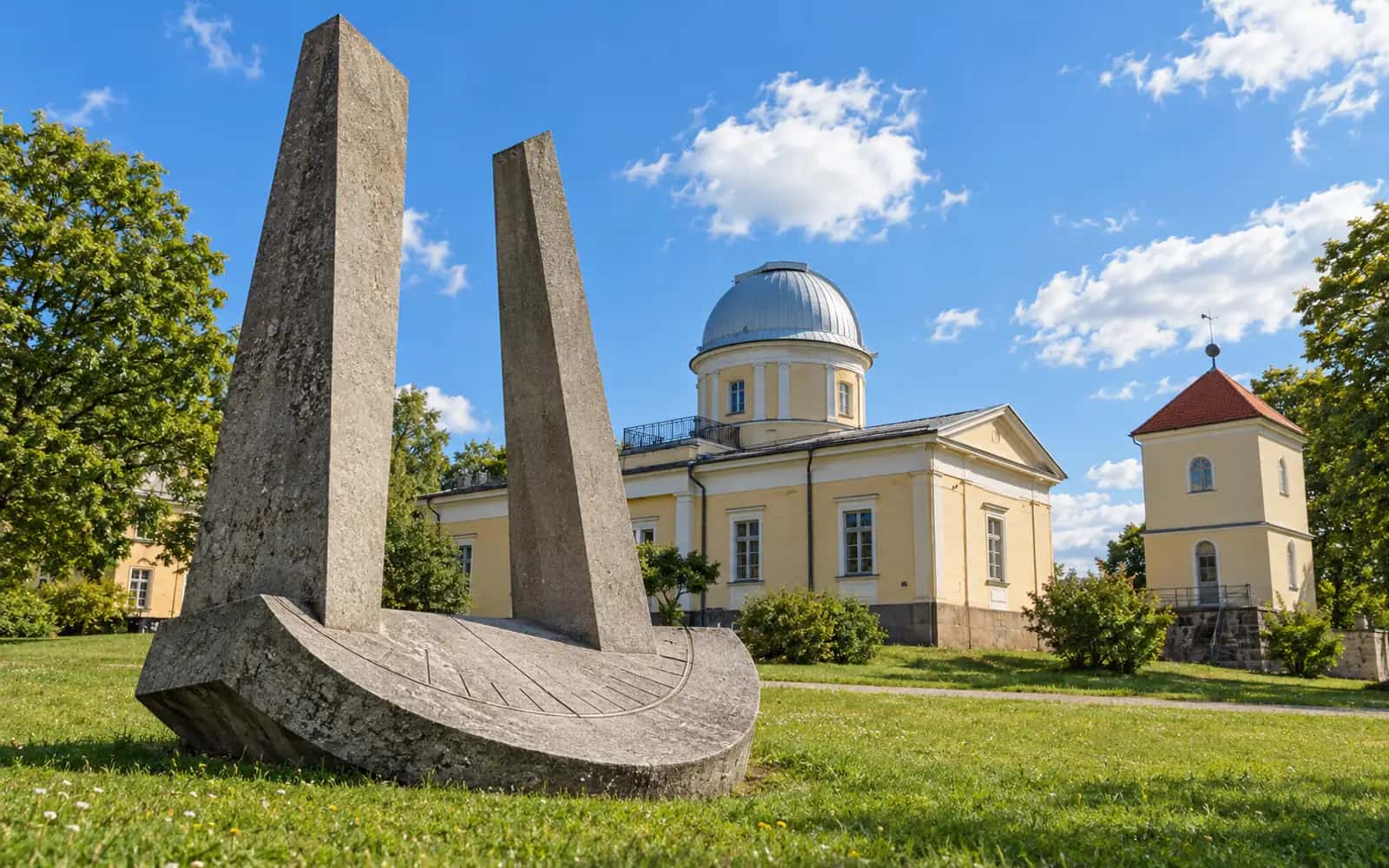
The Friedrich Georg Wilhelm Struve Monument on Uppsala Street in Tartu commemorates the astronomer and geodesist who directed Tartu Observatory. Unveiled in 1969, the abstract memorial alludes to the scientist's quest to understand the shape and size of the Earth. Under Struve's leadership a meridian arc was measured in the 19th century, helping to refine knowledge of our planet. The sculpture's form uses motifs of a sundial and an hourglass. The work was created by Olav Männi and Udo Ivask. The monument can be viewed on a separate walk, linking it with Tartu's history of science and the area around Toome Hill.

Uppsala tn 2, Tartu

Read more →
St. Mary's Church, Tartu

History & architecture

St. Mary's Church, Tartu

St. Mary's Church in Tartu stands on Pepleri Street and holds an important place in the history of Estonian song festivals. Completed in 1842, the church was the home church of the Estonians of Tartu town and parish, and its congregation included several well-known figures of the national awakening. The first Estonian Song Festival began here in 1869. Damaged in the Second World War, the church building was later used as a sports hall before being returned to the congregation. During restoration the tower has risen again, topped by a gilded rooster. The building's story brings together Tartu's musical, religious and architectural heritage.

Pepleri tn 1, Tartu

Read more →
Alatskivi Castle

History & architecture

Alatskivi Castle

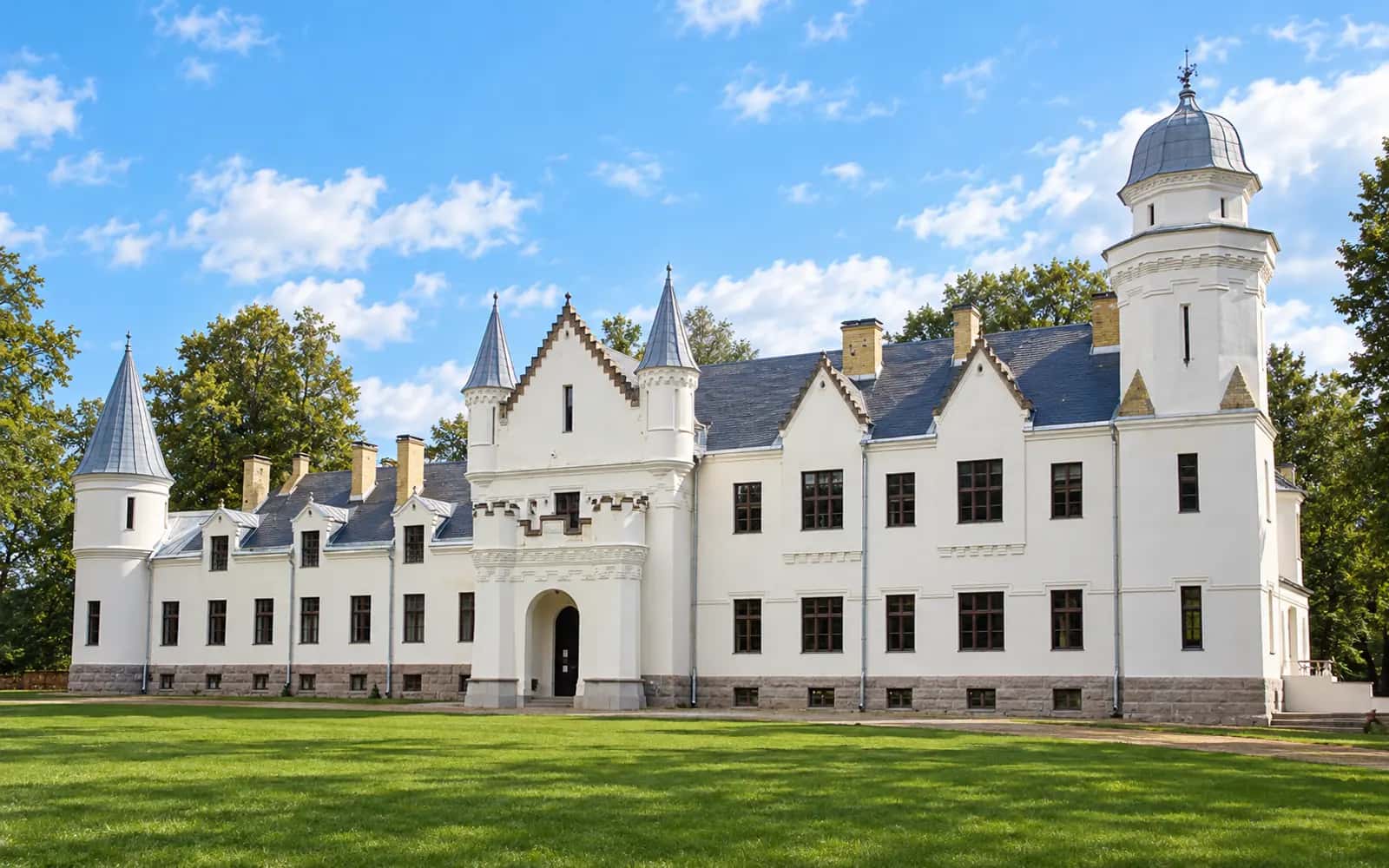
Alatskivi Castle is in the small town of Alatskivi, Tartu County, about forty kilometres from Tartu. In the rooms of the manor house you can learn about the life of a 19th-century noble family and the work of their servants, and see an exhibition on the castle's history. The third floor houses the museum of composer Eduard Tubin; beside the castle there is also a former stable building and an extensive park. Allow time to explore several floors, and a separate guided tour can be booked if you wish. Visiting hours change with the seasons; in summer the castle is also open on Mondays.

Indicative price: Adult €12; pensioner €9; pupil €7; family ticket €25; guided tours at extra cost

Lossi tn 6, Alatskivi alevik, Peipsiääre vald, Tartu maakond

Read more →

Showing 9 of 14