CITY GUIDE
Pärnu travel guide
Pärnu carries the informal title of Estonia's summer capital, and the reasons are worth understanding, especially if you're visiting for the first time.
History & culture
Why Pärnu
The city sits on the Gulf of Riga at the mouth of the Pärnu River, and its wide, sandy beach — backed by a pine park rather than a wall of high-rises — has drawn visitors since the 19th century, when the town first developed as a spa resort built around its mineral-rich mud and seawater treatments.
That spa tradition never disappeared; it grew into one of the most concentrated wellness scenes in the Baltics, with hotels built directly around treatment centres rather than treatment rooms added as an afterthought. Alongside it, Pärnu's compact wooden Old Town, its restored 17th-century town walls, and the café-and-shop strip along Rüütli Street give the city a walkable historic core that a beach resort alone wouldn't have.
Summer turns Pärnu into Estonia's unofficial festival capital — a run of concerts, open-air performances, and city-wide events fills the calendar from June through August, helped by long northern daylight hours. The shoulder seasons on either side are quieter and cheaper, and for many repeat visitors, the better time to actually come. Outside summer, Pärnu is a genuine year-round town: a working harbour, a resident population with its own restaurants and shops that don't depend on tourism, and a spa culture that runs on its own calendar entirely, independent of the beach season.
That mix — real seasonal tourism layered over a real, permanent town — is exactly why a single unified guide is useful here: a visitor and a resident are often looking for the same restaurant, the same event, or the same service, just for different reasons.
Not to miss
Pärnu Beach
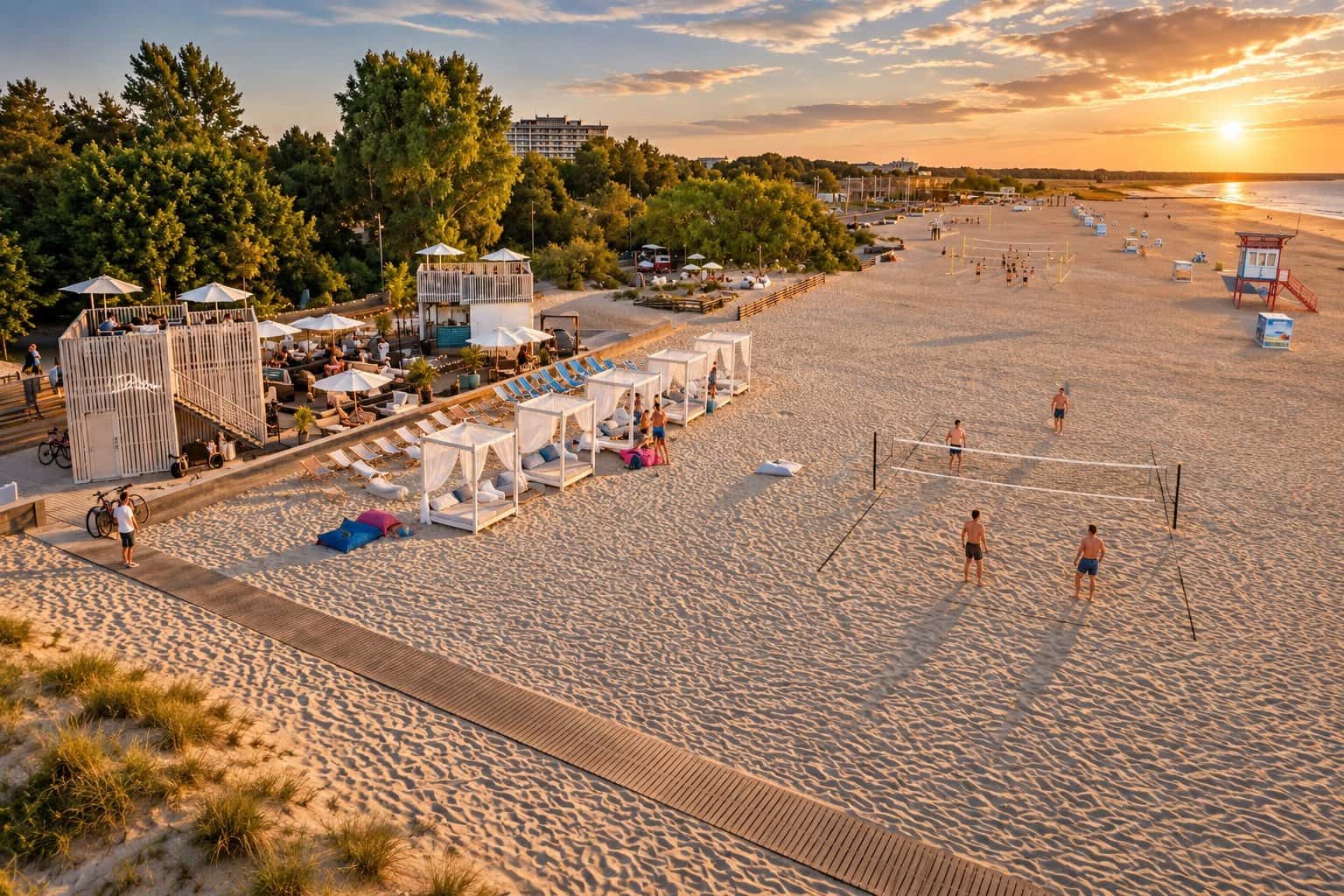
Pärnu beach is the main symbol of Estonia's summer capital and one of the city's most recognizable locations. A wide stretch of light sand and the shallow Pärnu Bay create particularly comfortable conditions for a summer holiday: the water near the shore warms up quickly, making the beach popular among families with children as well. Along the coast, there are walking areas, beach sports grounds, children's entertainment, and opportunities for water activities. Nearby are the seaside park, historical resort architecture, and a promenade with cafes and relaxation areas. This is not just a seasonal swimming spot: the coast is well-suited for walks and watching sunsets at any time of the year.
Side tänav T1, 80012 Pärnu
Tallinn Gate
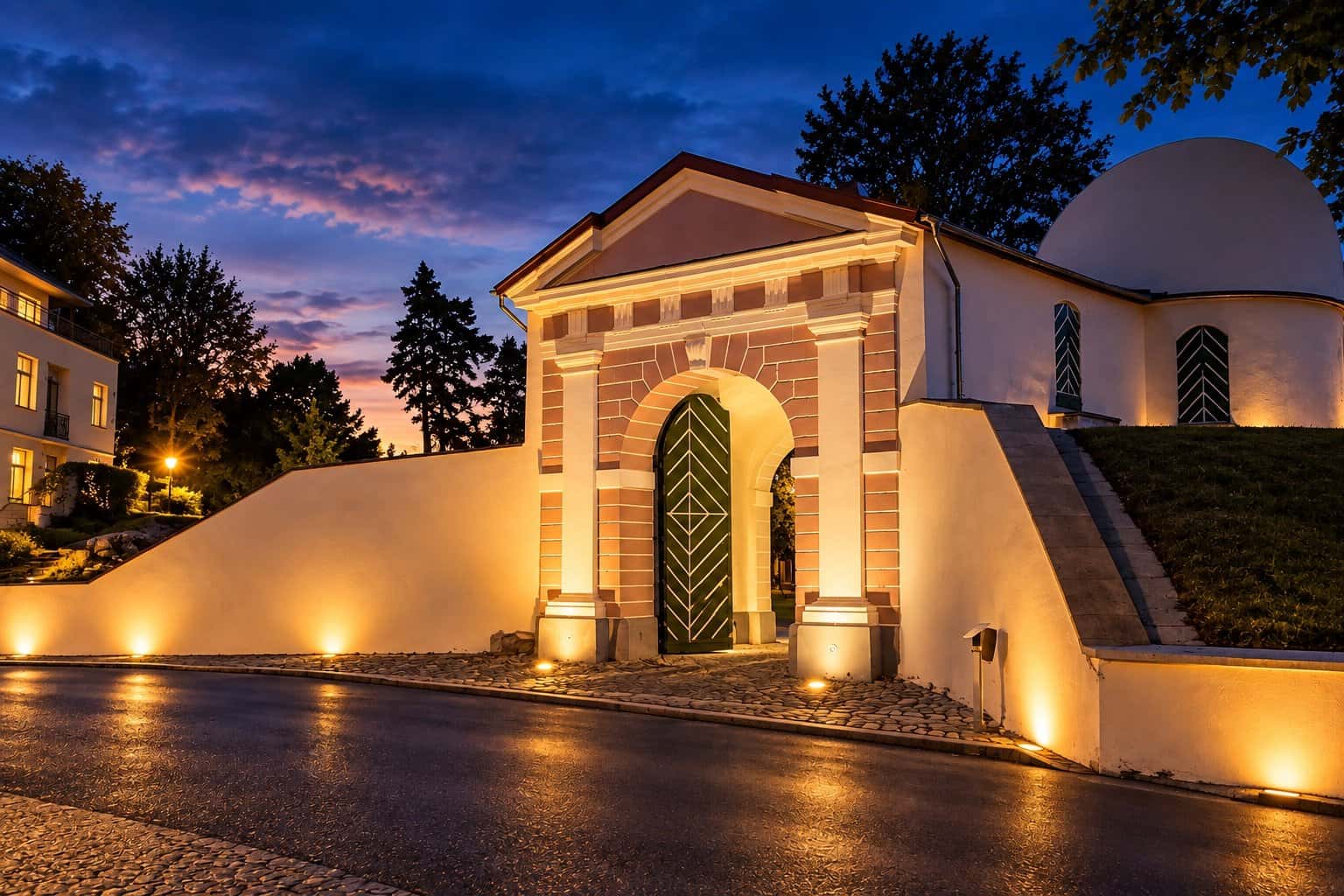
The Tallinn Gate is one of Pärnu's most important historical monuments and a surviving part of the 17th-century city fortifications. Until 1710, the structure was called the Carl Gustav Gate or the Royal Gate, from where the road to Tallinn began across the moat. After the demolition of a significant part of Pärnu's fortifications in the 19th century, the gate was preserved along with the ramparts and the moat leading to the Vallikäär bastion area. Today, pedestrians can freely walk through the monumental Baroque arch, continuing their route to the coastal district, park, and historic center. Due to its location, the gate is easily included in a walking tour of old Pärnu.
Vana-Tallinna tn 1, 80011 Pärnu
Red Tower
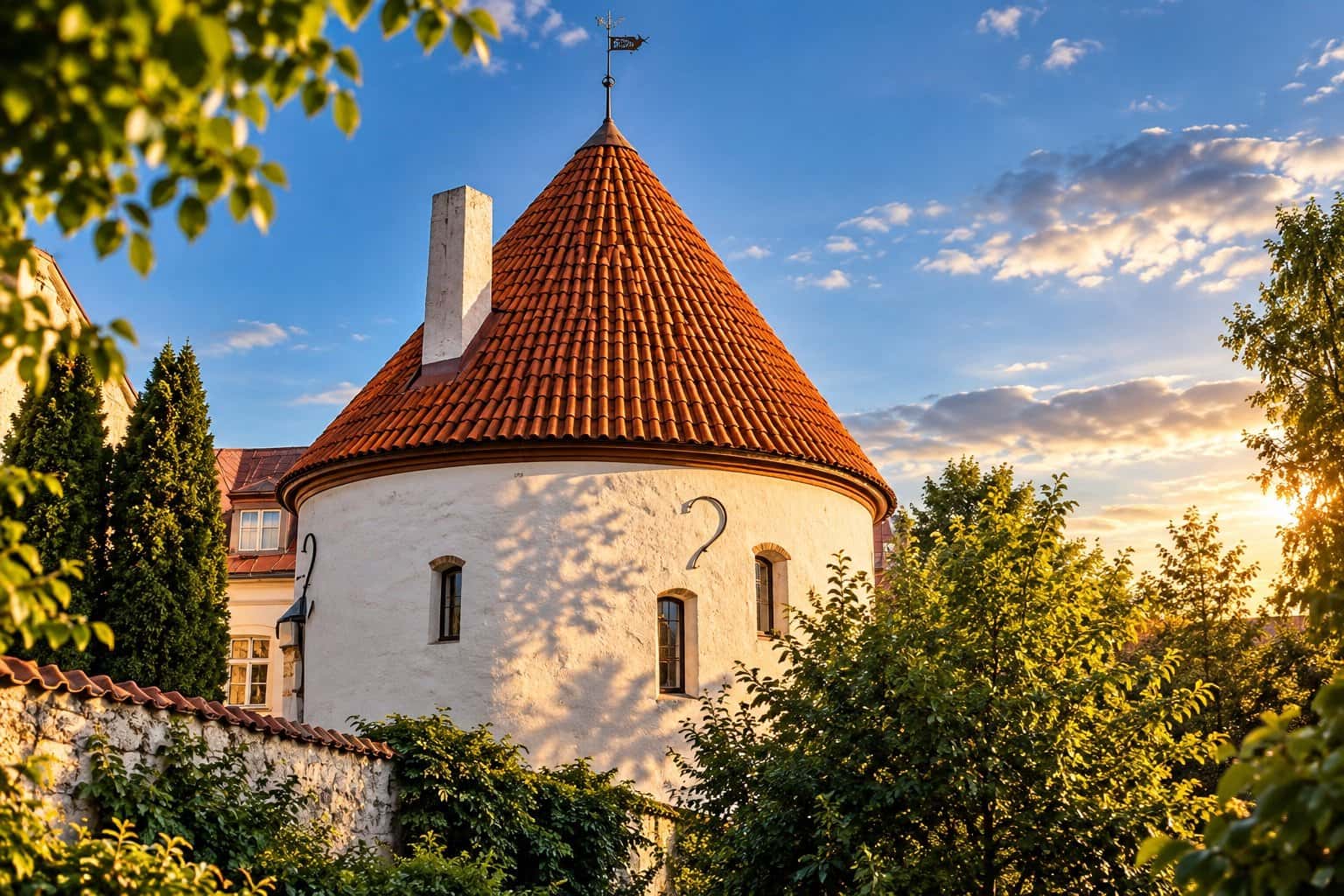
The Red Tower is Pärnu's oldest surviving building and a rare material trace of the medieval town of Uus-Pärnu. The tower was built in the 15th century as part of the defensive fortifications; for several centuries it was also used as a town prison. Three floors of the massive stone structure have survived to this day. Today it houses a branch of the Pärnu Museum: the exhibition introduces the history of the medieval town and the tower itself, and the upper level features a circular panoramic cinema. A ten-minute animated film takes the viewer through approximately 15,000 years of the region's history, from the Ice Age to the present day. It is a compact yet particularly characteristic historical attraction in the center of Pärnu.
Hommiku tn 11, 80011 Pärnu
Pärnu Museum
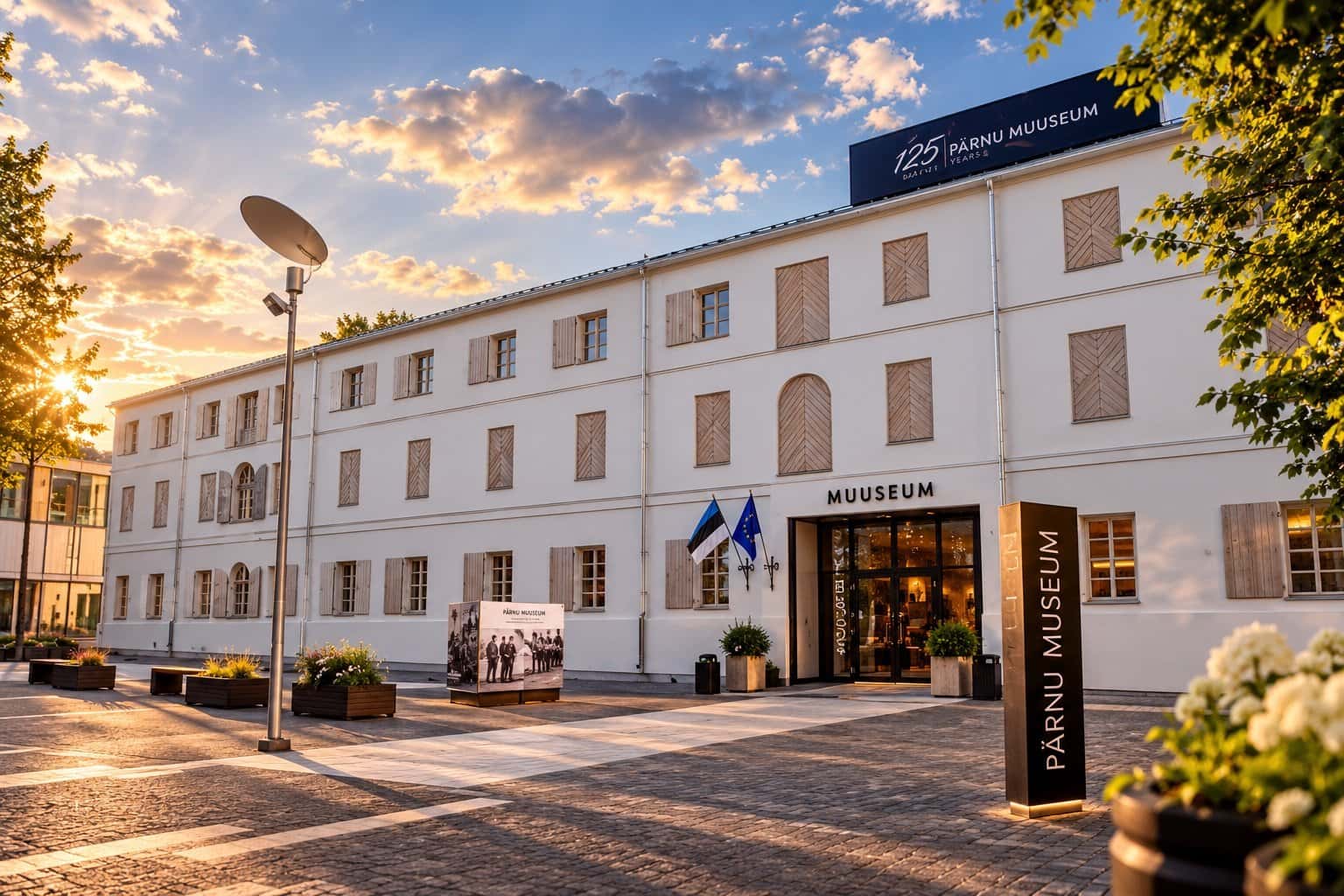
The Pärnu Museum is the city's main historical museum, offering a view of the development of Pärnu and Pärnu County within the context of Estonian and Baltic regional history. In 2026, a new permanent exhibition opened here, built around four major themes: the early settlement of the region, the history of two medieval towns, the birth of the nation-state, and the transformation of Pärnu into Estonia's summer capital. The exhibition covers over 11,000 years of history, from the first settlements to resort culture and the establishment of the independent republic. In addition to the permanent exhibition, the museum features an open storage facility with items not typically displayed and gallery spaces for temporary projects. The museum is located in the city center in a reconstructed historic warehouse building.
Aida 3, 80010 Pärnu
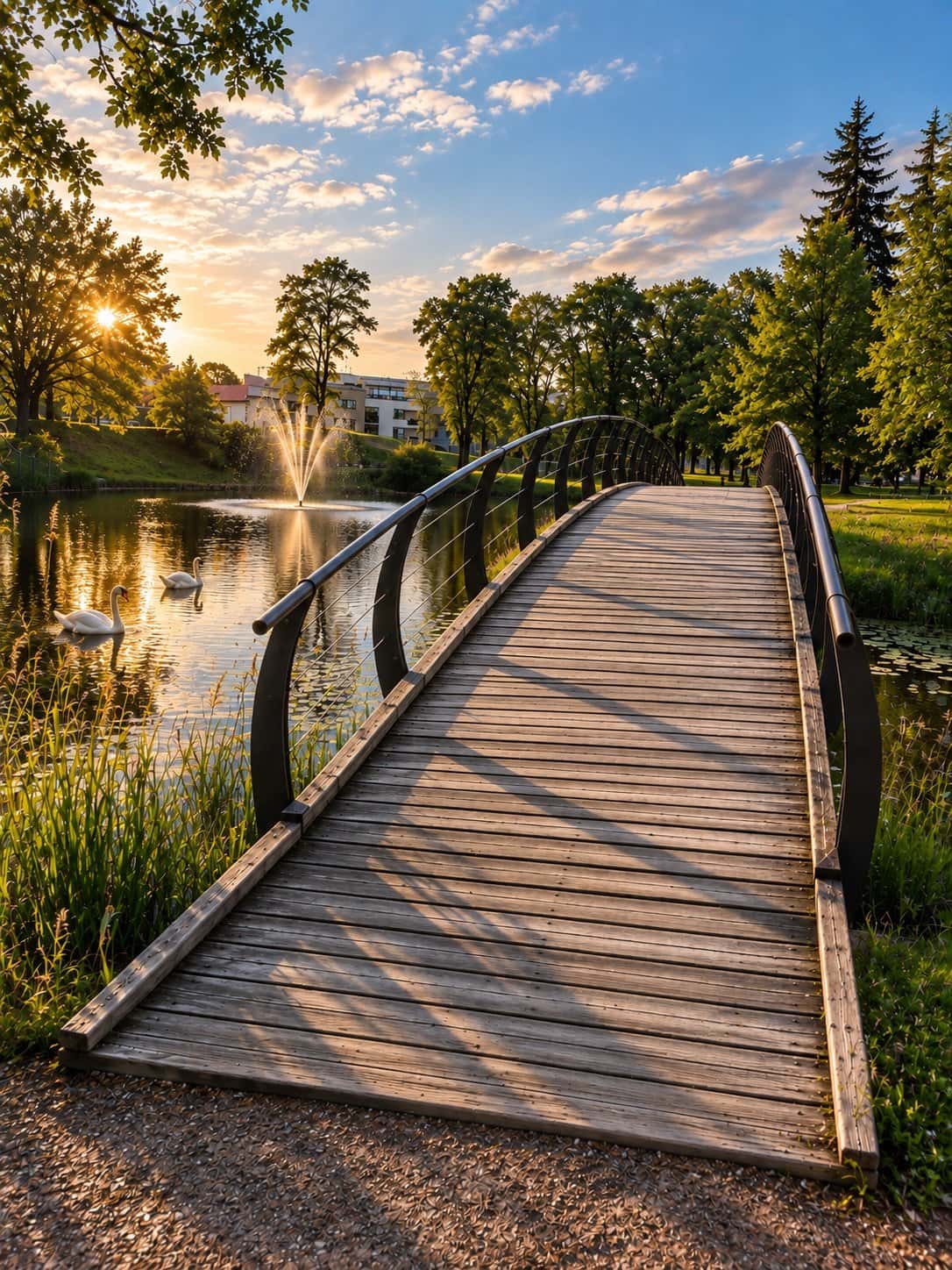
Pärnu Moat
Pärnu Vallikäär is a historic area of former city fortifications, now transformed into one of Pärnu's most beautiful parks and walking routes. A well-maintained promenade runs around the moat, a pedestrian bridge spans the water, and the central fountain forms one of the most recognizable panoramas of this part of the city. Elements of the bastion landscape and passages between the earthen fortifications have been preserved here, recalling the time when Pärnu was a fortress city. The area also features an open-air amphitheater that hosts major city concerts and festivals. Vallikäär is easy to combine in a single walk with the nearby Tallinn Gate, the promenade, and the Old Town.
Õhtu tn 1a, 80011 Pärnu
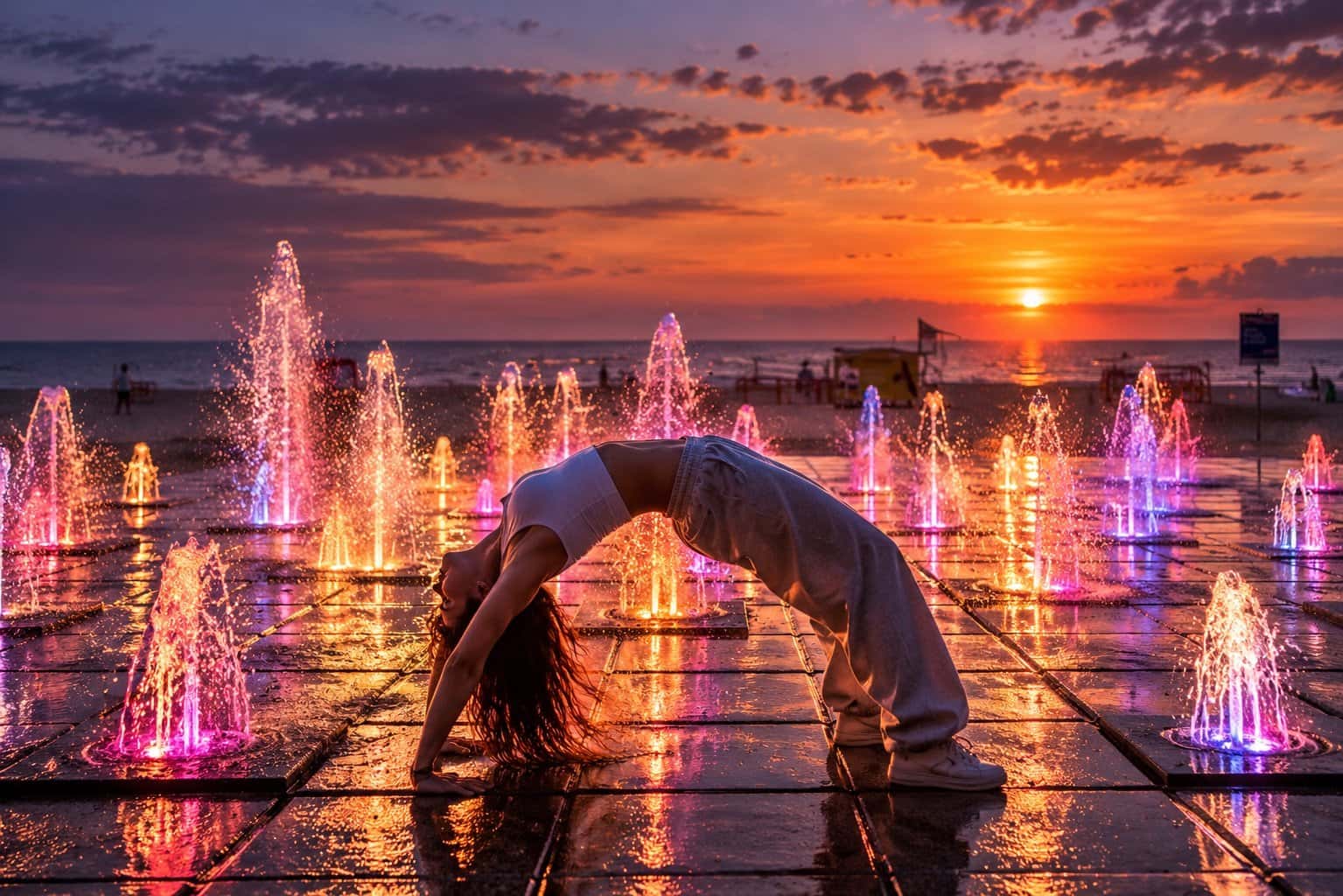
Pärnu Beach Promenade
The Pärnu Beach Promenade is an atmospheric walking area along Pärnu's main beach, where the sea, modern landscape design, and resort life come together in a single route. A special feature of the promenade is its integrated fountains: in the evening, the lighting turns the water jets into a vibrant play of color, and after sunset, this part of the coast takes on a completely different mood. The route runs along the sandy beach, connecting relaxation areas, cafes, play spaces, and spots with unobstructed views of Pärnu Bay. Established in 2006, the promenade was conceived not only as a path along the sea, but also as an independent public space featuring various surface textures, seating areas, and water elements. It is especially pleasant to walk here on summer evenings when the sun sets over the sea, the lighting turns on, and the beach gradually transitions from daytime relaxation to a vibrant evening resort atmosphere.
Ranna pst 3a, 80012 Pärnu
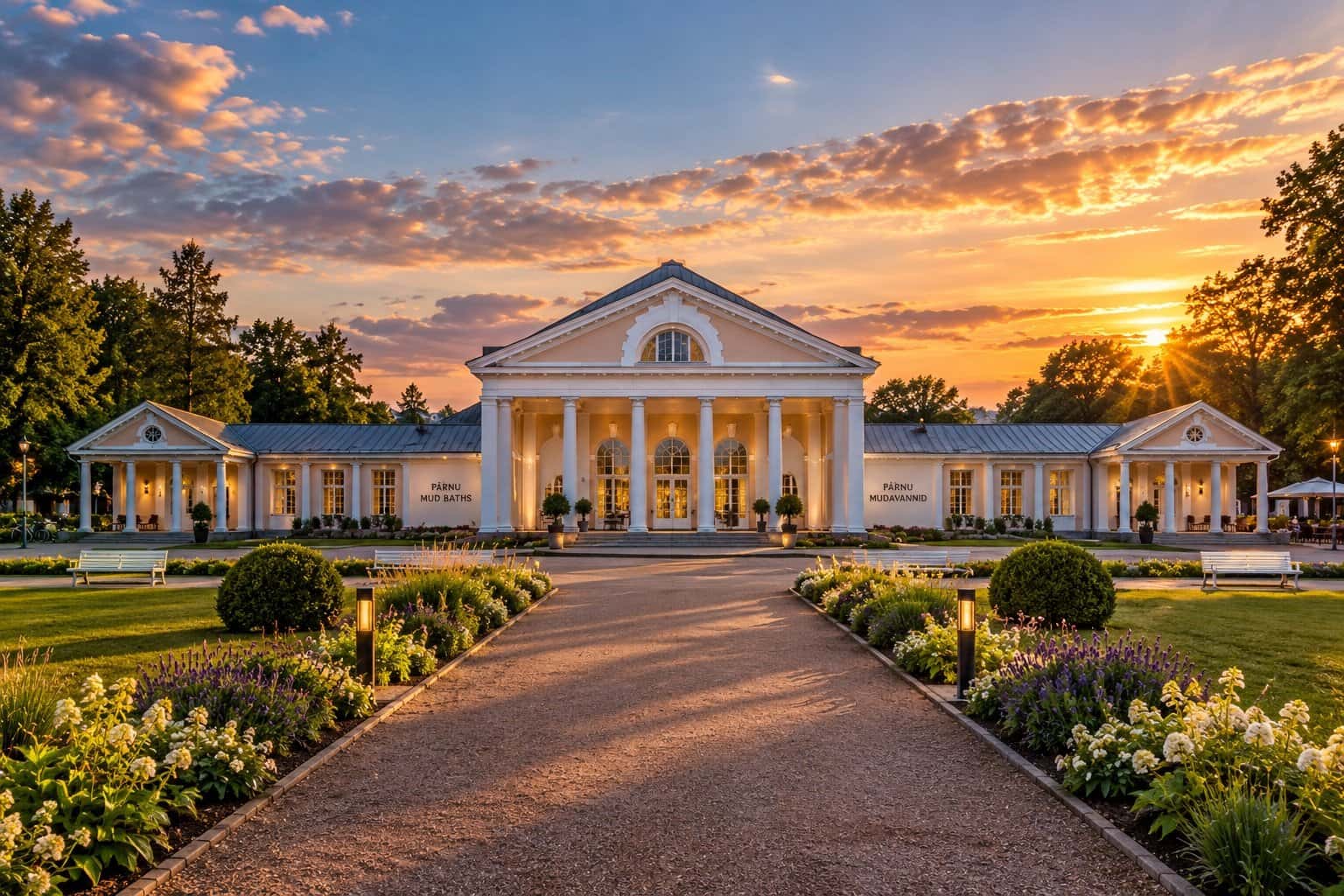
Pärnu Mud Baths
Pärnu Mud Baths is one of the key monuments of Pärnu's resort history. The modern neoclassical building was completed in 1927 on the site of an earlier bathing establishment, and its architecture is associated with Olev Siinmaa, Erich von Wolffeldt, and Aleksander Nürnberg. The history of resort treatments at this location begins in 1838, when Pärnu offered warm sea baths in the summer and a sauna in the winter; this period is considered the beginning of the city's development as a resort. Following restoration, the historical complex received a modern function: today, Hedon Spa operates in the building. The property is located directly in the beach district and well conveys Pärnu's character as a city with a nearly two-century resort tradition.
Ranna pst 1, 80012 Pärnu
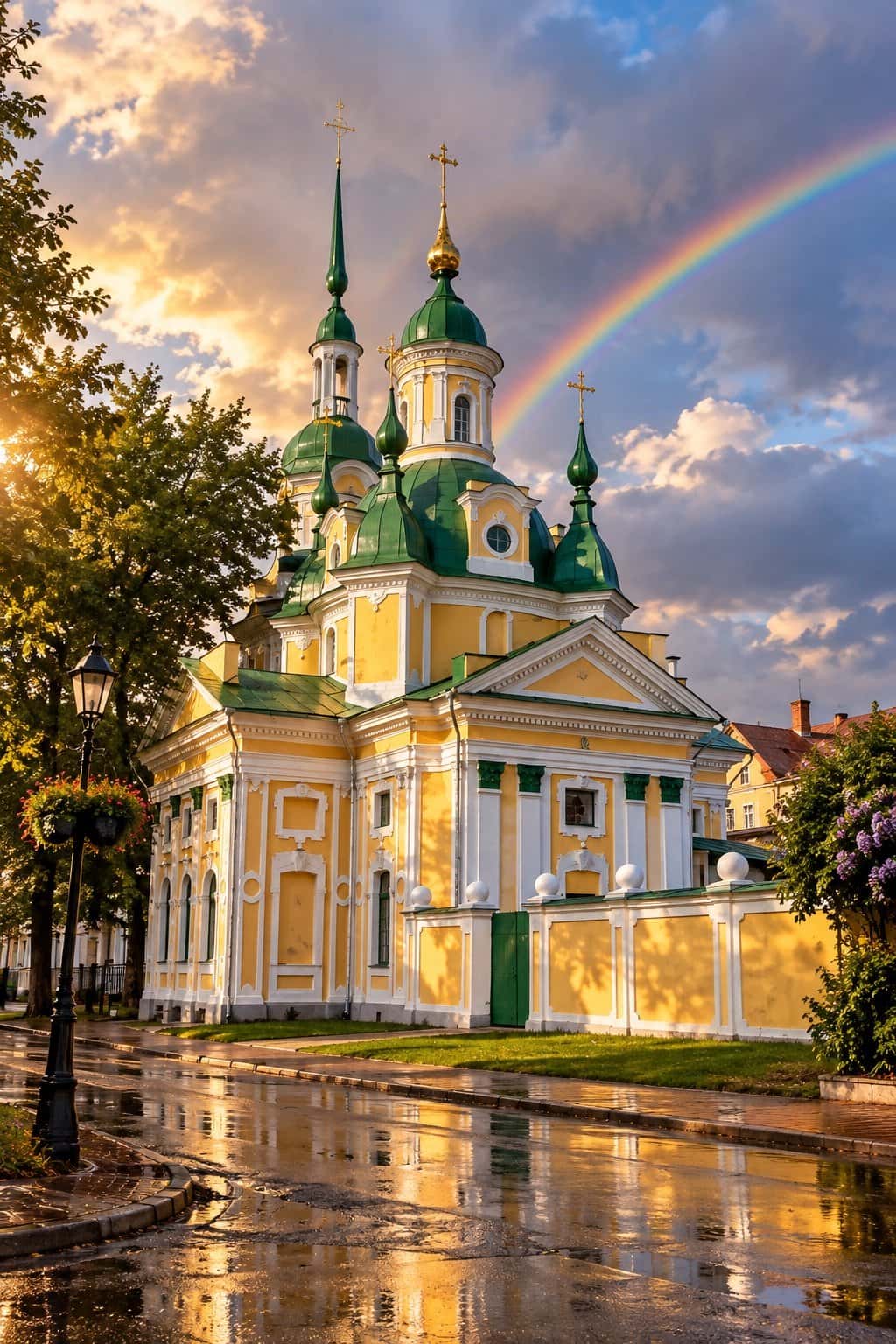
St. Catherine's Church in Pärnu
St. Catherine's Church is an outstanding monument of Baroque architecture in the historical centre of Pärnu. The Orthodox church was completed in 1769 by order and with the funding of Empress Catherine II. Its expressive facade, relief decoration and six slender spire finishes differ noticeably from the appearance of many Orthodox churches built in the region later. The church appeared about a century before most Orthodox churches of this architectural circle and influenced the further development of Orthodox church architecture in the Baltic countries. The Russian Orthodox community of Pärnu still operates here today. Due to its central location, the church is easy to include in a walk around the historical part of the city.
Vee tn 8, 80011 Pärnu
Pärnu Jetty
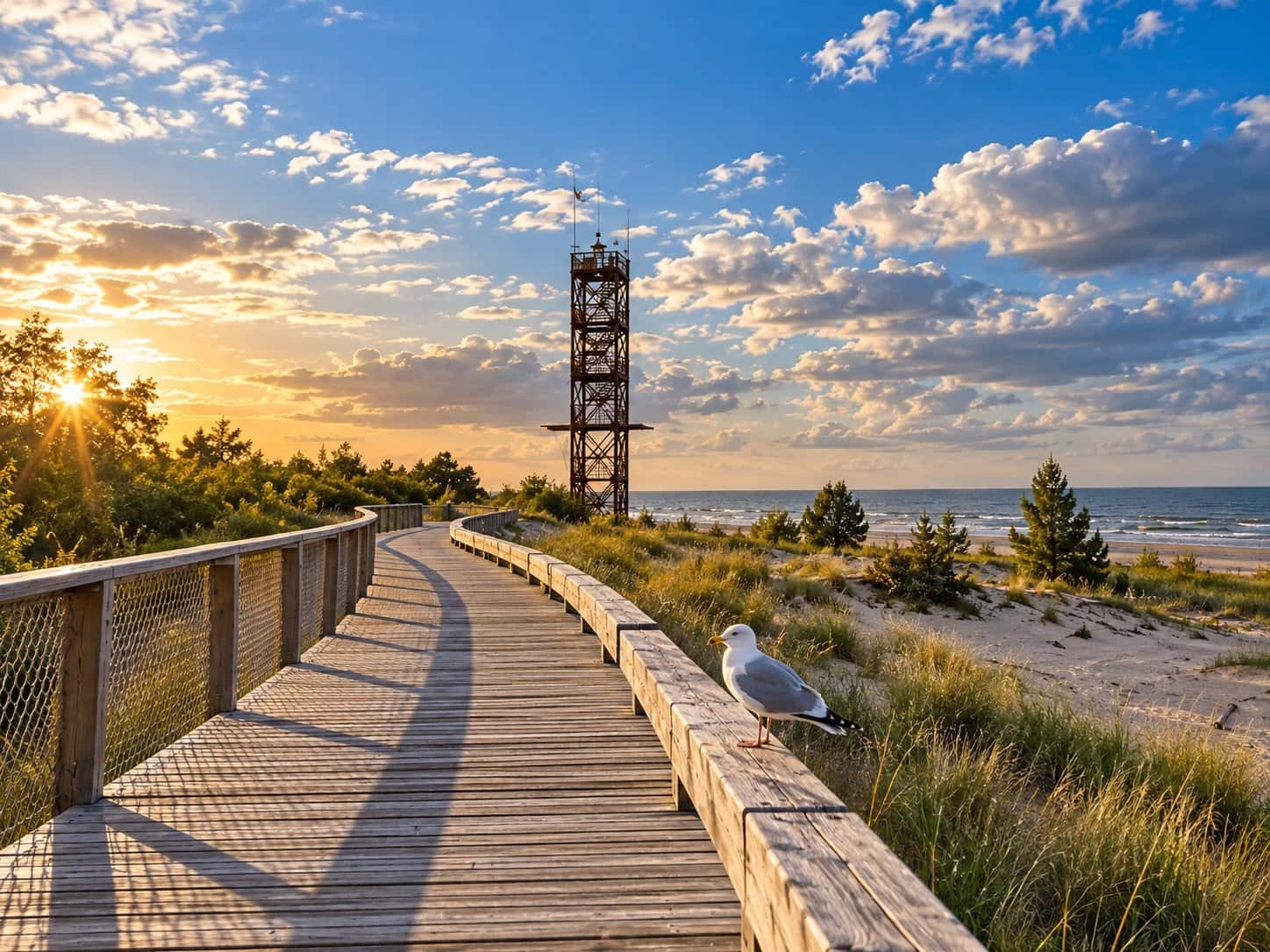
The Pärnu mole is one of the recognizable symbols of maritime Pärnu and a popular walking spot at the river mouth. Stone moles appeared here in the 19th century to protect the navigable channel from sand buildup; the construction of more permanent structures was completed in 1869. Today, a boardwalk from the seaside park leads to the mole, after which the route continues over stones towards the bay. At low water levels, you can see the remains of the wooden structures of the former construction, while at high water, certain sections may be flooded. A well-known urban legend is associated with the place: it is believed that a kiss at the end of the mole brings good luck to lovers. Open views of Pärnu Bay and sunsets look particularly expressive here.
Muuli 8, 80012 Pärnu
Villa Ammende
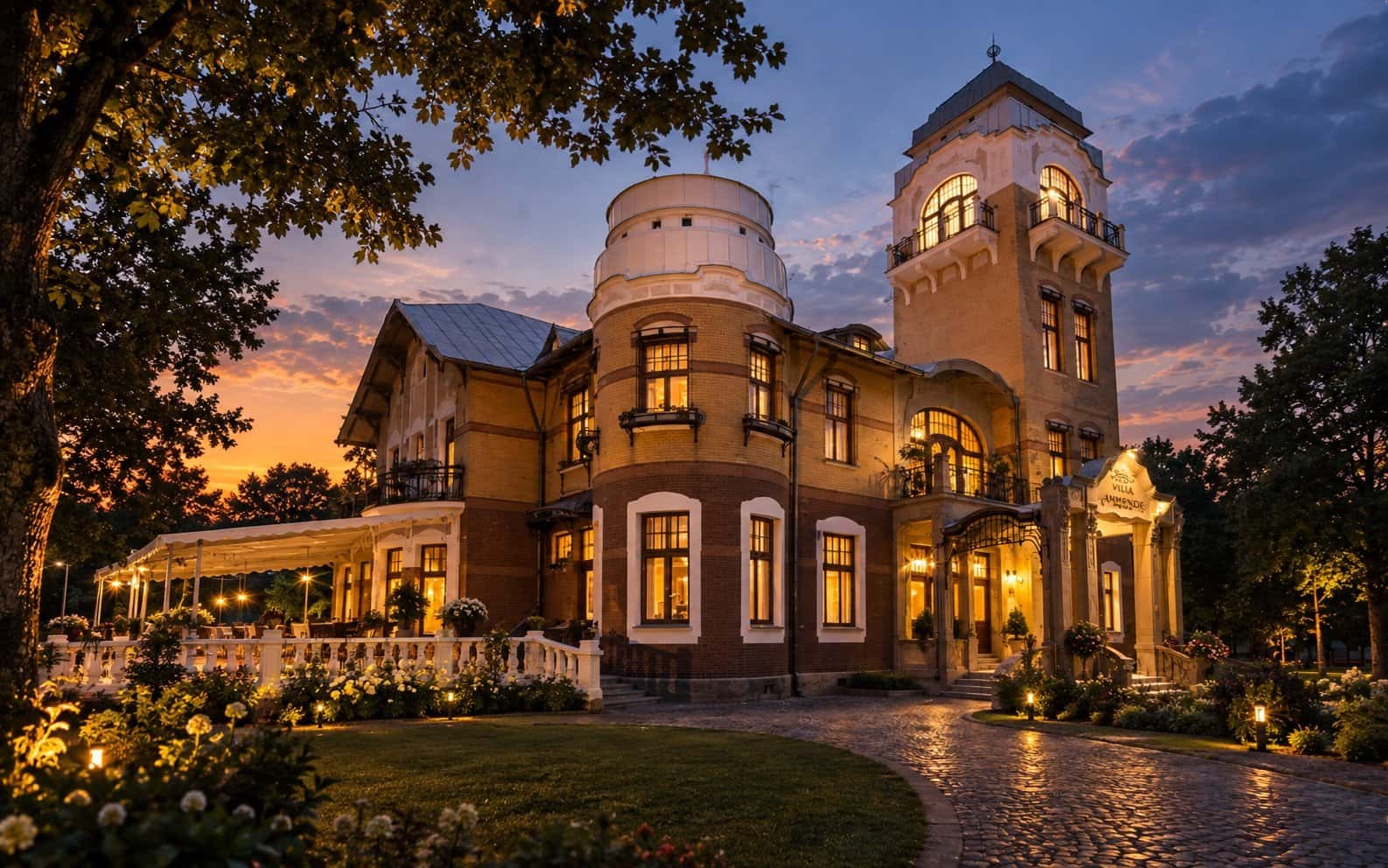
Villa Ammende is one of Pärnu's most expressive architectural landmarks and a prominent example of early Art Nouveau in Estonia. The villa was built in 1905 for the Ammende family, designed by architects F. Mitz and I. Gerasimov from St. Petersburg. The richly decorated facades and interiors were created as a unified representative ensemble typical of a wealthy urban villa of the early 20th century. Following a complex history, the building has been restored and is used today as a historic hotel and restaurant, while the architectural character of the mansion and its decorative details remain an important part of its image. A large garden and its location between the city center and the beach district make the villa a natural stop on an architectural walk through the resort city of Pärnu.
Mere pst 7, Pärnu
Koidula Museum
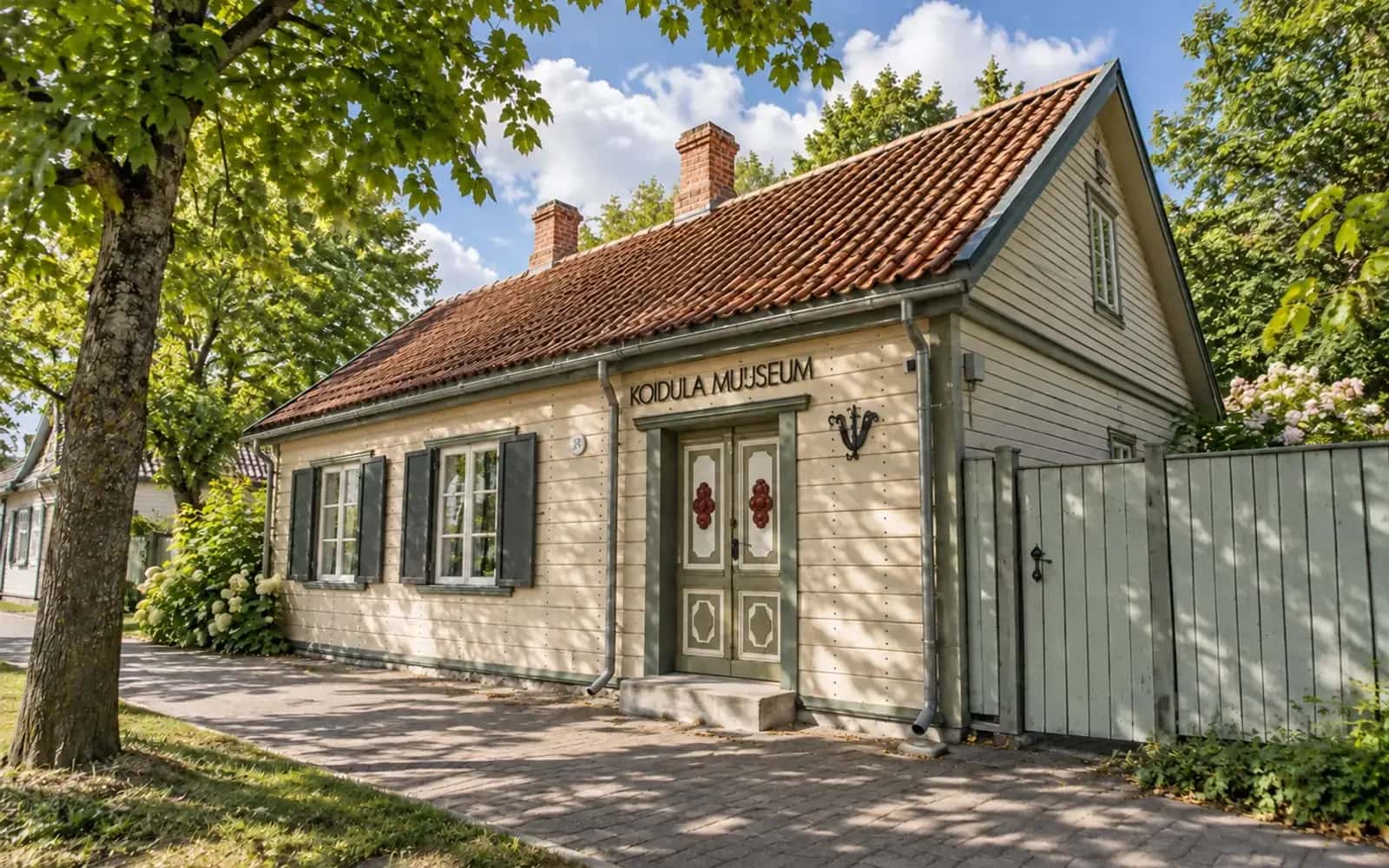
Koidula Muuseum is a literary and historical museum in the Ülejõe district of Pärnu, dedicated to Lydia Koidula and her family. The exhibition is housed in the wooden building where the Jannsen family lived and a school operated in the mid-19th century. Here, visitors can explore the life of the poet, the work of her father Johann Voldemar Jannsen, and the beginnings of Estonian-language journalism, including the newspaper Perno Postimees. Recreated school and living spaces help convey the atmosphere of the national awakening period. A garden next to the house adds to the historical experience.
Jannseni 37, 80032 Pärnu
Pärnu Eliisabeti kirik
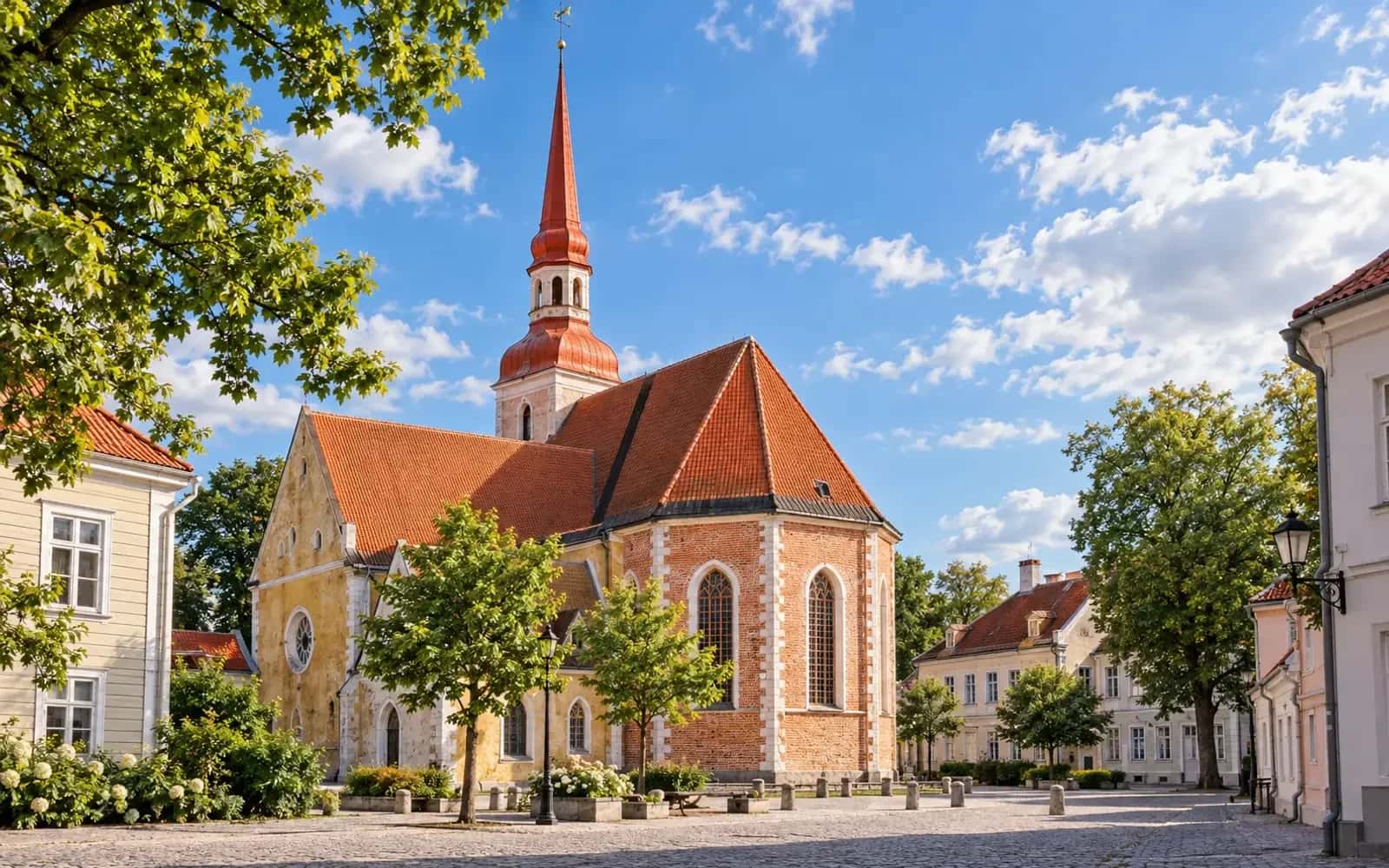
Pärnu Eliisabeti kirik is a historic Lutheran church located on Nikolai Street in the old town center of Pärnu. Consecrated in 1750, the church is considered a notable monument of Baroque church architecture in Estonia. Inside, visitors can see the 19th-century Neo-Gothic altar and pulpit, as well as altarpieces. Organ music plays a special role in the church's life: the church is known for its organ and is used as a concert venue. The name is associated with Empress Elizabeth, with whose support the local Estonian community was able to build its own church. A visit can be easily combined with a walk through the streets of the old town.
Nikolai 22, 80010 Pärnu
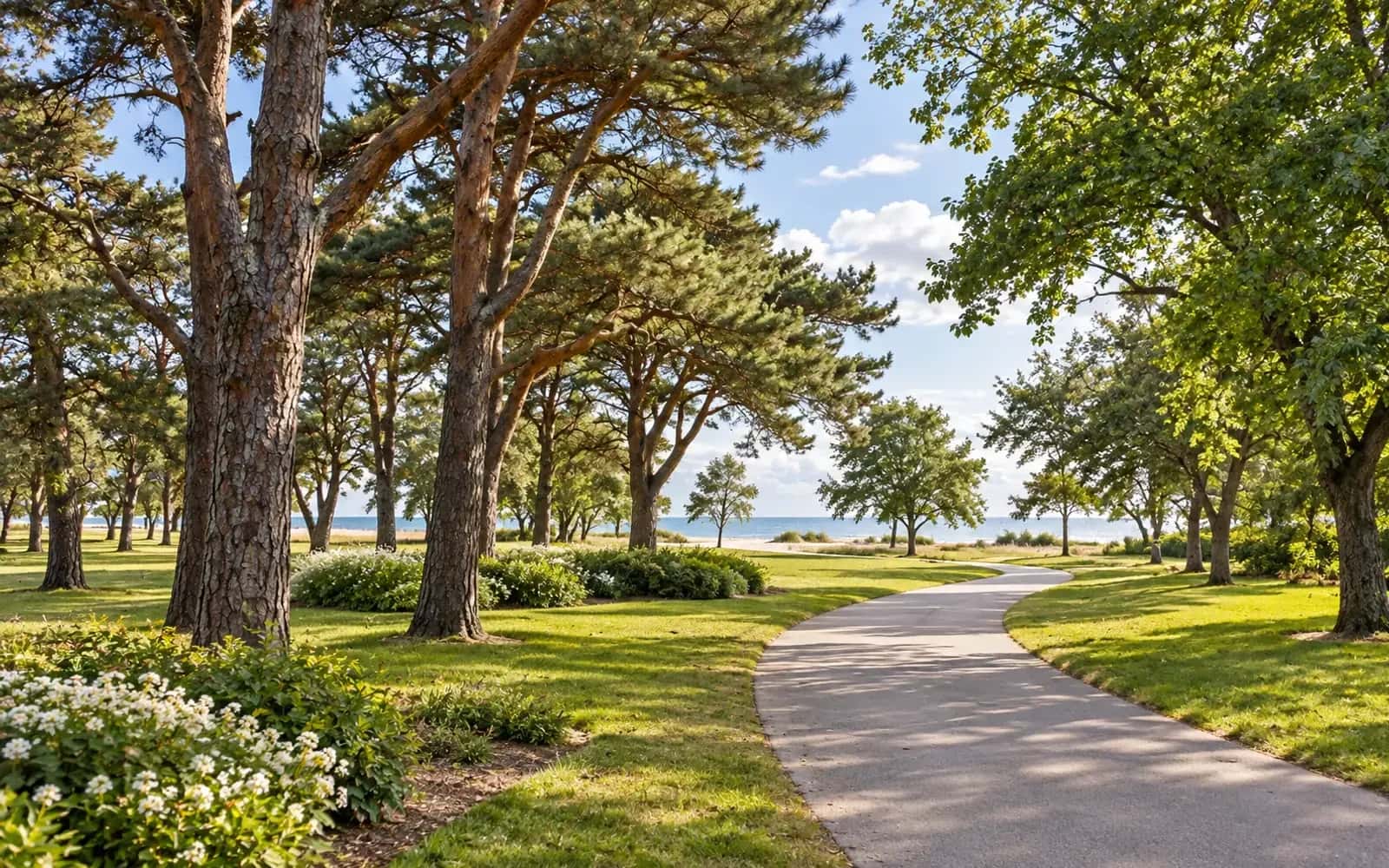
Pärnu rannapark
Pärnu rannapark is a historical seaside park next to the central beach of Pärnu, where walking paths connect the urban resort architecture and green relaxation areas. The park was established in 1882 and later received conservation status thanks to its plant diversity. It features shady paths, thematic spaces for quiet rest and meetings, picnic spots, and a children's playground closer to the sea. A fitness trail runs through the park, and the proximity of the beach makes it easy to combine a walk among the trees with relaxation by the water. Unlike the open sandy shore, it is especially pleasant to take shelter in the shade here on a warm day.
Rannapark P2, Pärnu
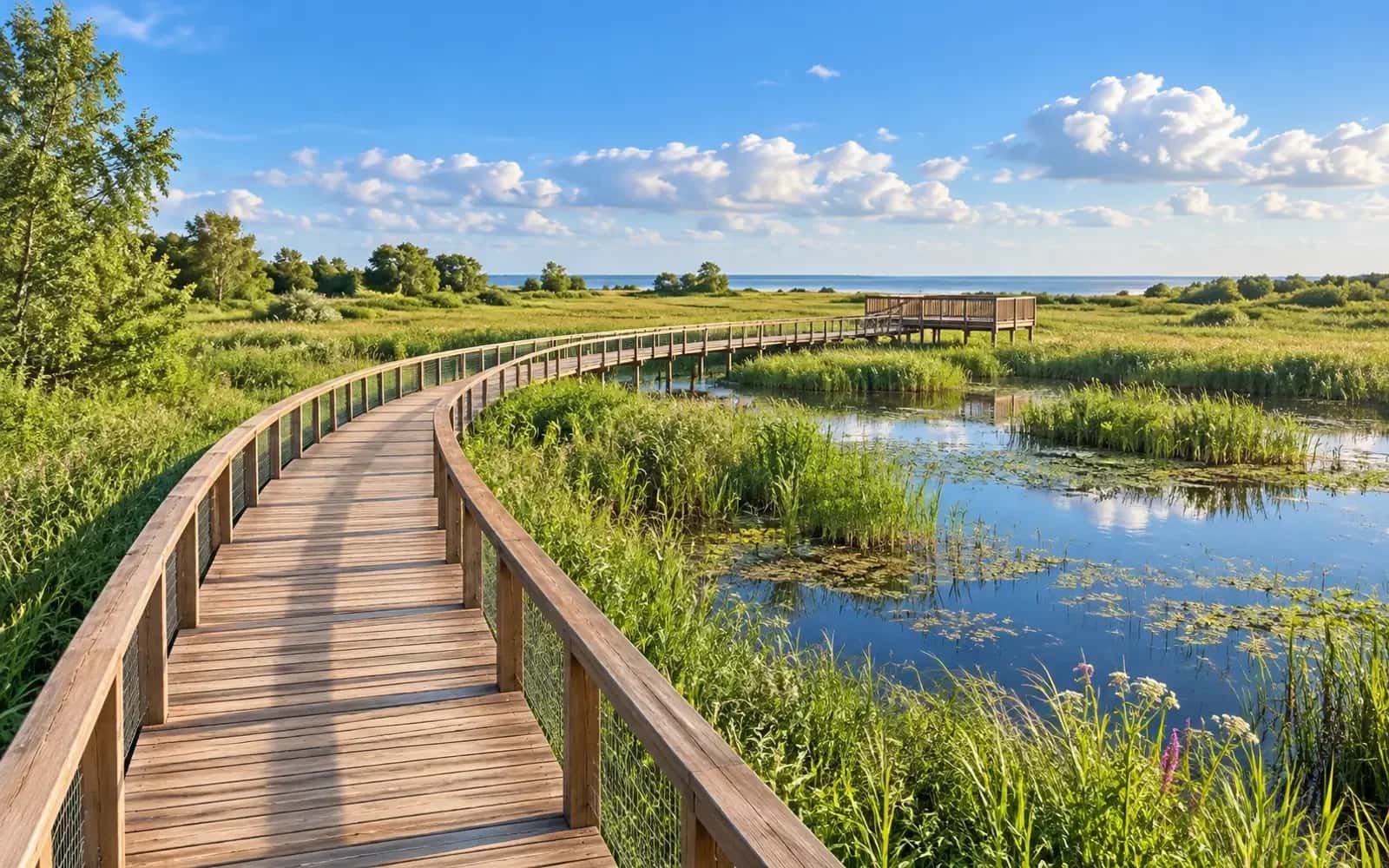
Pärnu Coastal Meadow Hiking Trail
Pärnu rannaniidu matkarada is a nature walking trail by the sea in Pärnu, laid out across protected coastal meadows. The wooden boardwalk, about 600 metres long, runs over damp meadow areas and small water bodies, allowing visitors to observe the landscape without damaging the sensitive vegetation. The nature reserve area includes lagoons, meadows and small forest patches; birds and amphibians can be found here. An observation platform is set up along the route, and the gentle structure is suitable for walking with a pram or wheelchair. This is an opportunity to see a completely different, quieter side of the popular seaside resort.
Ranna pst 11, 80012 Pärnu
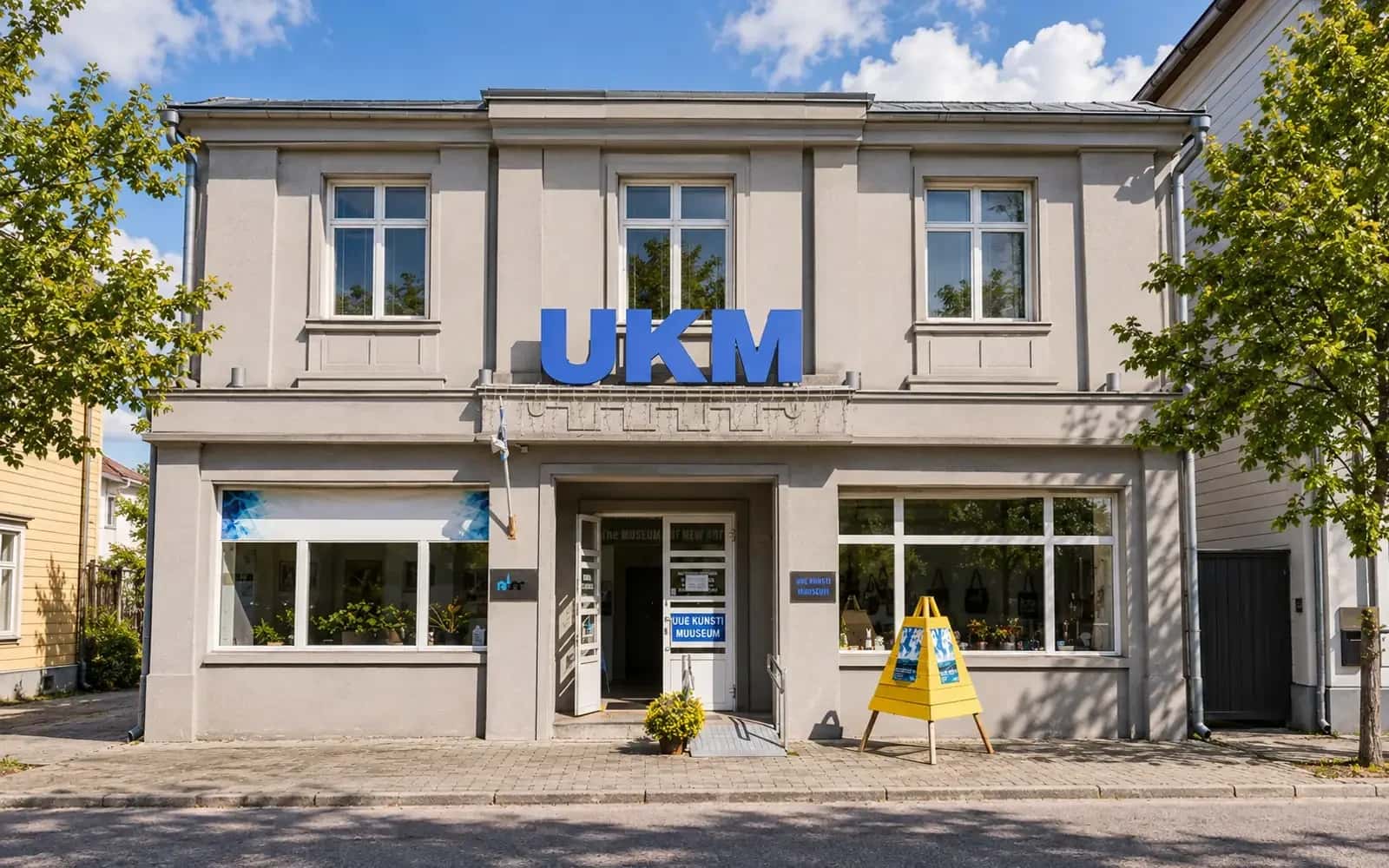
Museum of New Art
The Museum of New Art is a contemporary art museum on Rüütli Street in central Pärnu, known for changing exhibitions and international projects. Founded by artist and documentary filmmaker Mark Soosaar, the museum brings together works of visual art and an extensive video archive of documentary films. Its programme includes painting, photography, sculpture and experimental artistic practices. One of its traditional themes is exhibitions exploring the human figure and the relationship between art and society. It is a cultural stop in the historic city centre where the exhibitions change throughout the year.
Rüütli 40a, 80010 Pärnu
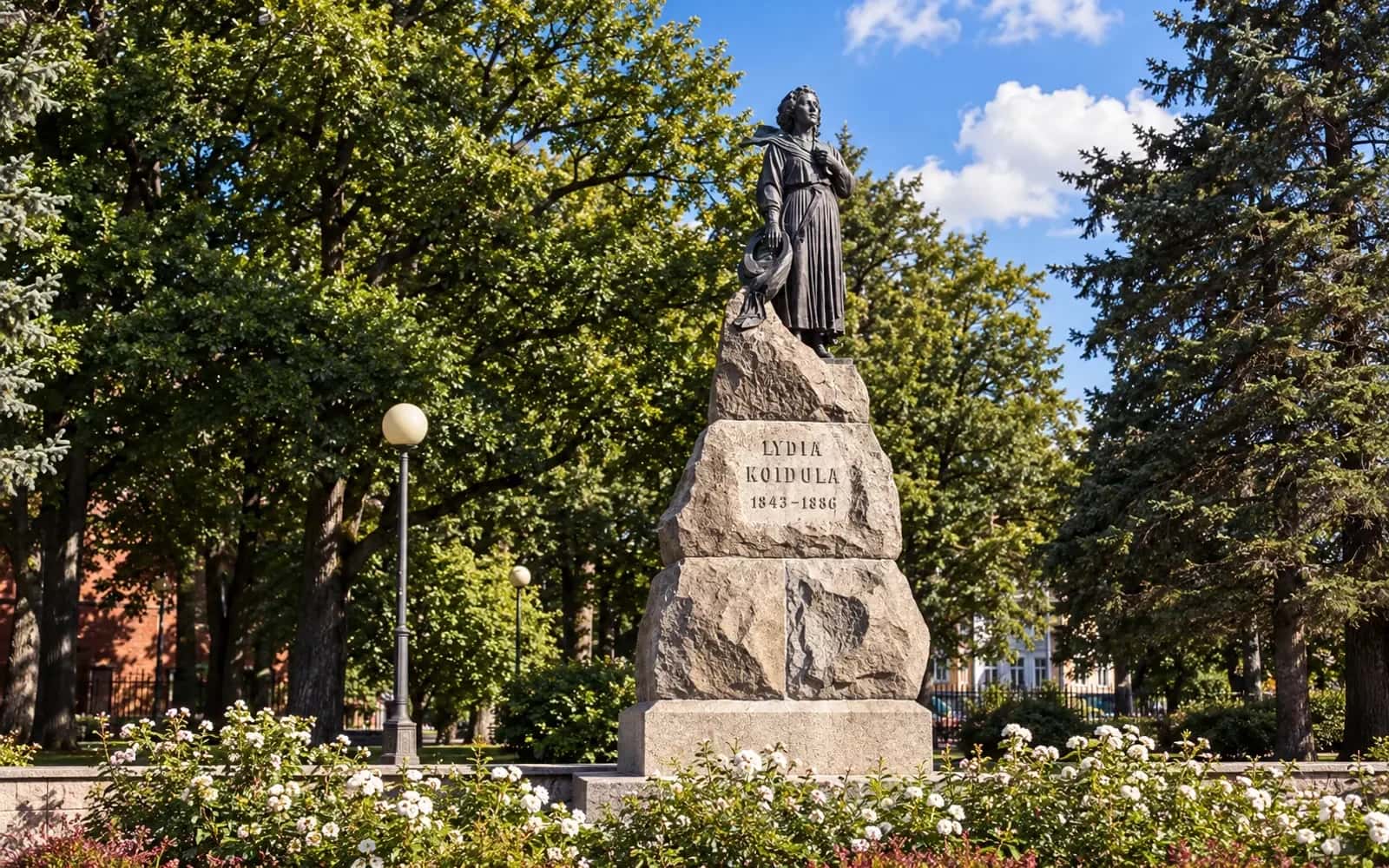
Lydia Koidula Monument
The Lydia Koidula monument stands in central Pärnu in Koidula Park and is dedicated to the well-known poet of the Estonian national awakening. Pärnu was the town of Koidula's youth, and the monument recalls her role in Estonian literature and public life. The sculpture is by Amandus Adamson and was unveiled in 1929. The memorial is surrounded by the park's trees, flower beds and footpaths, which make it a quiet stopping place in the heart of the town. It is a distinctive historical monument that can be viewed while strolling through the park and combined with discovering Pärnu's cultural history.
Koidula park, Pärnu
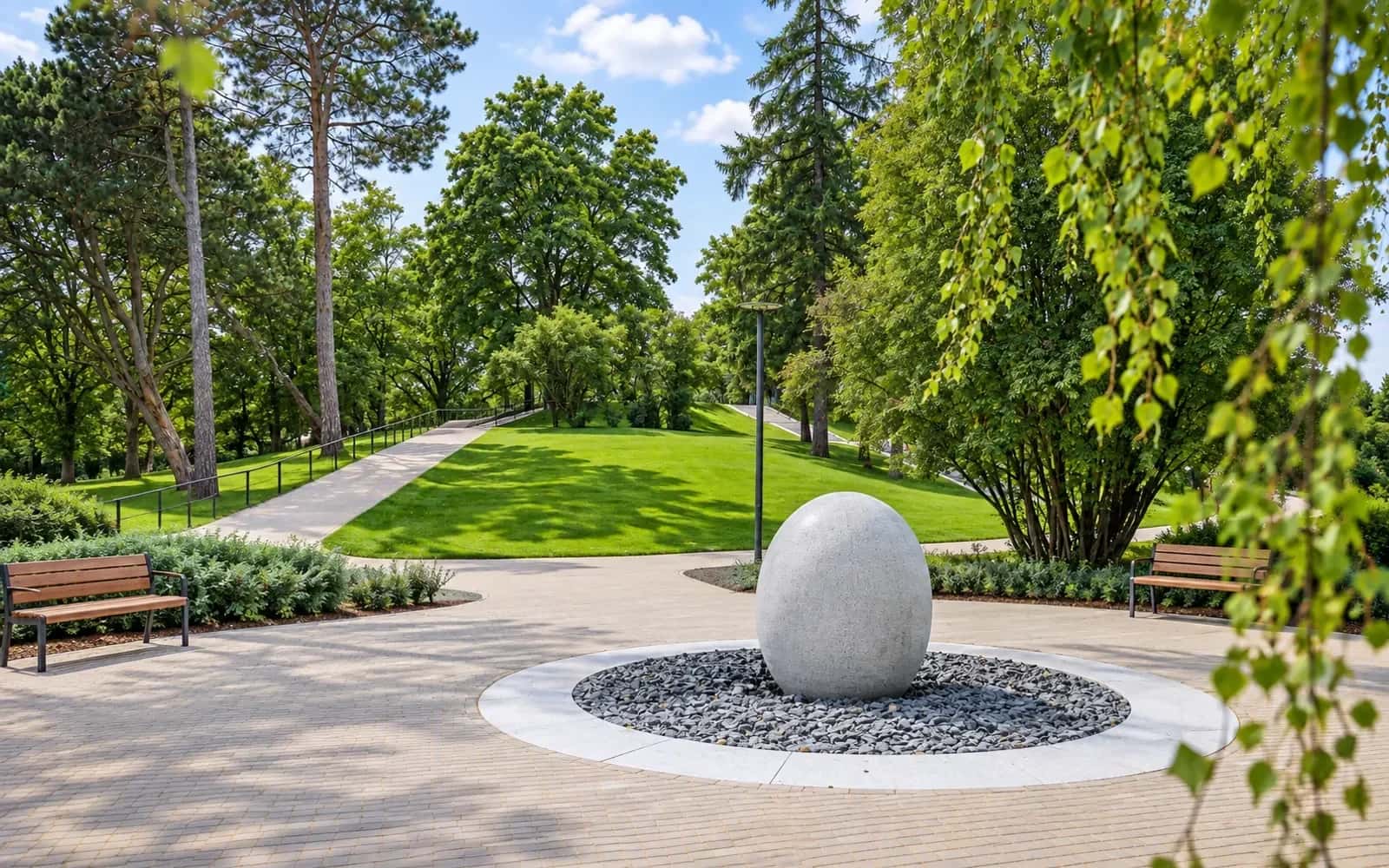
Munamägi Park in Pärnu
Munamägi Park in Pärnu is a green space in the town centre whose higher part is the town's highest natural point. The park brings together a historic landscape, interesting trees and modern recreation facilities. Among others, black pine and yellow birch grow here, and there is a playground for younger visitors. In the centre of the park is an egg-shaped fountain that makes the place easy to recognise. The slopes of Munamägi suit a relaxed walk, and in winter they are also used for sledging. It is a park in its own right, not part of Pärnu's beach park.
Munamäe park, Pärnu
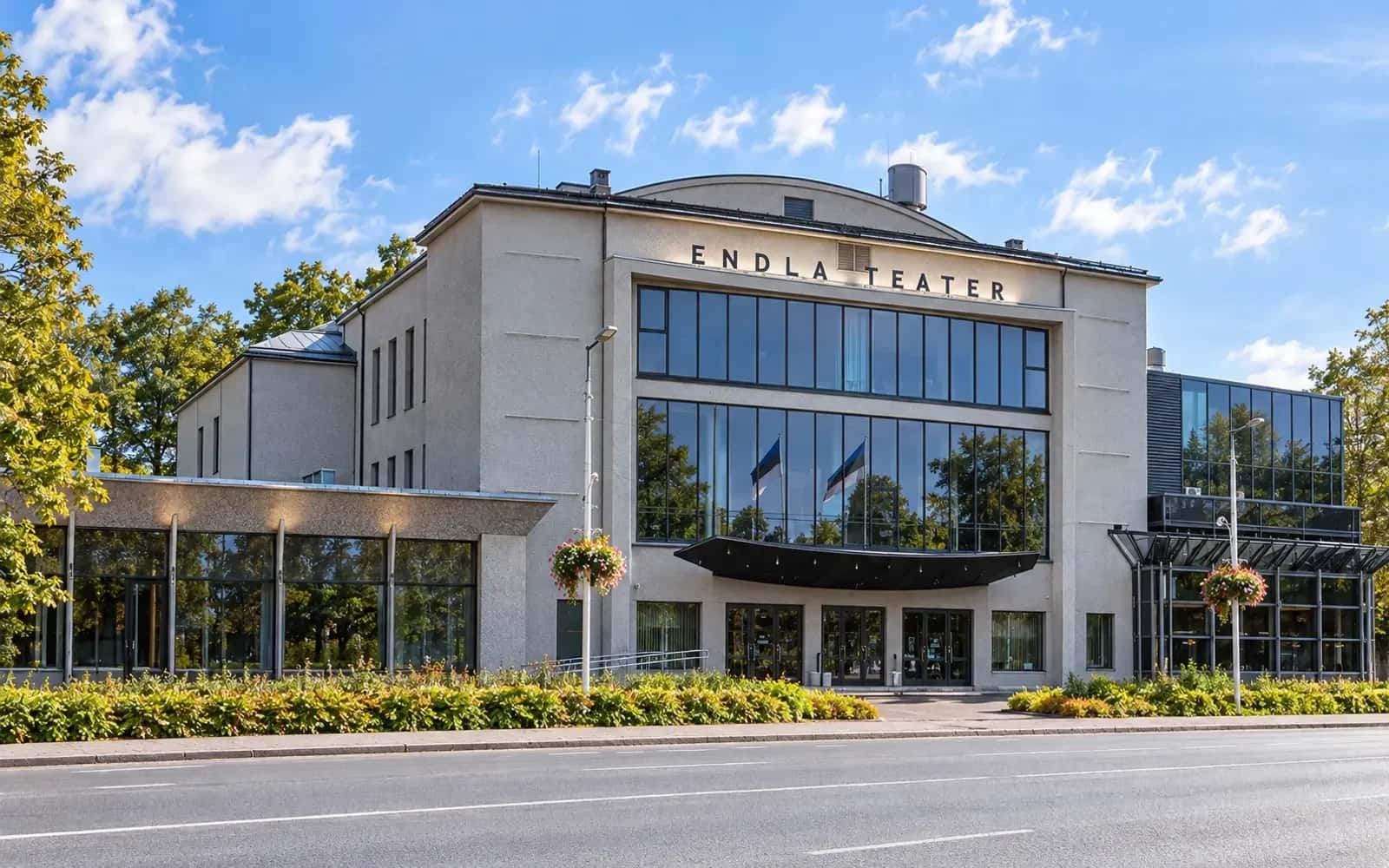
Endla Theatre
Endla Theatre stands on Keskväljak (Central Square) in central Pärnu and is one of Estonia's oldest professional theatres. Endla's history goes back to the early 20th century, and in 1918 the Estonian Declaration of Independence was read out from the balcony of the original theatre building. The current theatre building was completed in 1967 and is an important part of Pärnu's cultural life. The repertoire includes diverse productions, and the building also hosts other cultural events. As a sight, Endla is interesting for both its history and its architecture. To attend a performance, check the specific programme and tickets.
Keskväljak 1, Pärnu
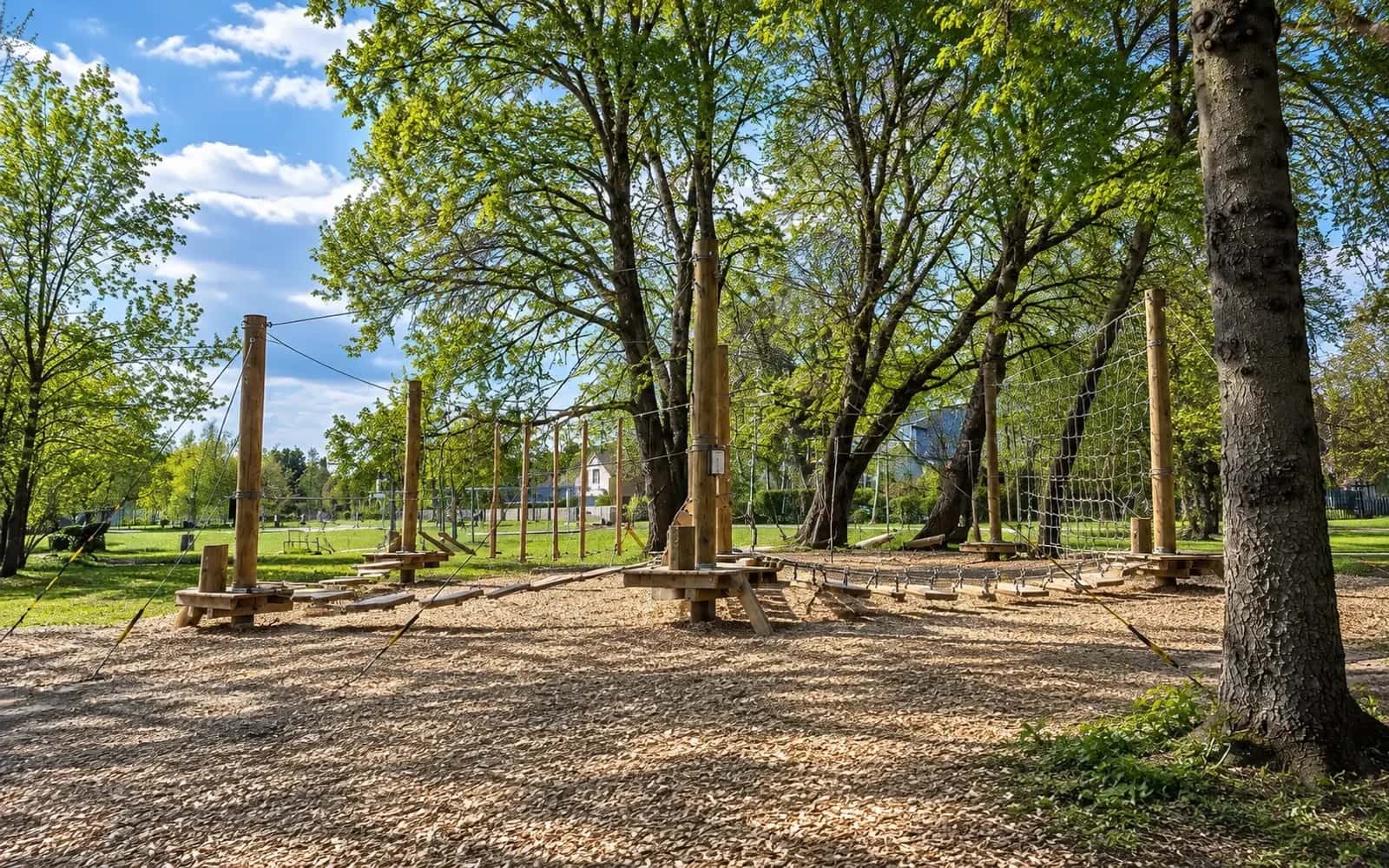
Vana-Pärnu Low Adventure Trail
The Vana-Pärnu low adventure trail is on Kesk Street in a green part of town and gives families a chance to get moving in the fresh air. The public trail is built at a low height, and you can practise balance, climbing and agility on it. It is a simpler adventure trail that does not use the usual safety equipment of a high ropes park. The surrounding trees give shade in warm weather and make the spot suitable for a short active stop. Visiting is free and the trail is publicly accessible; children should still be supervised during the activity.
Kesk tn 22a, Pärnu
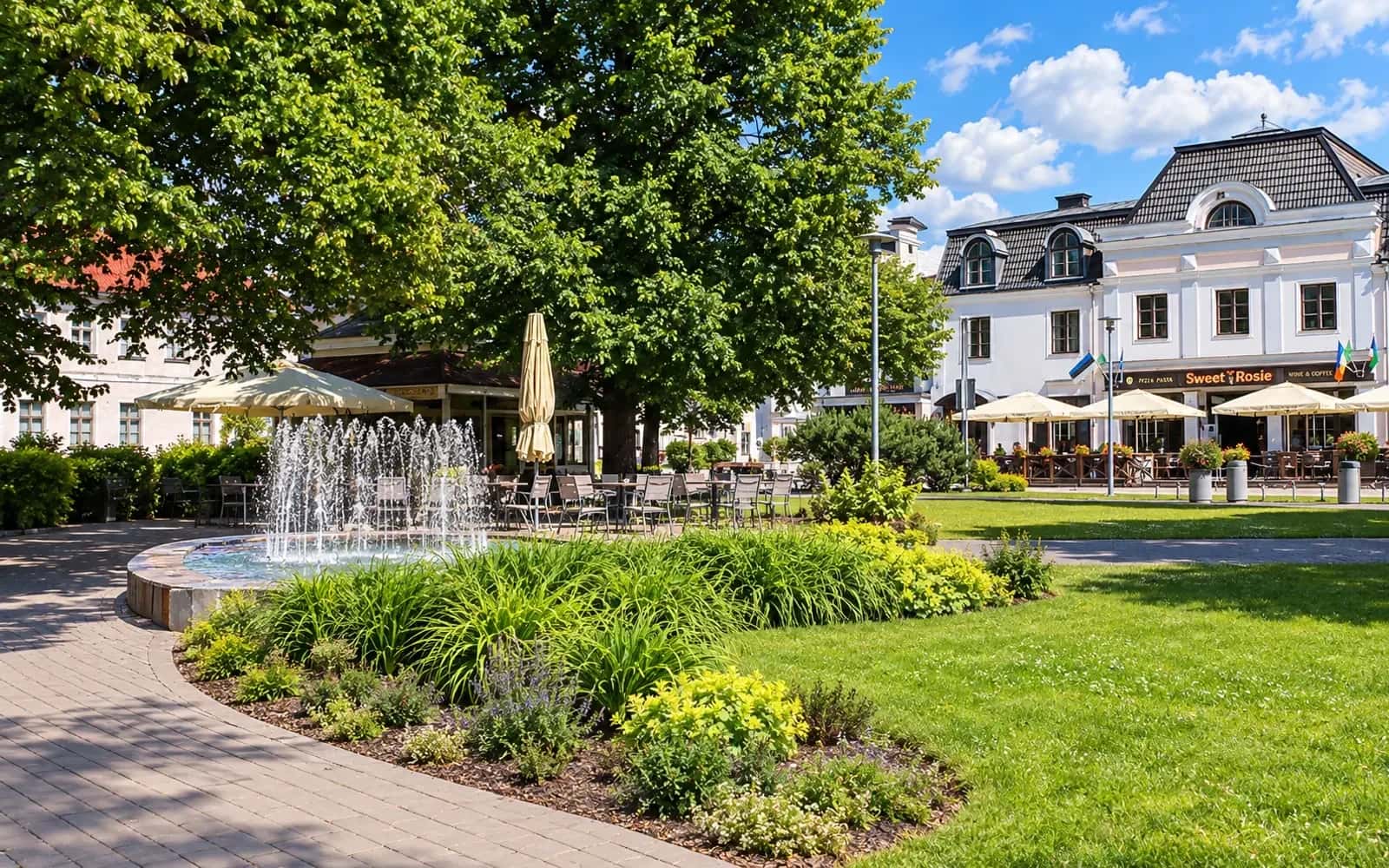
Pärnu Children's Park
Pärnu Children's Park (Lastepark) lies beside Rüütli Street in the town centre and is a small green space in the historic townscape. In summer a fountain, street musicians and various performances bring it to life; in winter light decorations add atmosphere. The park has memorial benches and animal carousels for children that can be used all year round. A walk in the Children's Park combines well with visiting the old town's shops and cafés. Unlike the large beach park, it is a compact meeting and resting place in the centre whose mood changes with the seasons.
Rüütli tn 12, Pärnu
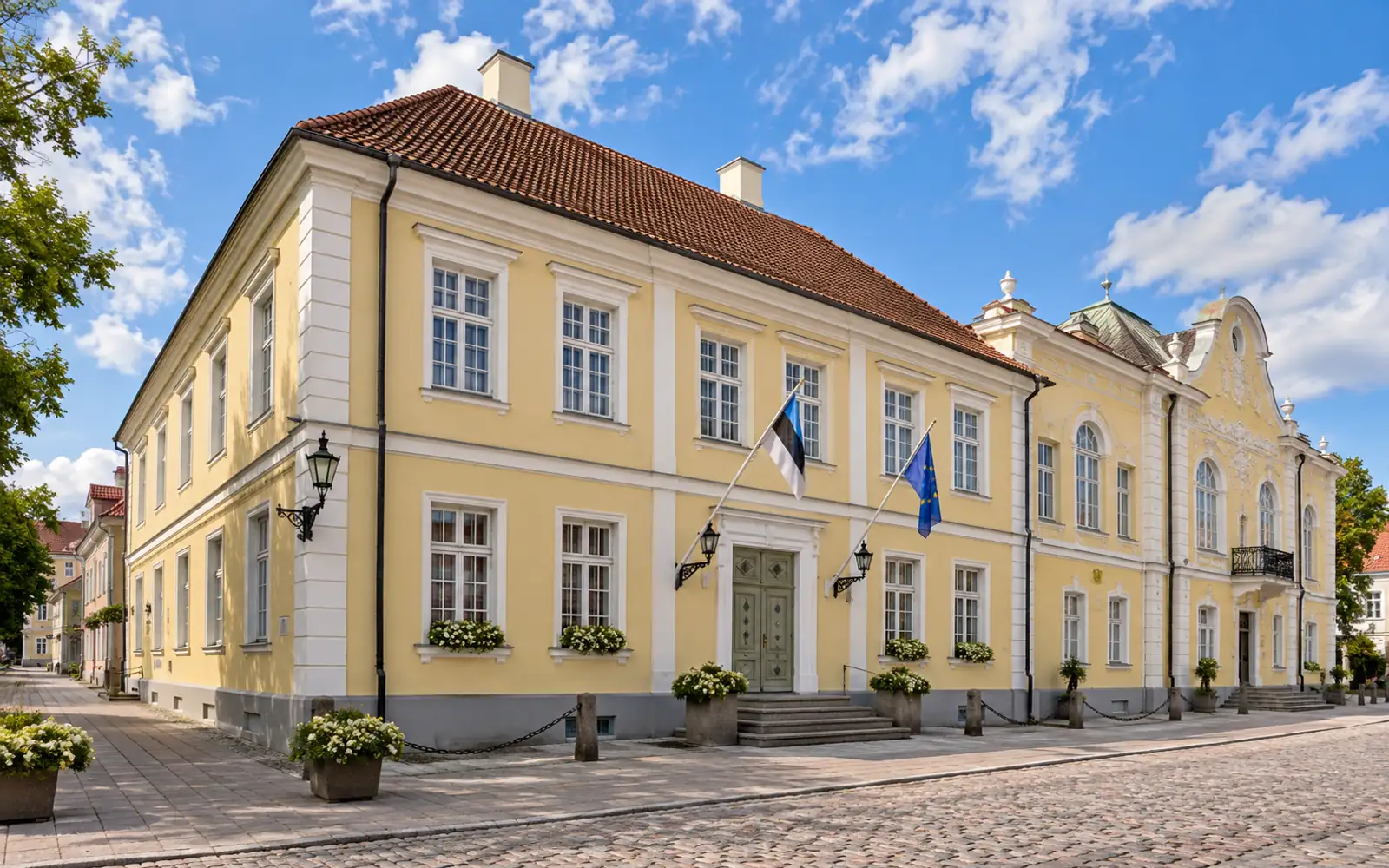
Pärnu Town Hall
Pärnu Town Hall is a historic building on Uus Street in central Pärnu. Its older part was built in 1797 as the residence of merchant Peter Reinhold Harder, and in 1839 the house began serving as the town hall. In 1804 Emperor Alexander I stayed here while visiting Pärnu. In 1911 a city council building was added to the north side of the town hall, its architecture differing from the older classicist house. The facades of two eras standing side by side make it easy to see how Pärnu's civic government and architecture changed. The exterior can be viewed on a walk through the Old Town; access to the interior depends on what is taking place there.
Uus tn 4, Pärnu
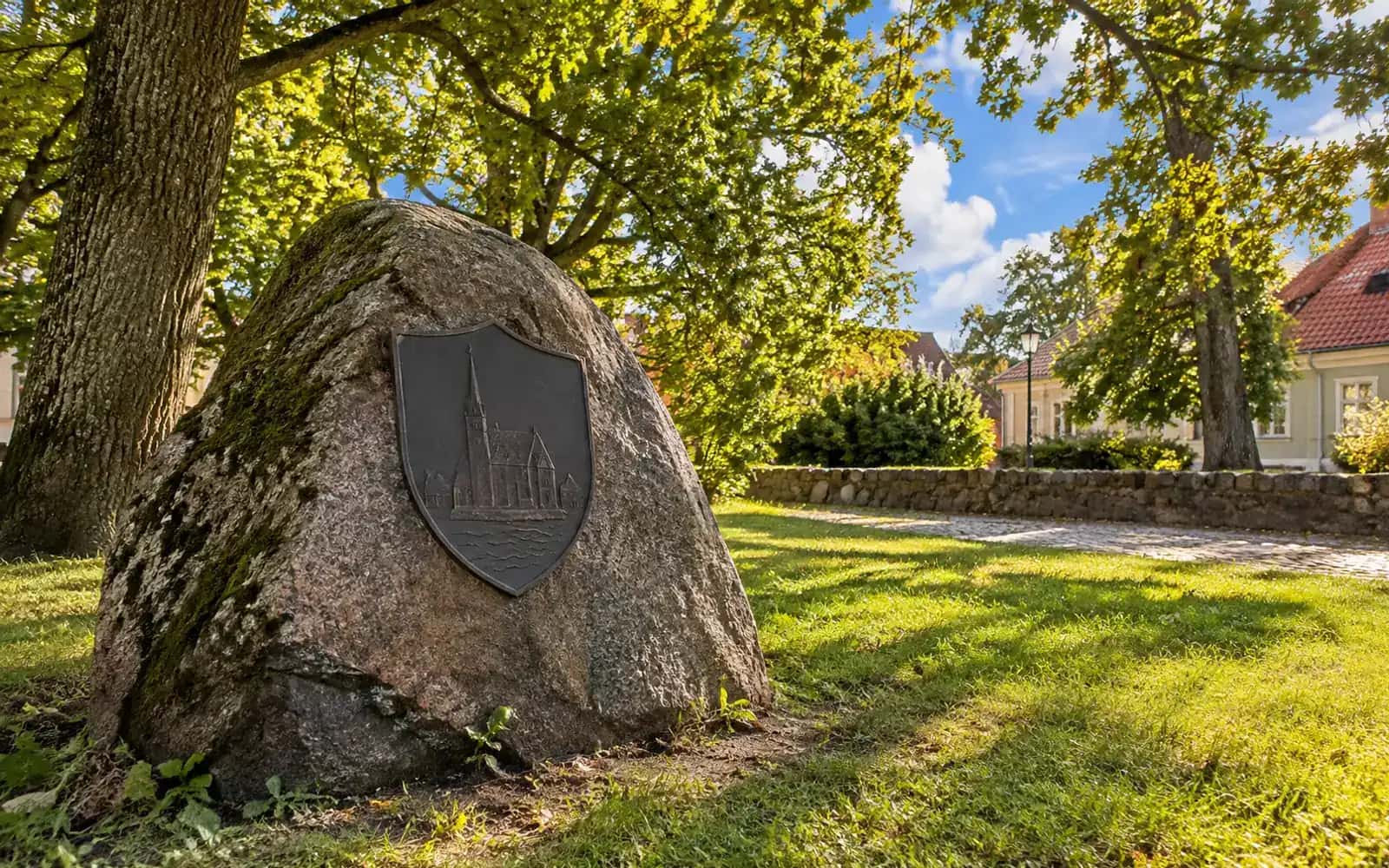
St. Nicholas Church Memorial Stone
The memorial stone dedicated to St. Nicholas Church stands on Nikolai Street in Pärnu's Old Town, near the site of the former church. For centuries the medieval St. Nicholas Church was one of the town's most important places of worship, but it was badly damaged in the bombing of 1944. The ruins were demolished in 1954, and the historic building can no longer be visited. The church's silhouette depicted on the stone helps visitors picture the lost townscape. Trees from the former churchyard still grow nearby, alongside other Old Town buildings. It is a quiet stop for anyone wanting to understand Pärnu's pre-war architecture and the town's complex history.
Nikolai tn 6, Pärnu
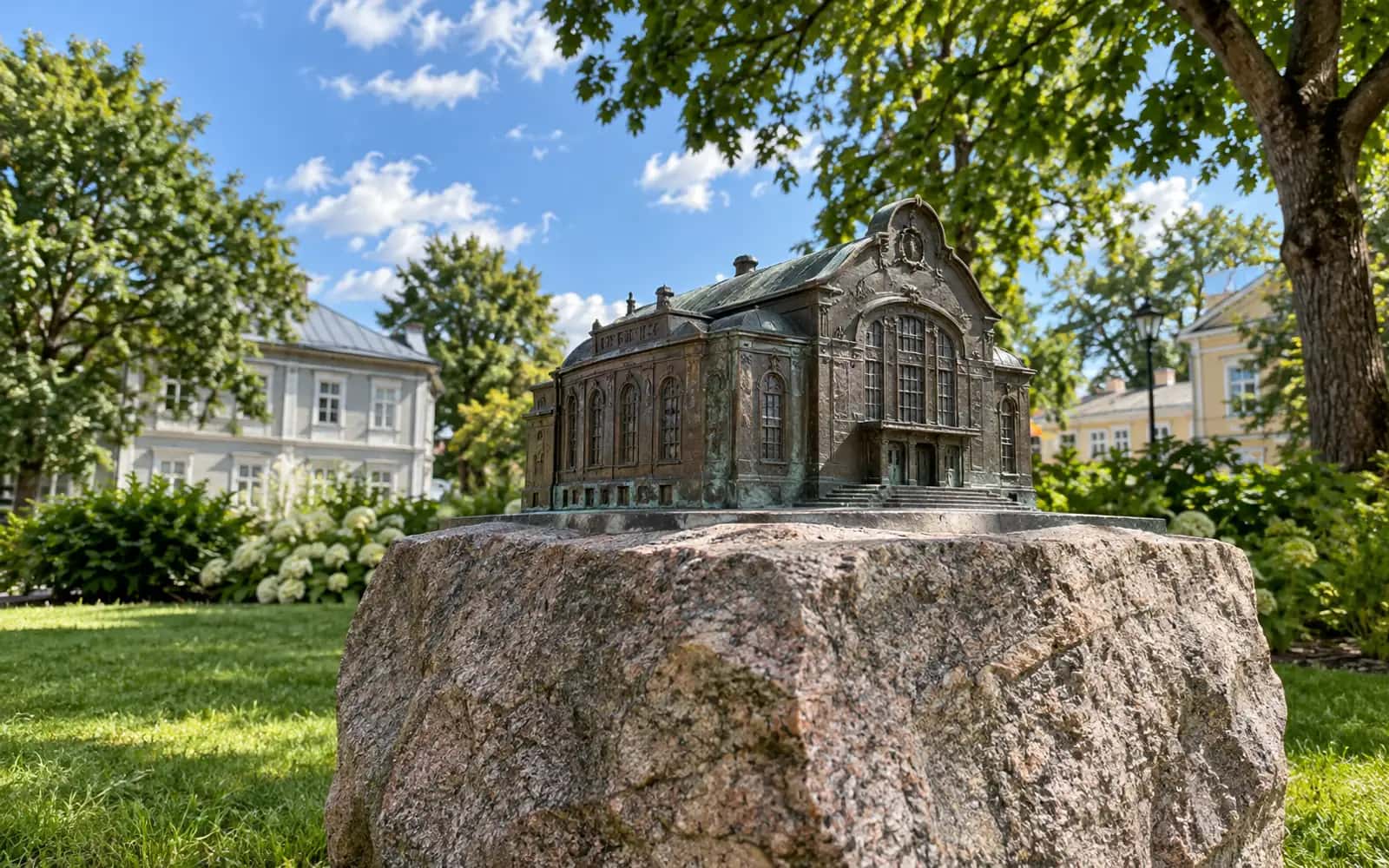
Endla Society House Monument
The Endla Society House Monument on Rüütli Street in central Pärnu marks a historic site linked to the proclamation of Estonia's independence. On 23 February 1918 the Estonian Declaration of Independence was read out publicly for the first time from the balcony of the Endla society house that stood here. The Art Nouveau society house was completed in 1911 but has not survived. The granite memorial by sculptor Mati Karmin was unveiled in 1989. The monument recalls Pärnu's role in the birth of the Estonian state and invites comparison between today's streetscape and the historic events. The outdoor memorial makes a good stop on a walk through the town centre.
Rüütli tn 44, Pärnu
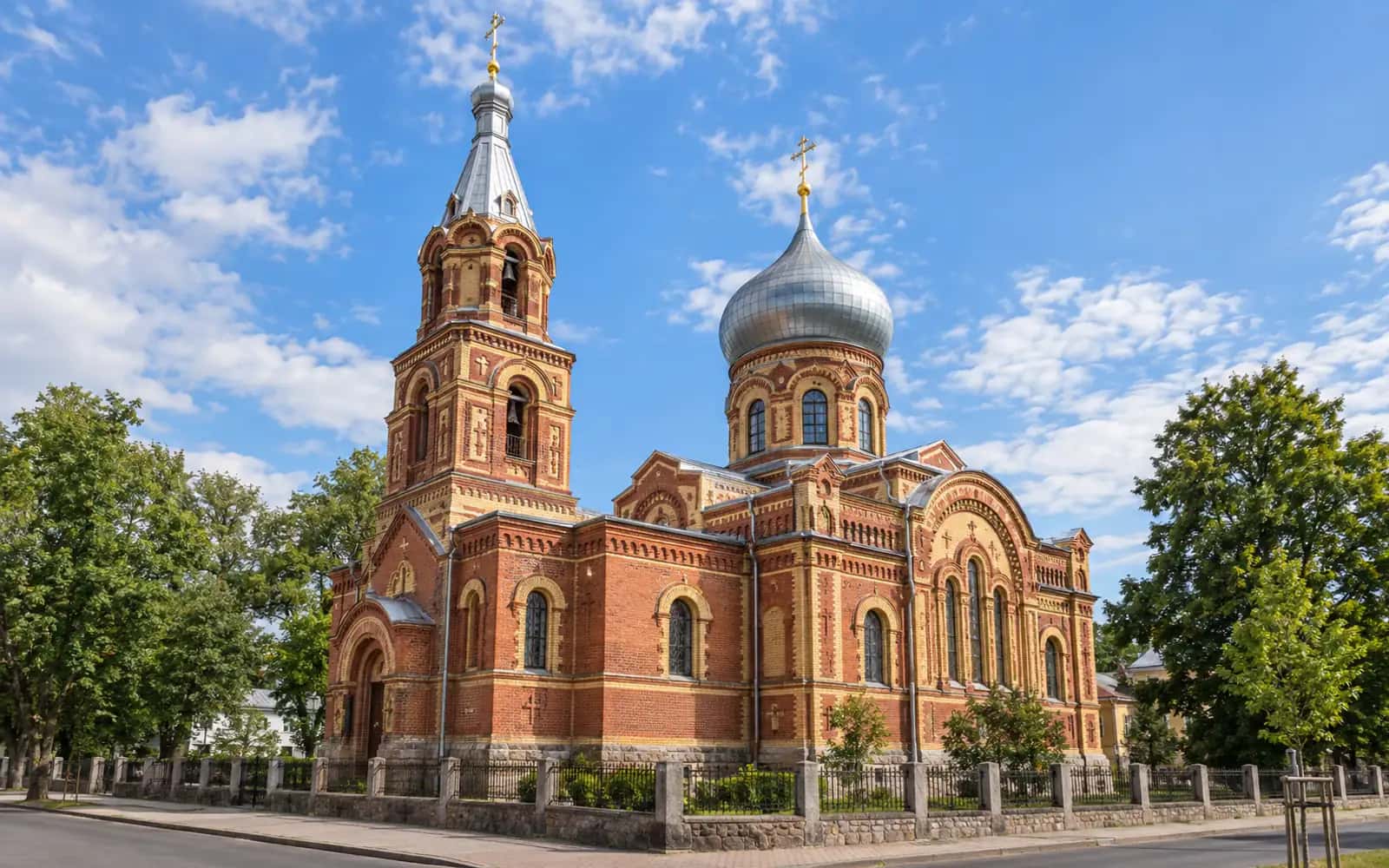
Pärnu Church of the Transfiguration
Pärnu Church of the Transfiguration is an Orthodox church on Aia Street in central Pärnu. The historicist church building was completed in 1904 and became the home church of the local Estonian-speaking Orthodox congregation. Its yellowish brick walls and tall bell tower, visible from far across the town, stand out. Inside are an iconostasis and religious wall compositions. The church is used for the congregation's religious life, so visitors should be mindful of services and church customs. Its exterior architecture can be admired on a walk through central Pärnu.
Aia tn 5, Pärnu
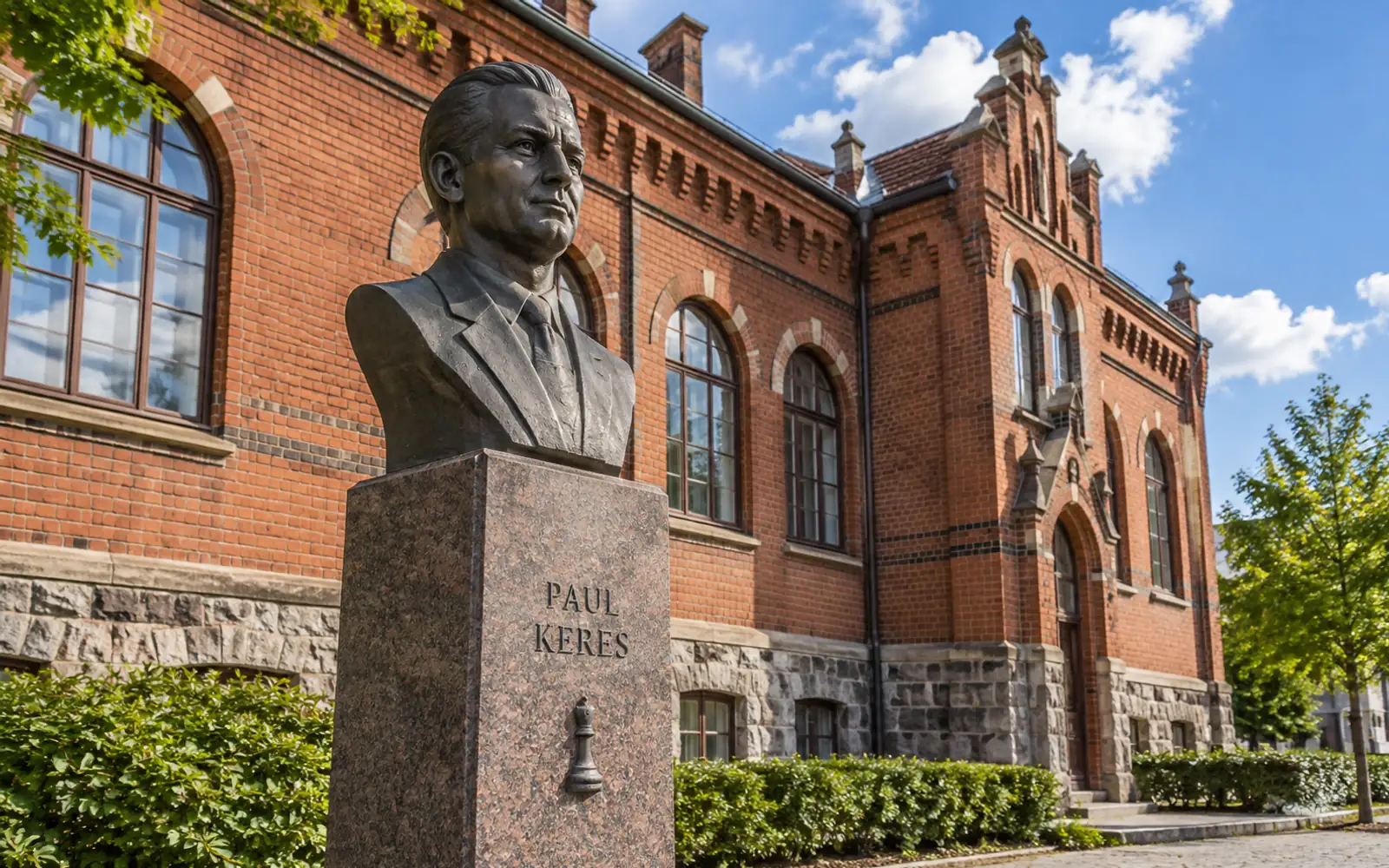
Paul Keres Memorial in Pärnu
The Paul Keres Memorial in Pärnu stands on Kuninga Street in front of the school building where the future chess player studied from 1930 to 1934. International grandmaster Paul Keres spent part of his youth in Pärnu, and his connection with the town is commemorated in public space. The memorial by artist Mare Mikoff was unveiled in 1996. The sculpture draws attention to Estonian chess history and to a man whose achievements were known far beyond Estonia. It can be viewed in the area in front of the school and combined with a walk through the streets of Pärnu's Old Town. It is a standalone sculpture, not a museum exhibition.
Kuninga tn 29, Pärnu
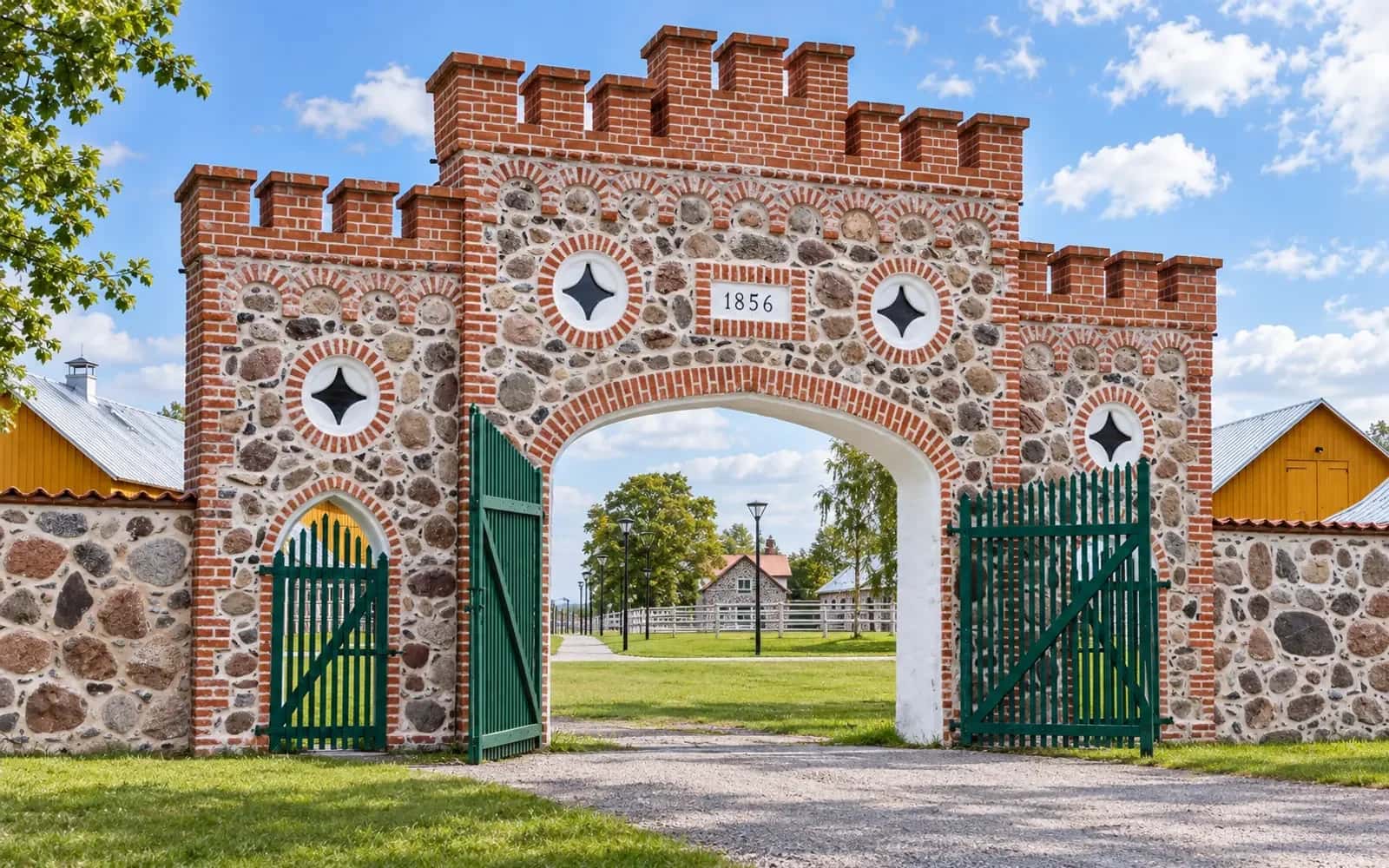
Tori Stud Farm
Tori Stud Farm is in the small town of Tori in Pärnu County, beside the road towards Soomaa. Founded in 1856, the stud still breeds Estonian and Tori horses today. The historic stables and the stud's museum tell the story of horse breeding and the local area; the exhibition also includes horse-related objects and hands-on activities. Horses and the stable setting can be seen according to the stud's visiting rules, while riding and horse-drawn carriage tours must be booked separately. The museum ticket and a visit to the grounds only are priced differently.
Pärnu mnt 10, Tori alevik, Tori vald, Pärnu maakond
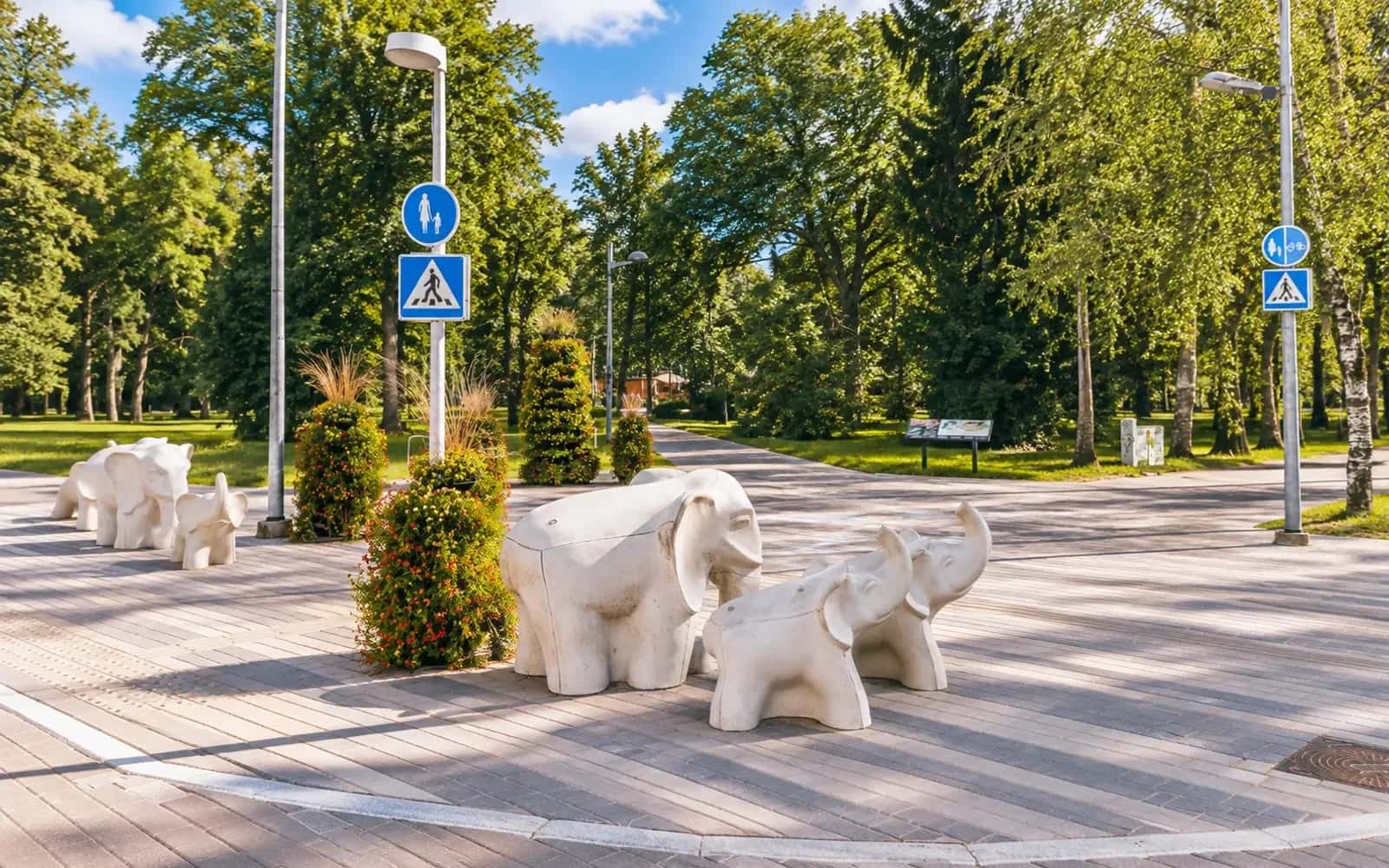
Pärnu Elephants
Pärnu Elephants is a walk around the town of Pärnu in search of sculptures and lawn figures, with Supeluse Street a good place to start. Concrete elephants can be found along the route from the town centre towards the beach and in the beach district, while the Beach Park also has elephant figures made of grass. It is not a single garden or a new park, but a way of exploring the townscape through several stops. The elephant has been a symbol of Pärnu in different eras, from the Elevandi granary and street to the elephant-shaped slides that once stood on the beach.
Supeluse tn, Pärnu linn
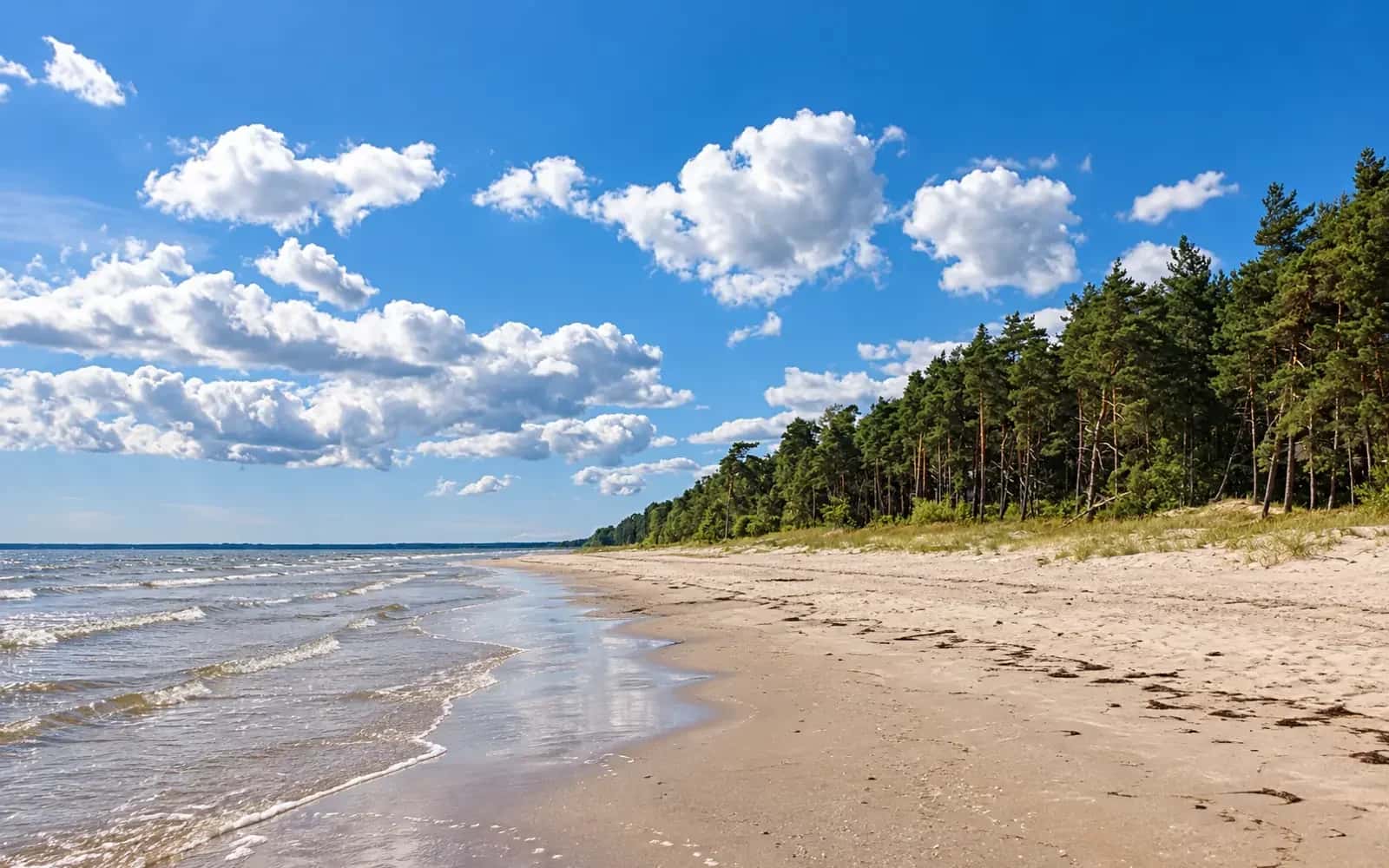
Valgerand Beach
Valgerand is a sandy beach in Valgeranna village, Pärnu County, a short trip from the town. A lit footpath leads from the car park to the sea through the coastal forest. Near the beach are an observation tower, a children's playground, an adventure park and a disc golf course, but check the conditions for these activities separately. The long shoreline offers both a livelier spot by the promenade and quieter stretches further away. The walking area between the forest and the sea is worth visiting outside the summer swimming season too.
Valgeranna küla, Pärnu linn, Pärnu maakond
Pernova Nature House
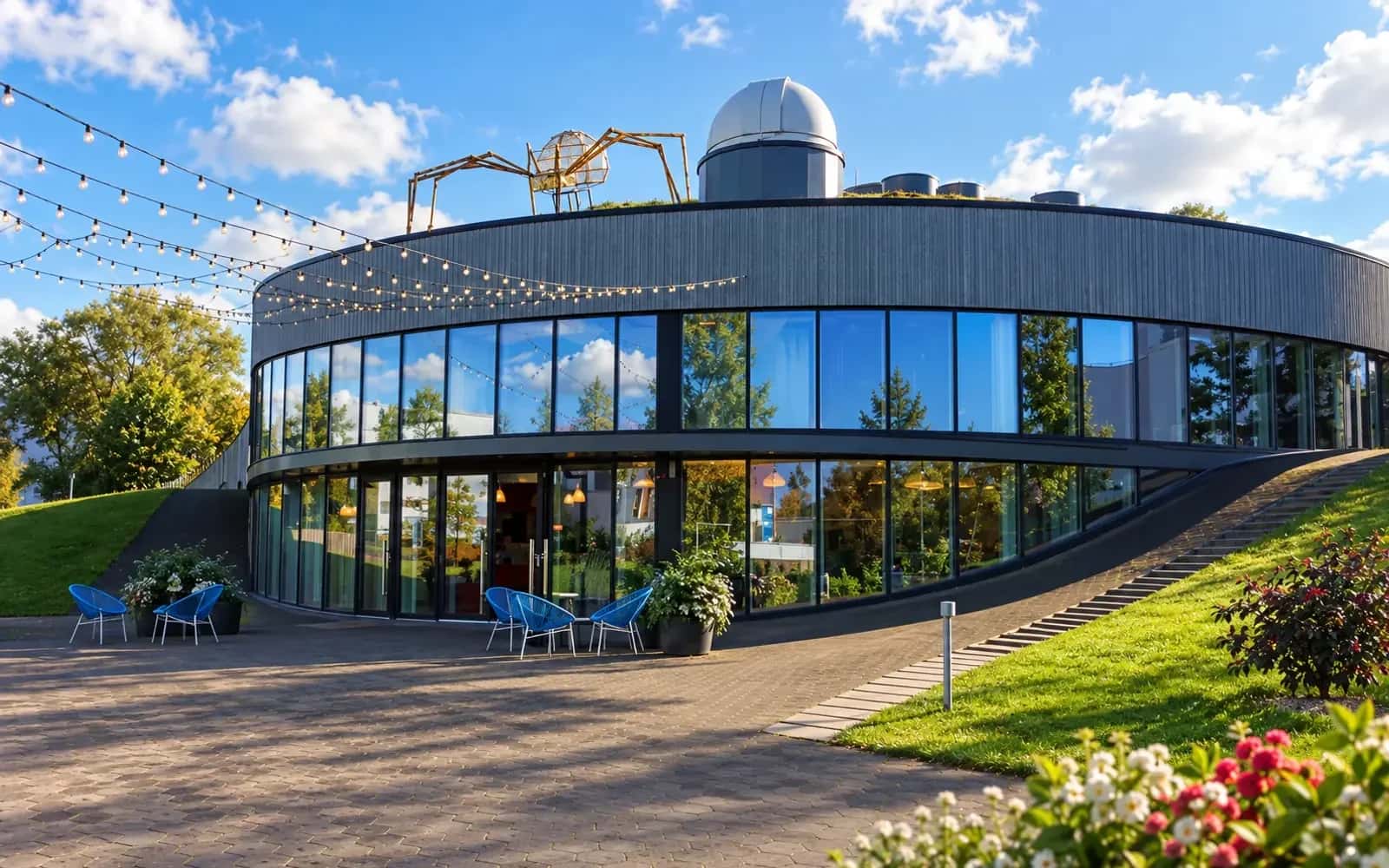
Pernova Nature House is a nature education visitor centre on A. H. Tammsaare Boulevard in Pärnu. In the grass-roofed building you can explore a permanent exhibition of animals, birds and plants, visit the winter garden and discover the sound and film cave. Dome cinema and planetarium shows offer a different angle on nature and outer space. The exhibitions and activity areas suit a family visit; the planetarium programme depends on the day's schedule. The standard day ticket covers the nature house exhibitions and the film shows held during your visit.
A. H. Tammsaare pst 57, Pärnu linn
C. R. Jakobson Farm Museum
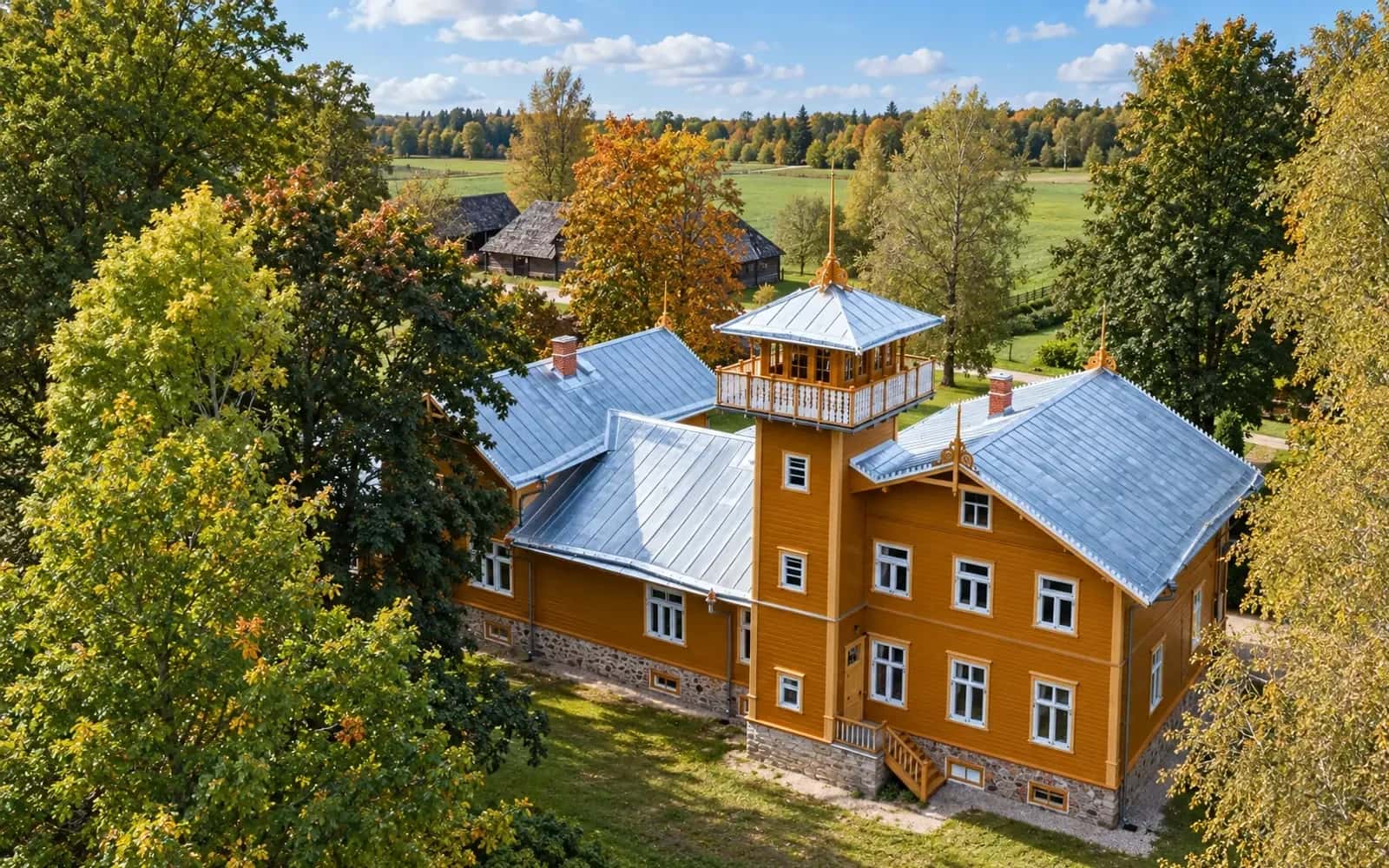
The C. R. Jakobson Farm Museum in Kurgja village, northern Pärnu County, introduces the life of a figure of the national awakening in a working farm setting. In the main house, built to Jakobson's designs, you can follow the story and activities of his family, while outdoors there are historic farm buildings and agricultural work to see. The mill, the sauna house and the stops along the nature trail reveal different sides of 19th-century rural life. The Sakala hiking trail starts near the museum, so a farm visit can be combined with a walk around Kurgja.
Kurgja-Linnutaja talu, Kurgja küla, Põhja-Pärnumaa vald, Pärnu maakond
Nigula Bog Nature Trail
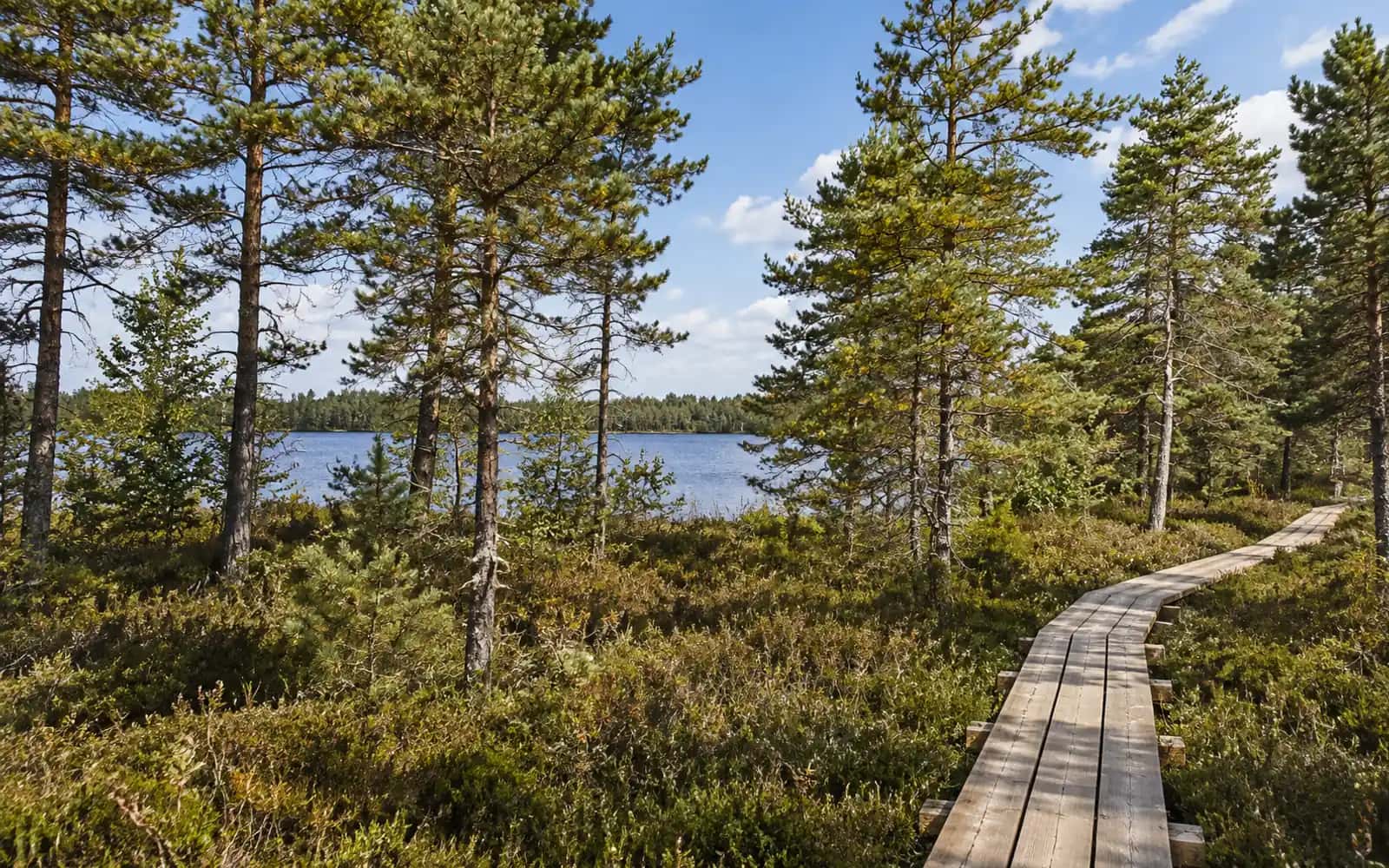
The Nigula Bog Nature Trail is in the Urissaare village area of Häädemeeste Parish, Pärnu County. The six-kilometre out-and-back trail leads through the reserve's forest and across open bog towards the bog island of Salupeaksi. Walking along the boardwalk, you can spot the water of bog pools, bog plants and a landscape that changes noticeably with the seasons. An observation tower offers a higher view of the whole scene. This is protected nature where you must stay on the trail and follow visitor restrictions; swimming in the bog lake is not allowed. The trail is a good choice for a quiet, longer nature outing.
Nigula looduskaitseala 6, Urissaare küla, Häädemeeste vald, Pärnu maakond
Kihnu Lighthouse
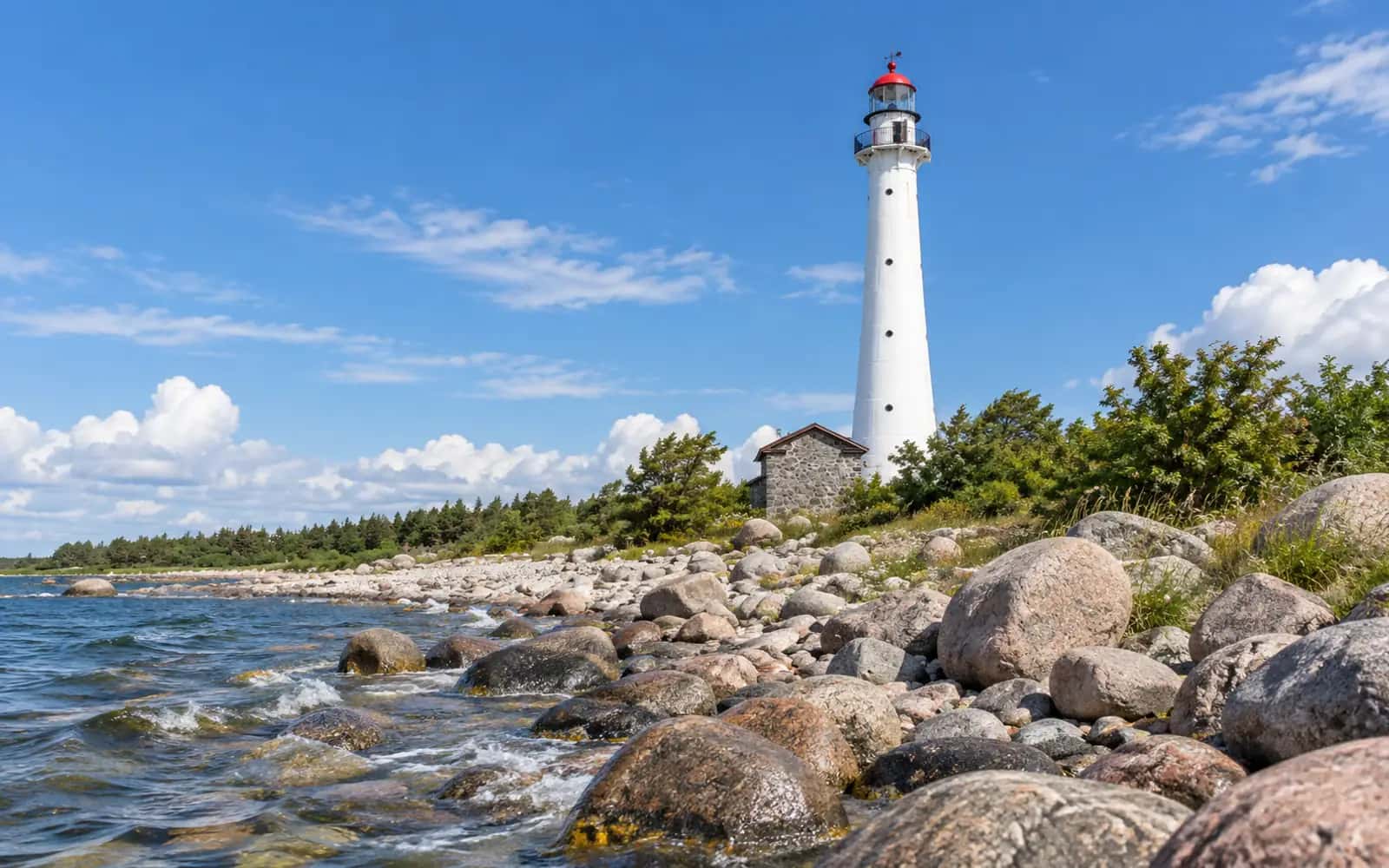
Kihnu Lighthouse is a historic tower with sea views in Rootsiküla village on Kihnu island, Pärnu County. Assembled from cast-iron parts, the white tower was erected at the island's southern tip in 1864. In season you can climb up and look out over the Kihnu coast and the sea; the paraffin store beside the tower recalls the site's earlier work. Outside the summer a visit must be arranged in advance and a separate opening fee is added. Getting to the island means planning around the ferry connection and the weather, so the lighthouse works well as one stop on a full day on the island.
Rootsiküla küla, Kihnu vald, Pärnu maakond
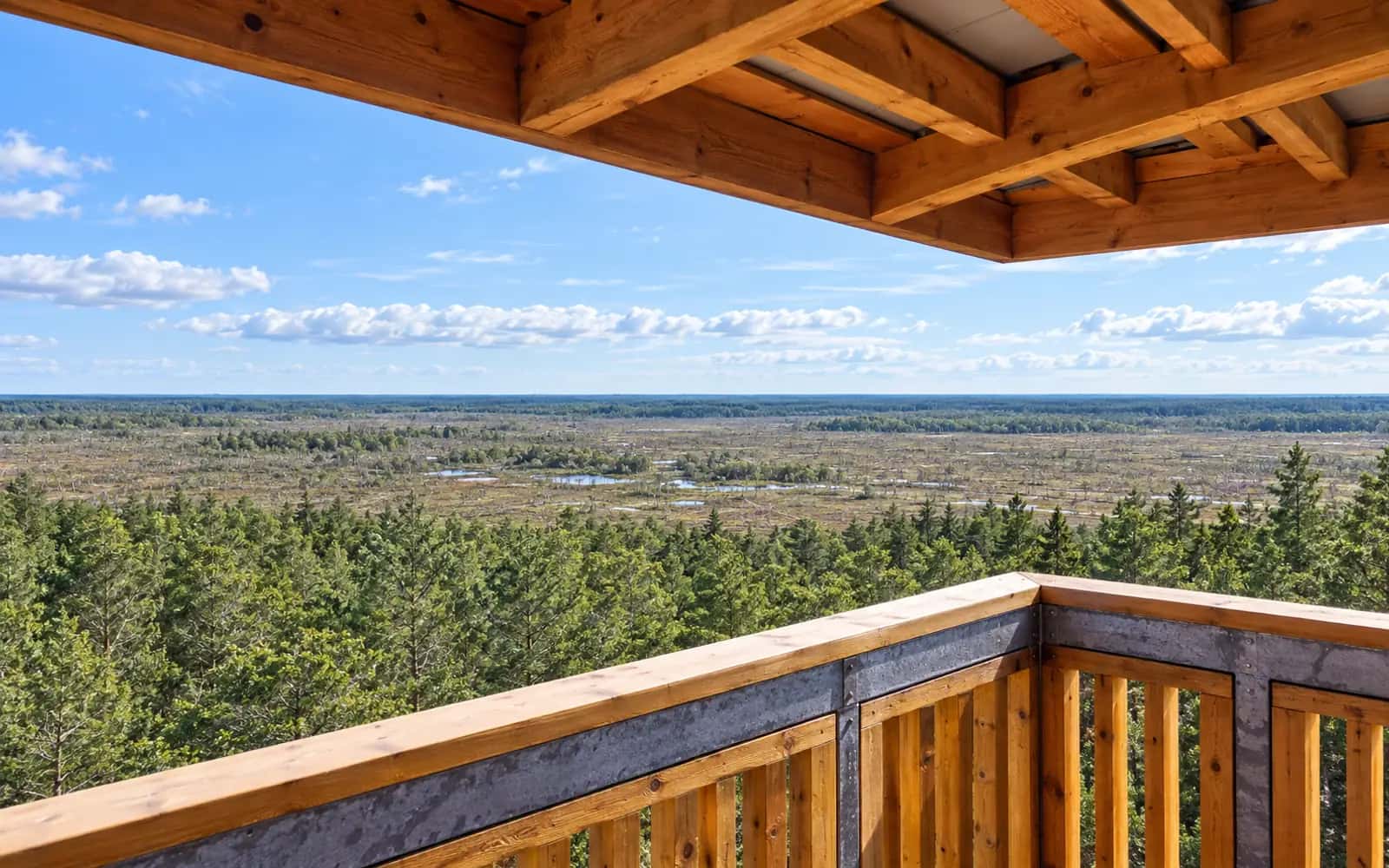
Rannametsa-Tolkuse Nature Trail
The Rannametsa-Tolkuse Nature Trail is a 2.2-kilometre loop near Rannametsa village in Häädemeeste Parish, Pärnu County. It links tall dune pine forest with the open Tolkuse bog, so a short walk shows you two very different landscapes. A boardwalk helps you cross the wet area, and information boards along the trail explain the local nature. From the observation tower on Tornimägi you can see the bog, forests and, in clear weather, Pärnu Bay. The trail starts near the main road; before setting off, check RMK's latest trail information and the weather.
Rannametsa küla, Häädemeeste vald, Pärnu maakond
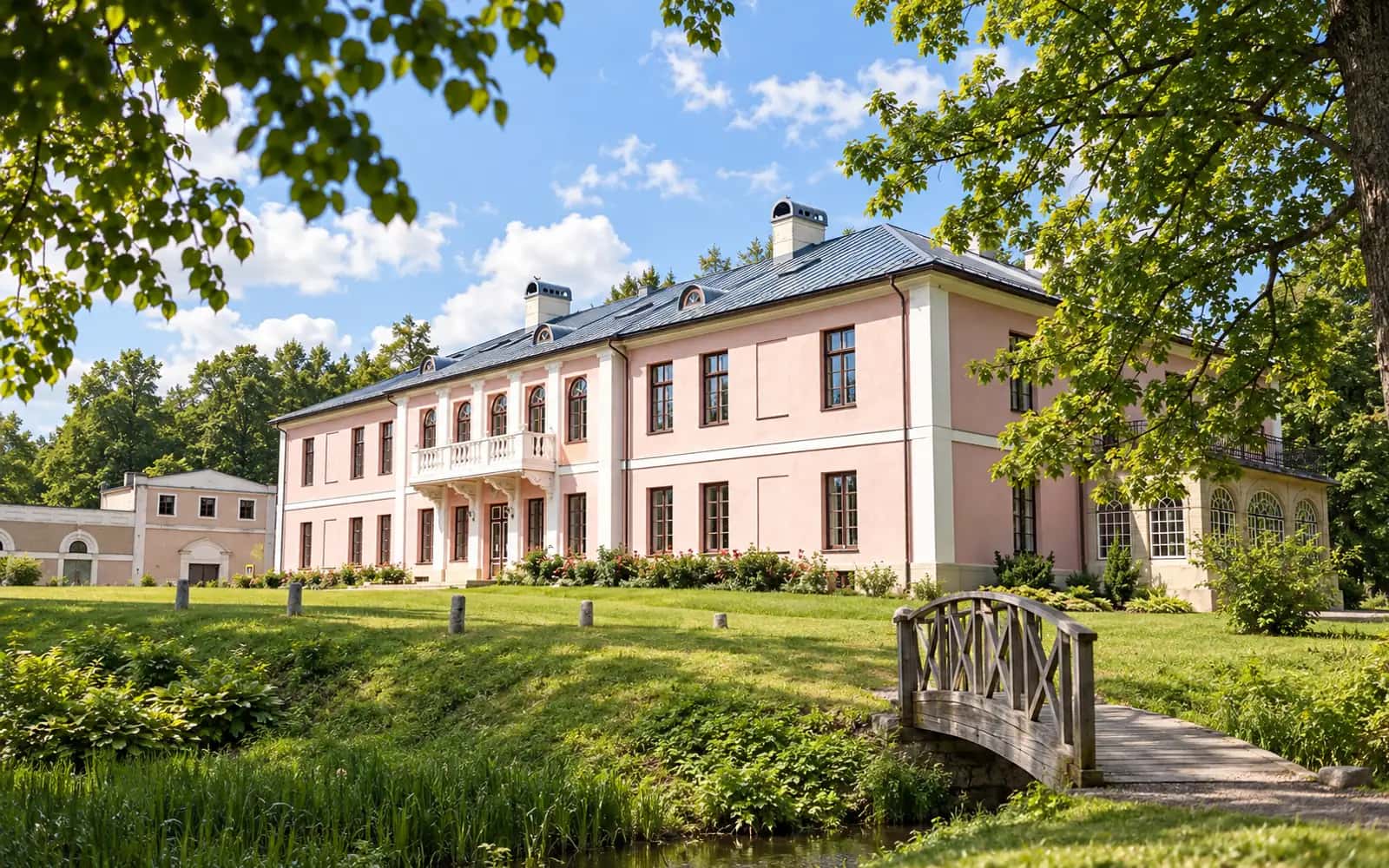
Tõstamaa Manor
Tõstamaa Manor is a historic manor house in the small town of Tõstamaa, part of the city of Pärnu in Pärnu County. A school operates in the pinkish-fronted building, but on an arranged visit you can also learn about the manor's history and see its rooms. Surviving wall and ceiling paintings and an imposing staircase give the interiors a special character. Beside the manor is a protected park with a large old oak. In summer visiting hours are longer than usual; at other times entry must be booked in advance. That makes it a good fit for a day combined with other stops on the Tõstamaa peninsula.
Kalli mnt 13, Tõstamaa alevik, Pärnu linn, Pärnu maakond
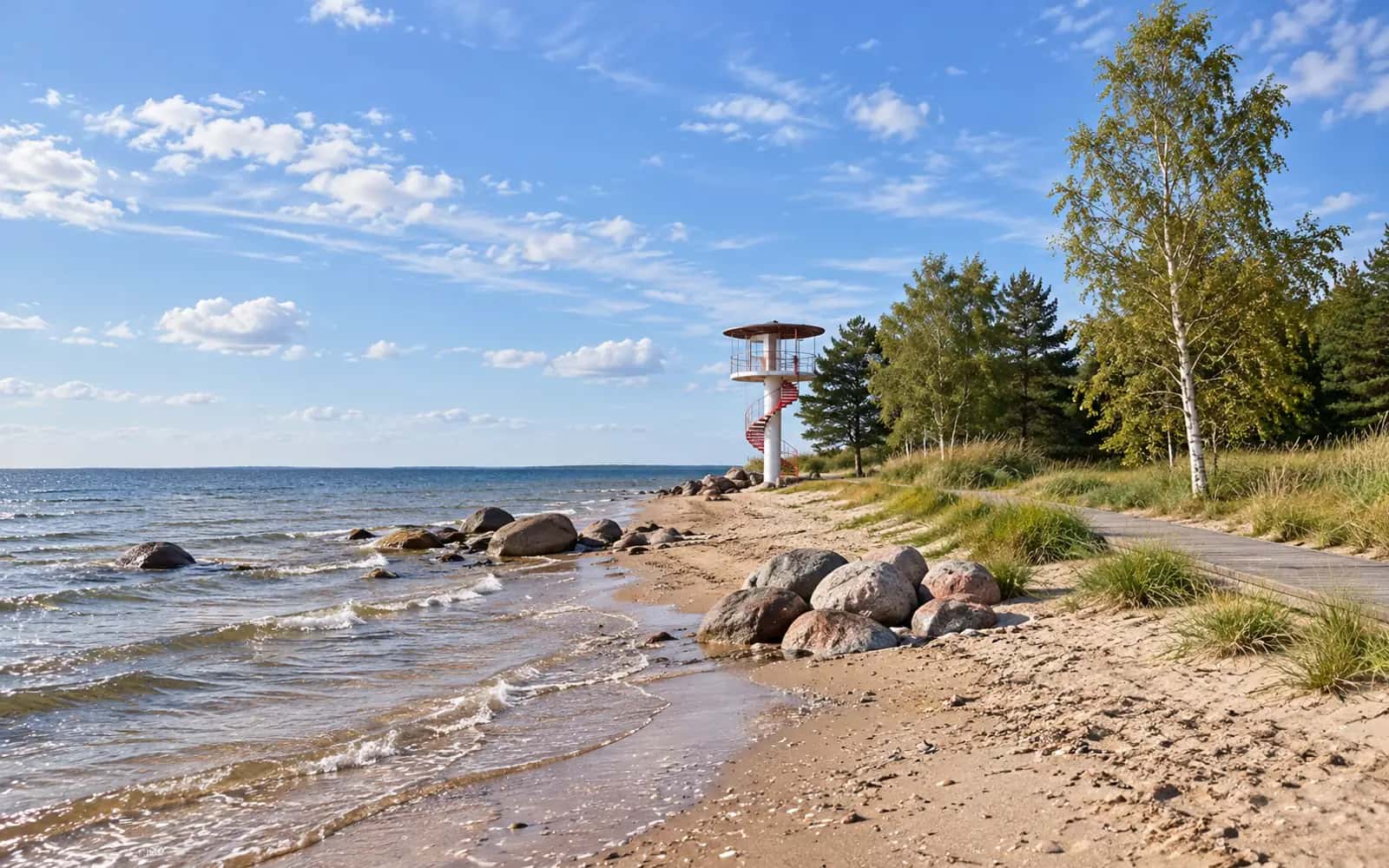
Kabli Beach
Kabli Beach is a sandy beach in Kabli village, Häädemeeste Parish, Pärnu County. Shallow water and a wide shoreline make it a peaceful stop on the Gulf of Riga, where a beach walk can be combined with nature watching. A promenade through the dunes leads towards the sea, and there are picnic facilities and a play area nearby. The Kabli bird station, a nature trail and the visitor centre are in the same area too, but they are separate places to visit. The beach is open around the clock; for beach services and swimming conditions, bear in mind the season and the weather.
Kabli küla, Häädemeeste vald, Pärnu maakond
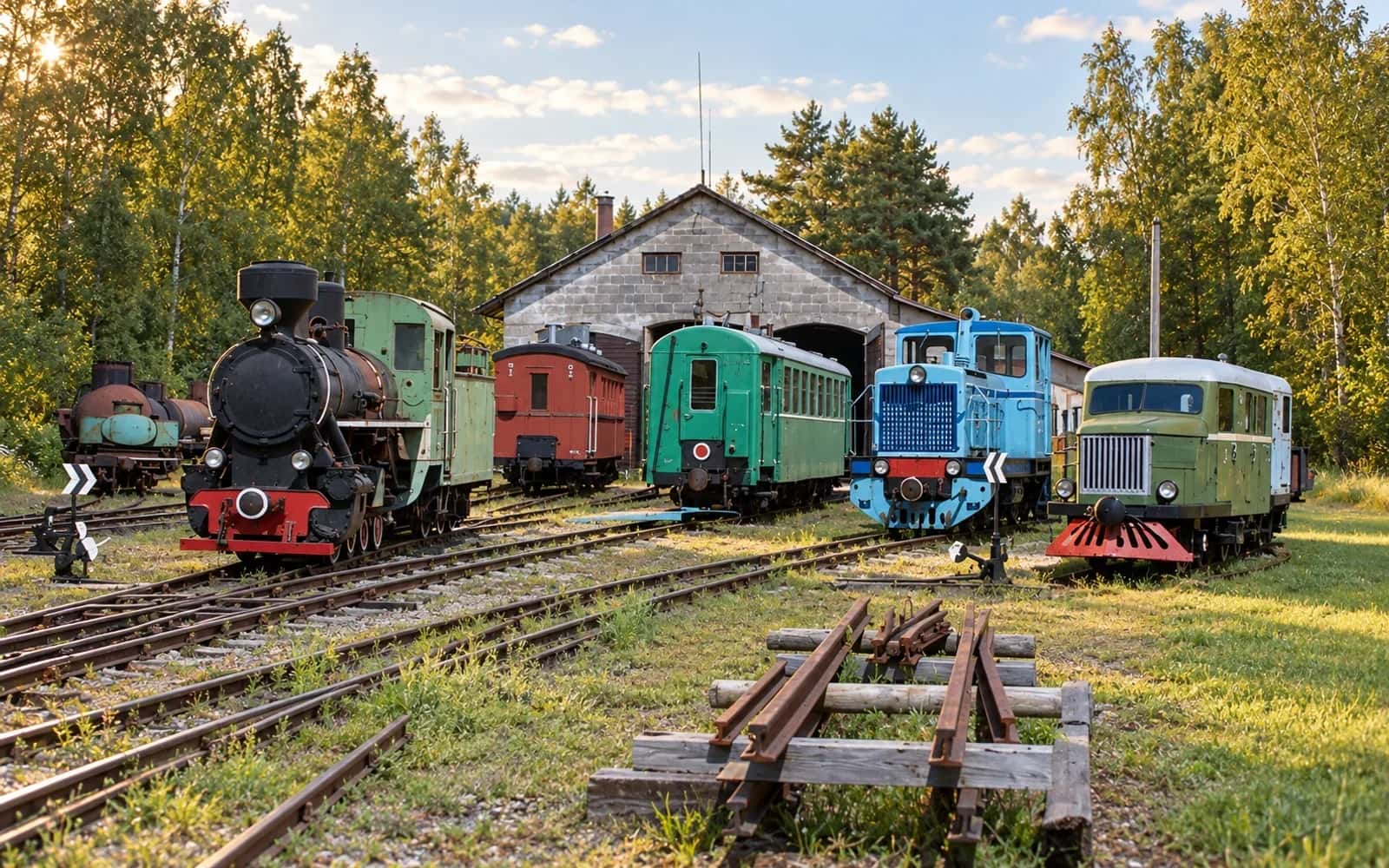
Estonian Museum Railway in Lavassaare
The Estonian Museum Railway in Lavassaare is a museum introducing the history of narrow-gauge railways, located in the small town of Lavassaare in Pärnu County. Situated on the former peat industry site, the outdoor exhibition features dozens of locomotives and carriages, including steam locomotives. Indoors, visitors can examine old photographs, tools, and documents that explain the role of the railway in Estonia's transport history. During the summer season, museum train rides are also organized, but their availability must be checked separately. The exhibition is suitable for engineering enthusiasts and families, offering something completely different from the museums in downtown Pärnu.
Ülejõe tn 1, Lavassaare alev, Pärnu linn, Pärnumaa
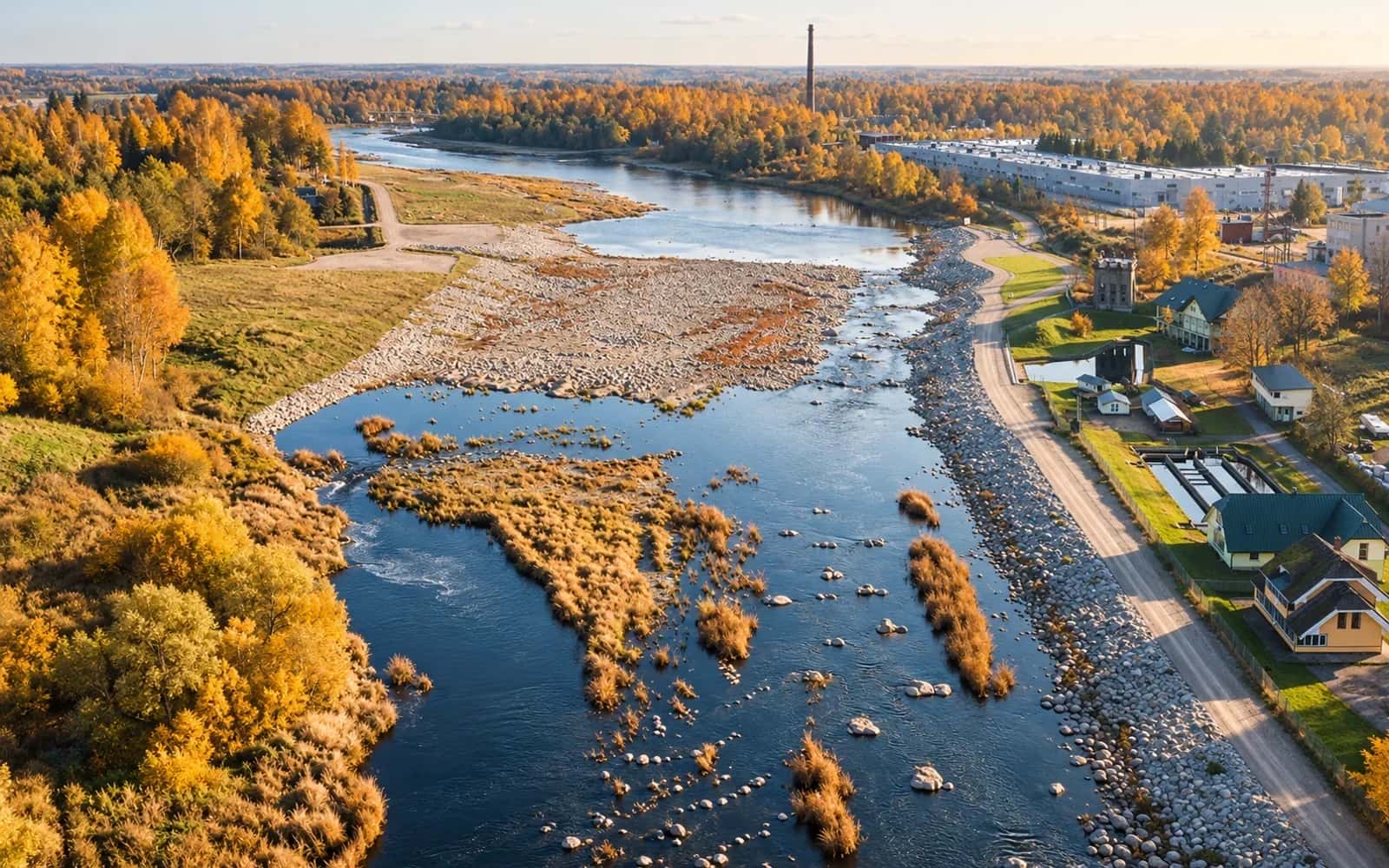
Sindi rapids
Sindi rapids are located in Pärnu County in the town of Sindi on the Pärnu River, formed as a river section created in place of the former dam. Following the removal of the dam, the fish migration route was restored and new spawning areas were created. The rapids offer an opportunity to observe moving water and the changed river landscape from the bank. It is also used for practicing slalom canoeing and other water sports, but the strong current requires equipment and experience. Visitors can explore the location without entering the water. The rapids are a nature and water sports site, not the Sindi Museum or the nearby health trail.
Kalamaja tee 4, Sindi linn, Tori vald, Pärnumaa
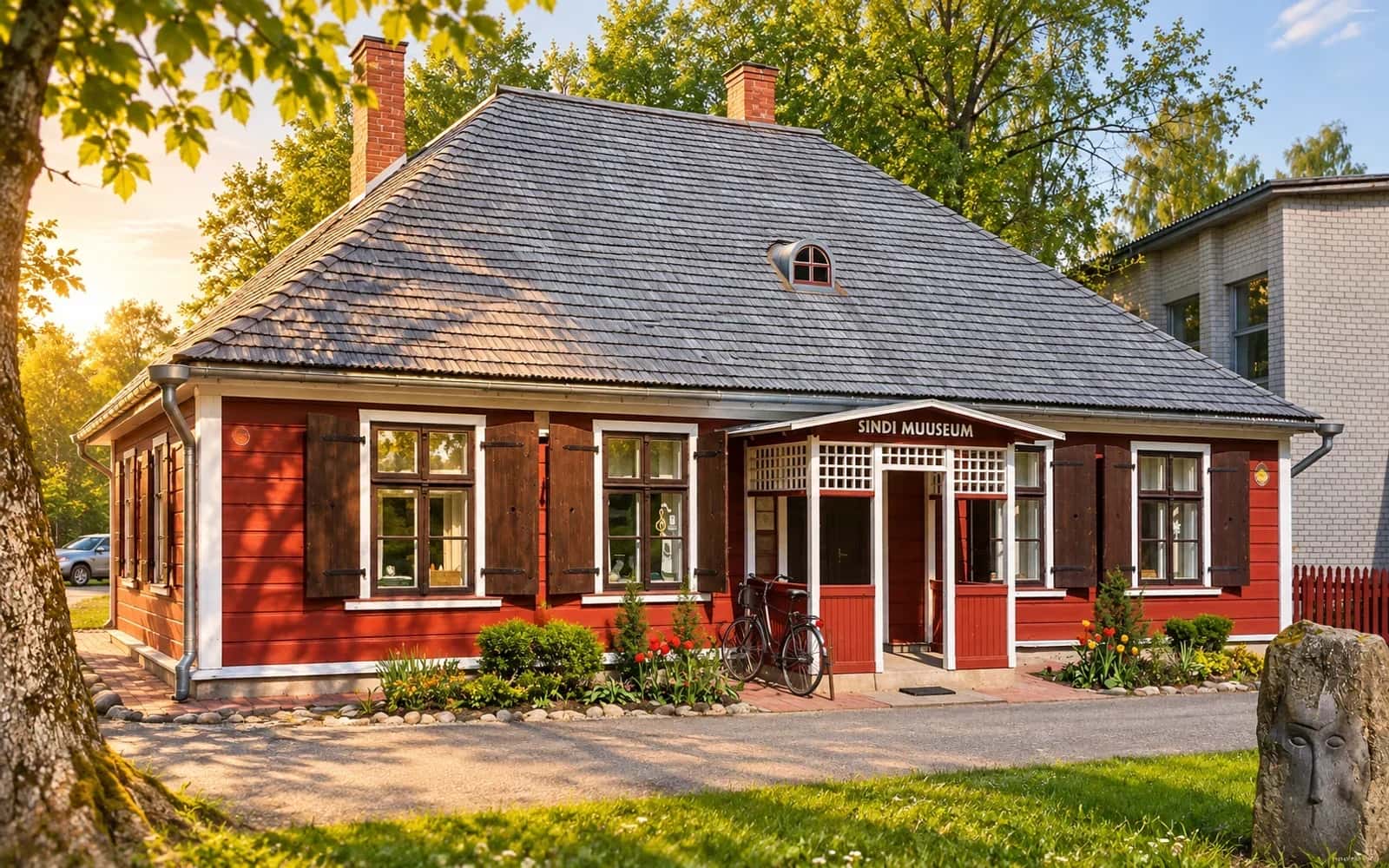
Sindi Museum
Sindi Museum is located in Pärnu County, in the town of Sindi on Pärnu highway in a historic small building. The museum introduces the history of the textile industry and the Sindi factory, the lives of the workers, and the development of the town. The exhibitions feature items, documents, and photos that tell about local school, sports, and community life. Additionally, 20th-century handicrafts and domestic tools can be seen. The building itself is connected to the history of early cooperative activities in Estonia. The museum is a standalone historical attraction, not part of the Sindi health trail or riverside park.
Pärnu mnt 26a, Sindi linn, Tori vald, Pärnumaa
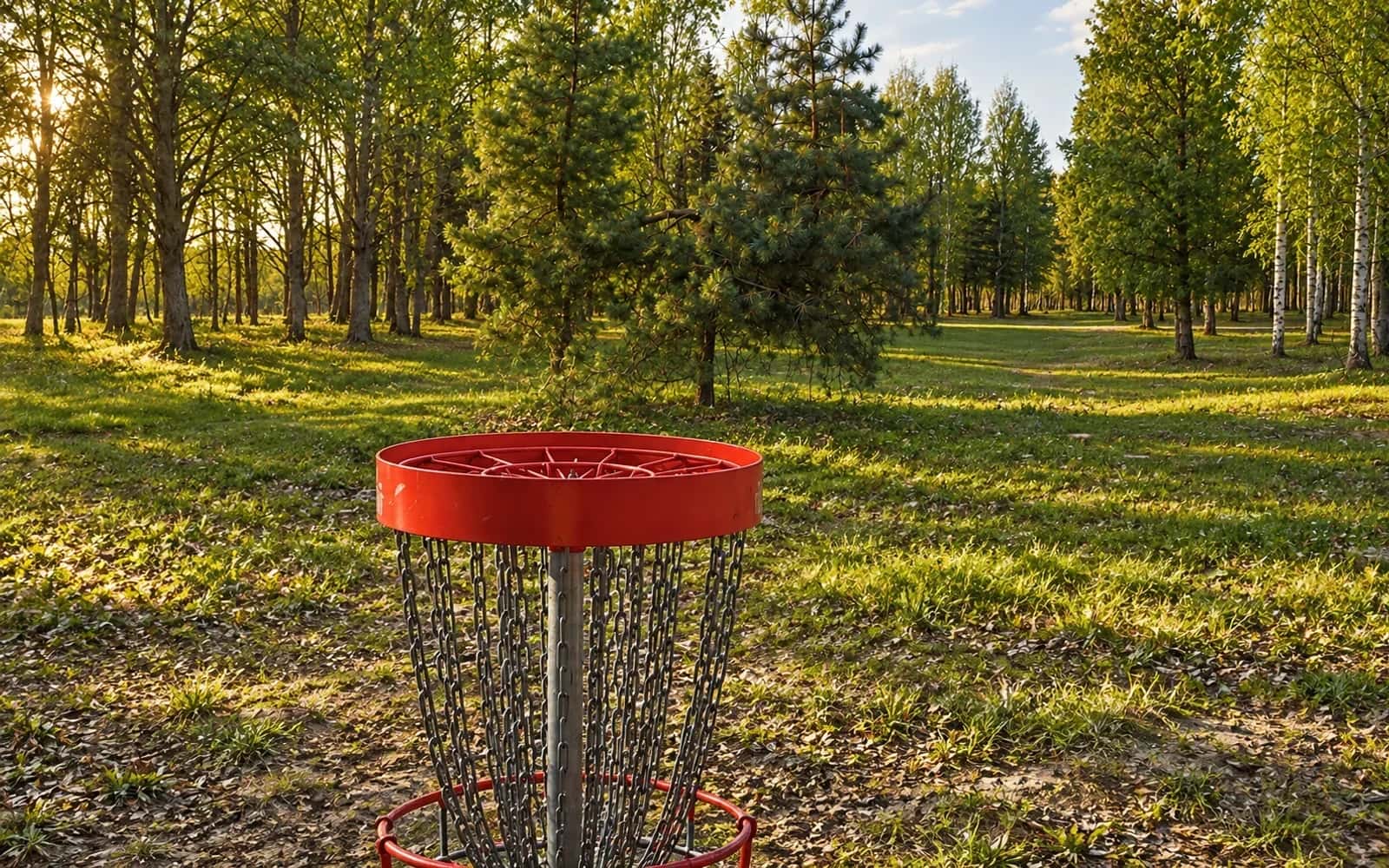
Sindi health trail and disc golf course
The Sindi health trail and disc golf course is located in the town of Sindi in Pärnu County and runs partly through the greenery of Sõpruse Park. Here you can walk, run, ski in winter, and play disc golf. There are trails of various lengths for movement, the shorter of which is lit in the evenings. The eighteen-basket disc golf course offers athletic activities for locals and visitors alike. The proximity of the river adds open views to the route, but the trail must be used with consideration for other visitors. This is a separately established sports infrastructure, not the Sindi rapids or a history museum.
Pärnu mnt 12d, Sindi linn, Tori vald, Pärnumaa
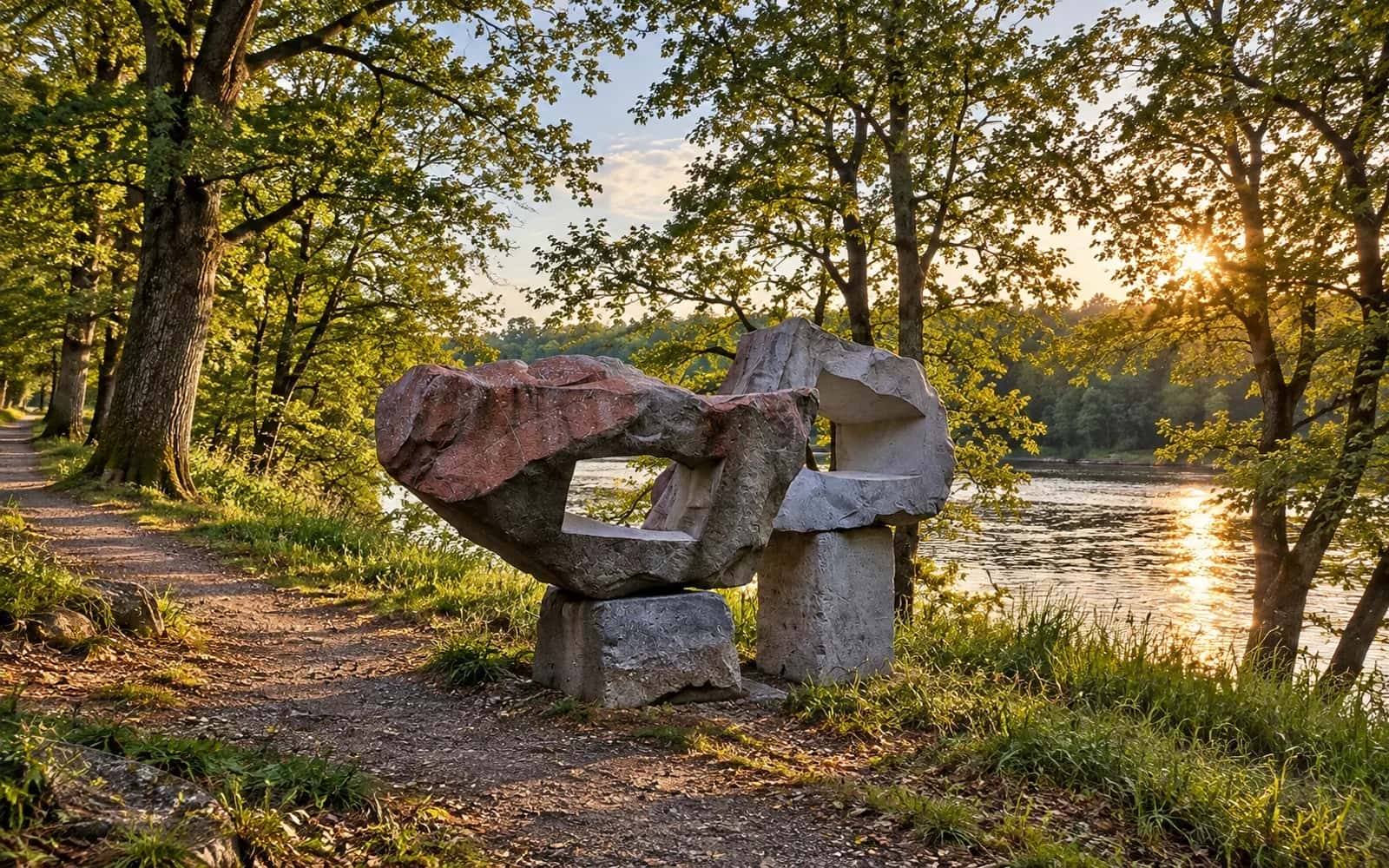
Stone Age Study Trail near Sindi-Lodja Bridge
The Stone Age study trail is located in Pärnu County, in the small town of Paikuse near the Sindi-Lodja bridge, at the confluence of the Reiu and Pärnu rivers. Approximately four hundred meters long, the trail introduces the region's ancient settlements and archaeological finds. Information boards feature QR codes that open additional explanations about Stone Age life. There are resting spots by the river and an opportunity to pause and observe the water landscape. The trail combines a short walk with discovering local ancient history. It is situated in Paikuse, not in downtown Pärnu, and is a separate site from the sports trails of the town of Sindi.
Paikuse alev, Pärnu linn, Pärnumaa
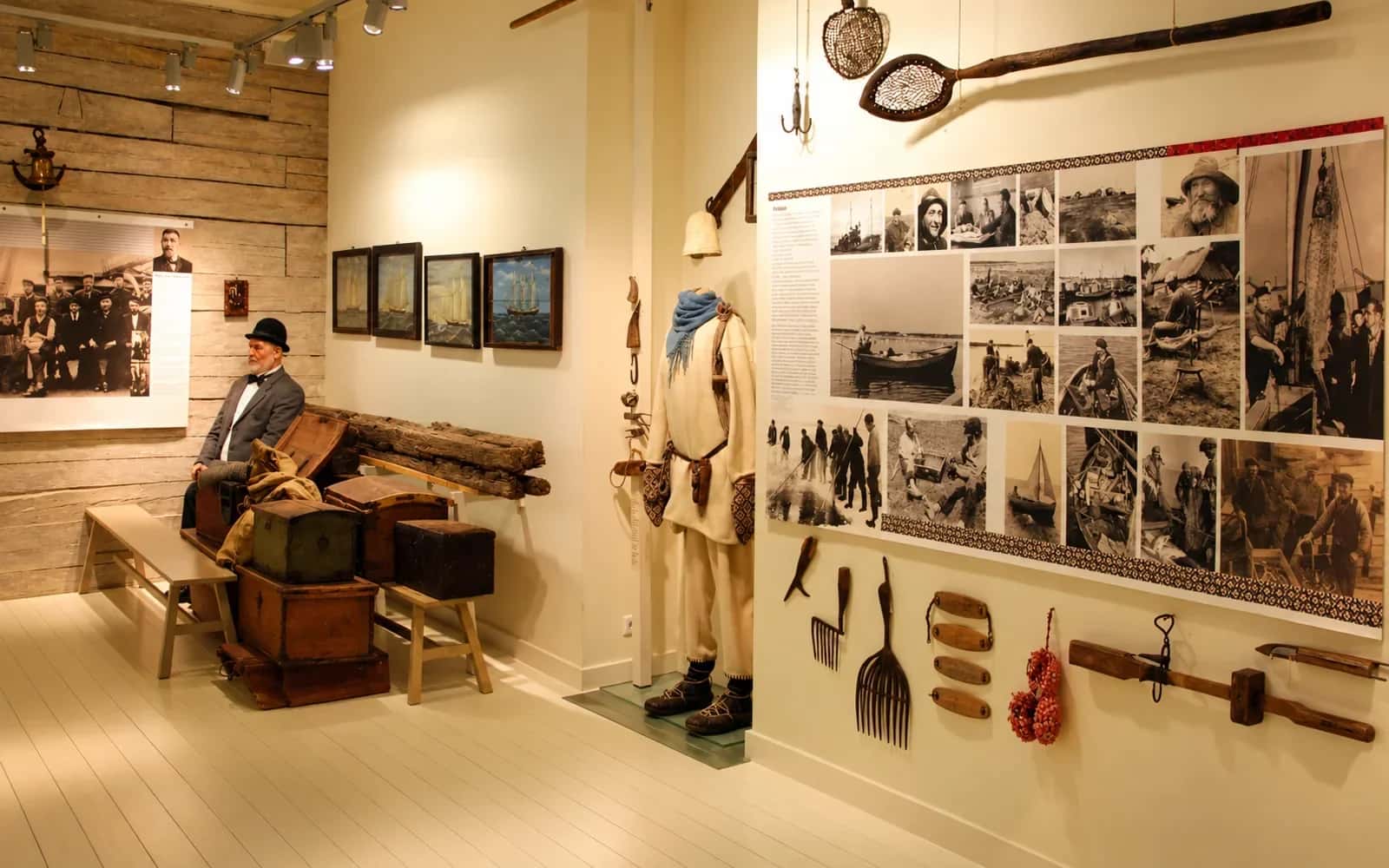
Kihnu Museum
Kihnu Museum is located in Linaküla on Kihnu Island, in Pärnu County, in a former school building. The exhibition introduces the daily life of the island's people, seafaring, handicrafts, and folk costumes, and helps to understand Kihnu's living cultural heritage. The museum also features works by local folk artists and stories of Kihnu's famous people. If desired, one can participate in a guided tour or workshop; the building also has a souvenir shop offering local handicrafts. When planning your visit, consider the ferry connection from Munalaiu harbor and check the schedule for that day before setting off.
Linaküla küla, Kihnu vald, Pärnu maakond
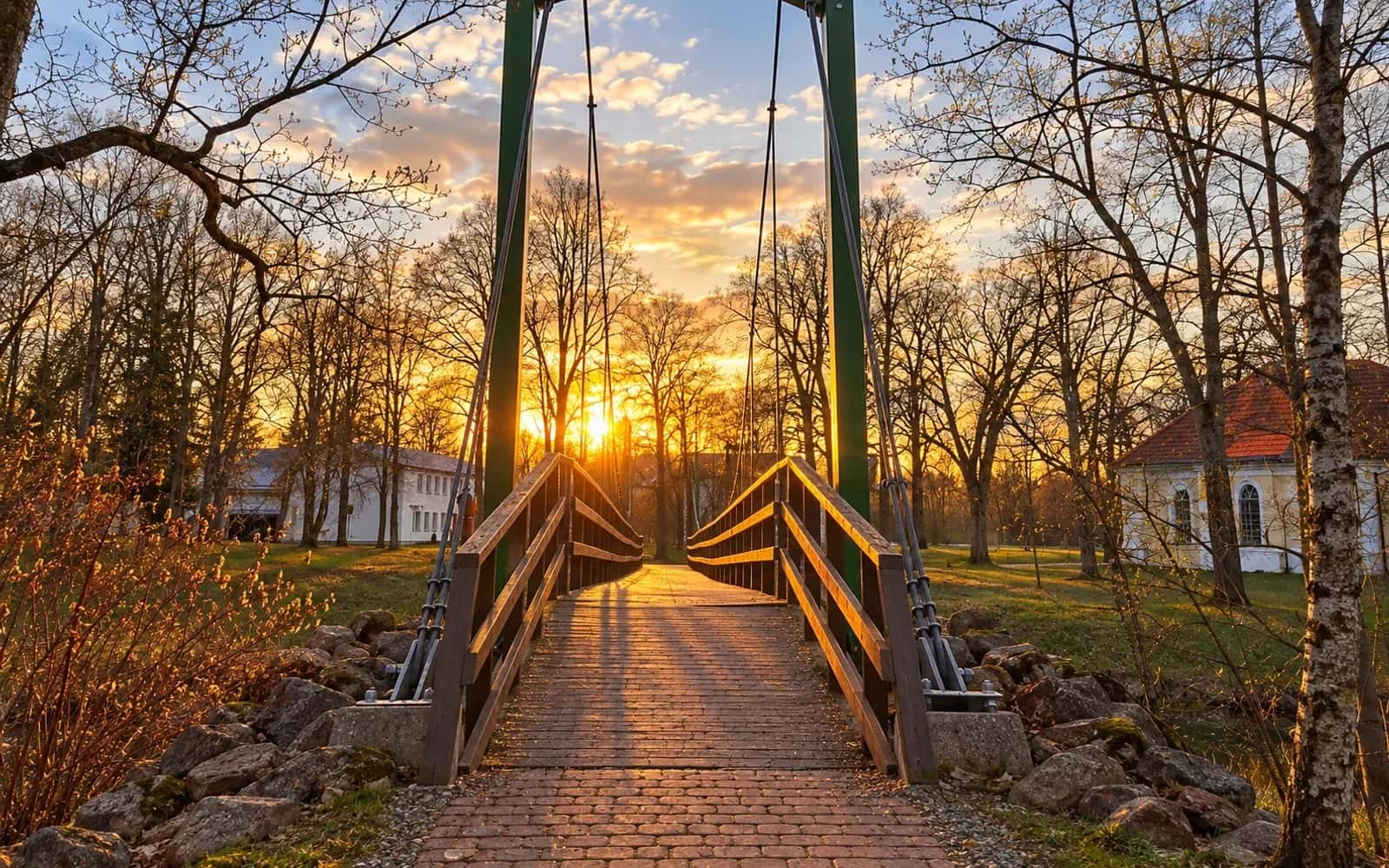
Audru Manor Complex
The Audru Manor Complex, located in Pärnu County, is a historical manor dating back to the early 19th century, representing a typical ensemble of 18th-century manor buildings. The complex includes 14 protected buildings that are relatively well preserved. Although the manor house was destroyed in World War II, several other buildings have survived, including a stone barn with a high gable roof and a grain distillery. The manor house hosts a local museum and library. The estate is surrounded by a beautiful park where visitors can enjoy nature and the Audru River with its four bridges. It is a great place to explore local history and architecture.
Pärna allee 14, Audru alevik, Pärnu linn, Pärnu maakond
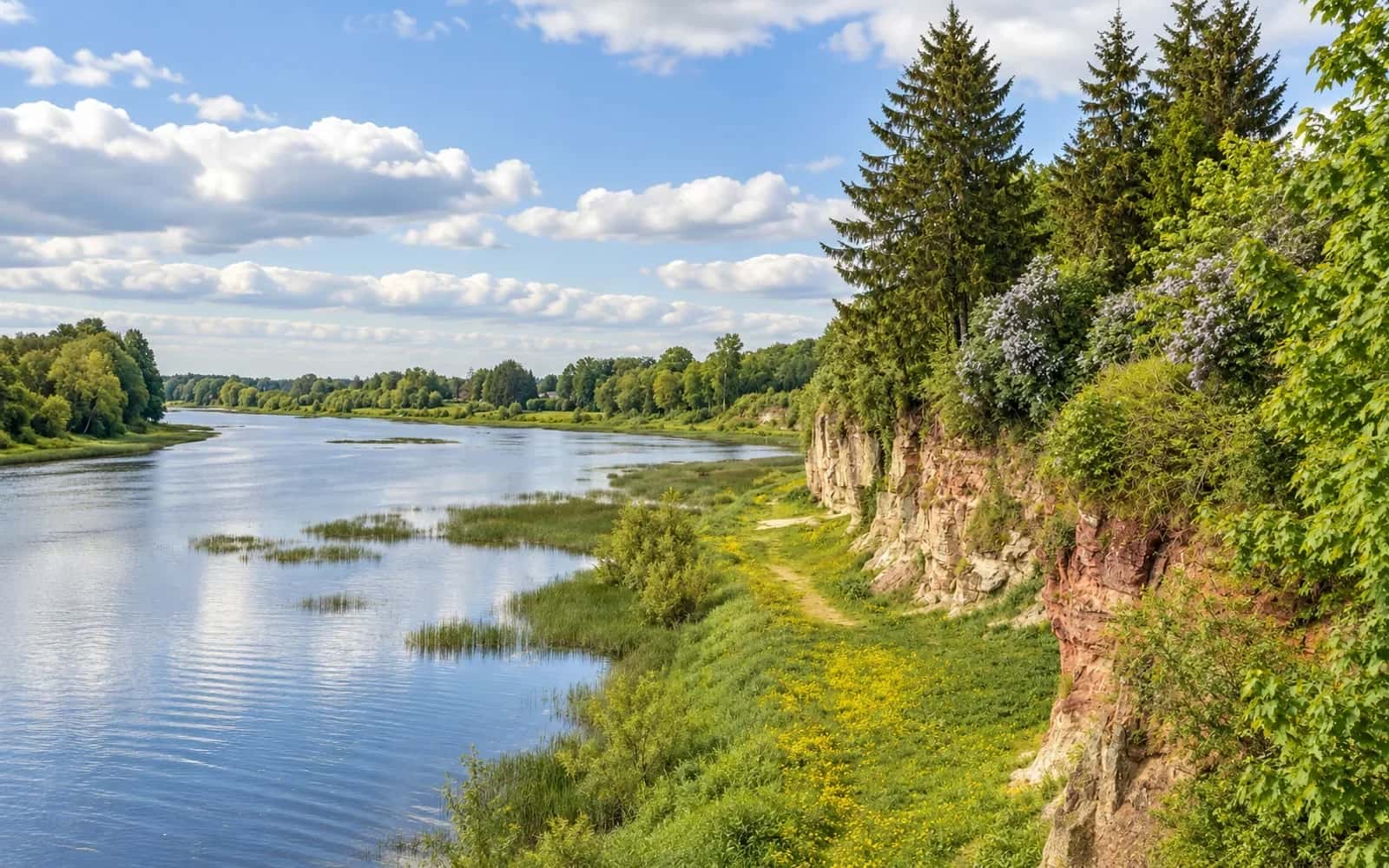
Tori Hell
Tori Hell is a cave on the Devonian sandstone cliff of the Pärnu River, located in the village of Muraka in Tori Parish, Pärnu County. Spring water once carved a passage, around which many local legends formed. The cave entrance was previously about six meters wide, but a ceiling collapse in 1908 and an entrance collapse in 1974 changed the appearance of the site. Nowadays, it is not possible to enter the cave. Stairs descend from the cemetery gate to a viewpoint where one can see the riverbank and sandstone cliff and read about the history of the place. During slippery times, one should move carefully on the steps.
Muraka küla, Tori vald, Pärnu maakond
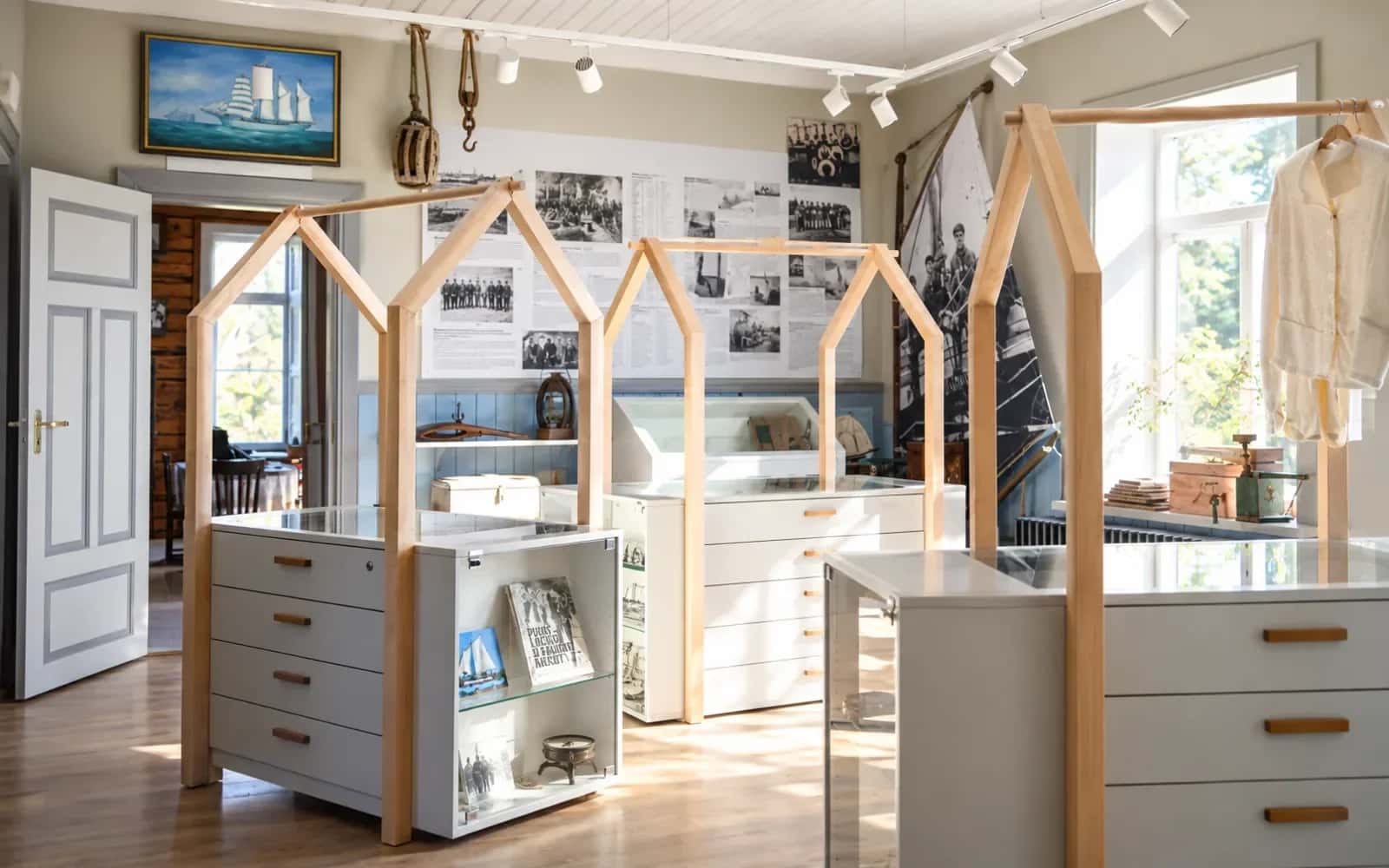
Häädemeeste Museum
Häädemeeste Museum is located in Pärnu County and is an inspiring cultural and heritage center that showcases the unique history of the Häädemeeste region. The museum highlights the rich cultural heritage of the area, from fishing and sailing to church, school, and community movements. Visitors can dive into centuries past by exploring interesting and practical items from farmhouses that reflect the living and working conditions of rural people about a hundred years ago. It is a great place to learn about Estonian history, the heritage of Pärnu County, and the life of coastal communities. The museum also offers meaningful guided tours that highlight details you might not notice yourself. The wisdom of Häädemeeste, that "Life must be and the fire must burn", lives on in the museum, providing visitors with a meaningful experience.
Pärnu mnt 13, Häädemeeste alevik, Häädemeeste vald, Pärnu maakond
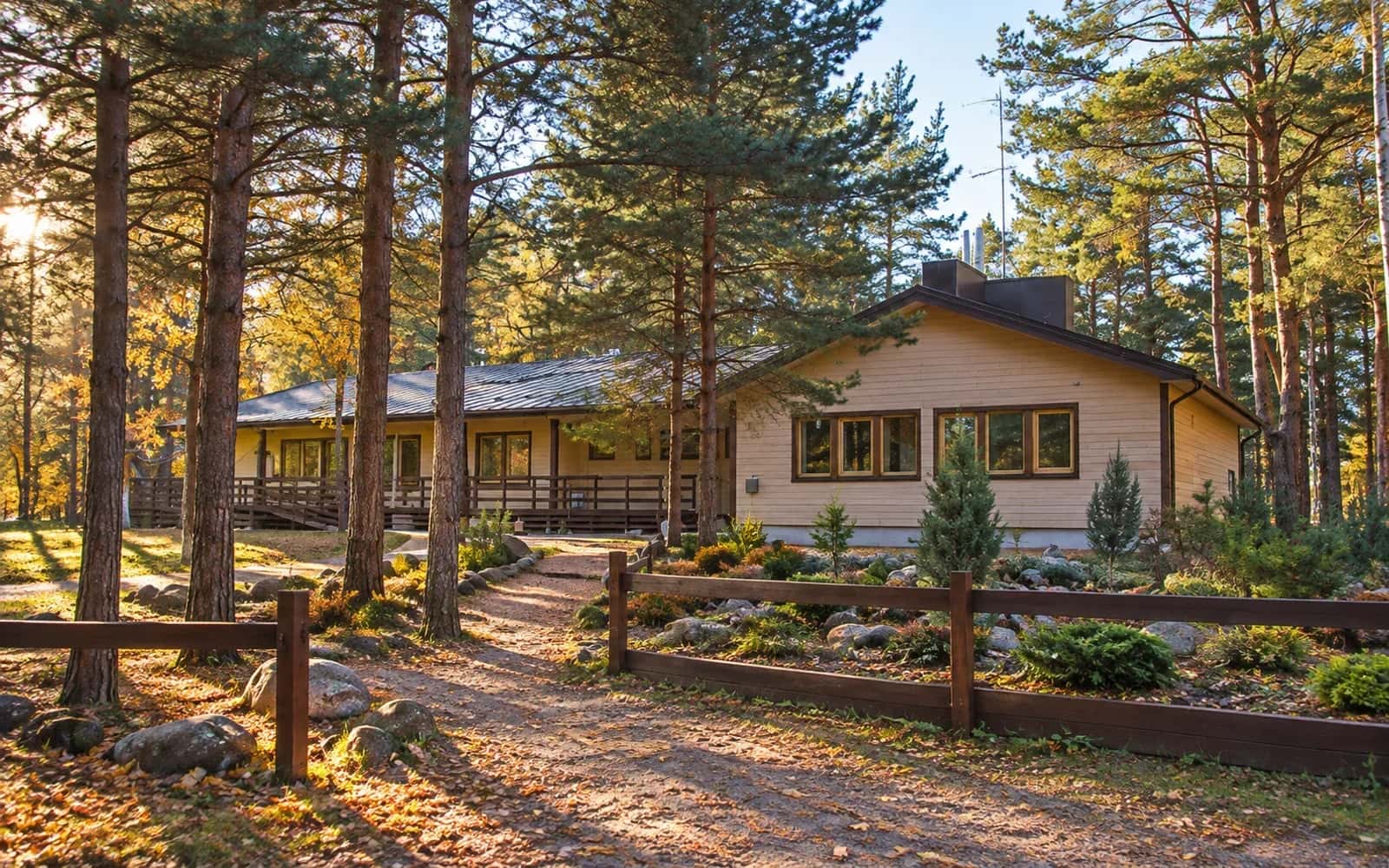
Kabli Visitor Centre
Kabli Visitor Centre is located in a seaside pine forest in Häädemeeste municipality, Pärnu County. Its RMK exhibition introduces the forests, bogs, coastal meadows and migrating birds of southern Pärnu County. Visitors can ask about local hiking routes and follow the nearby Kabli nature study trail. Priivitsa campfire site is close by. In autumn, the area offers opportunities to watch migrating birds and learn about bird ringing. Nature education programmes are offered for children and adults; check current opening hours on the RMK website before visiting.
Kabli küla, Häädemeeste vald, Pärnu maakond
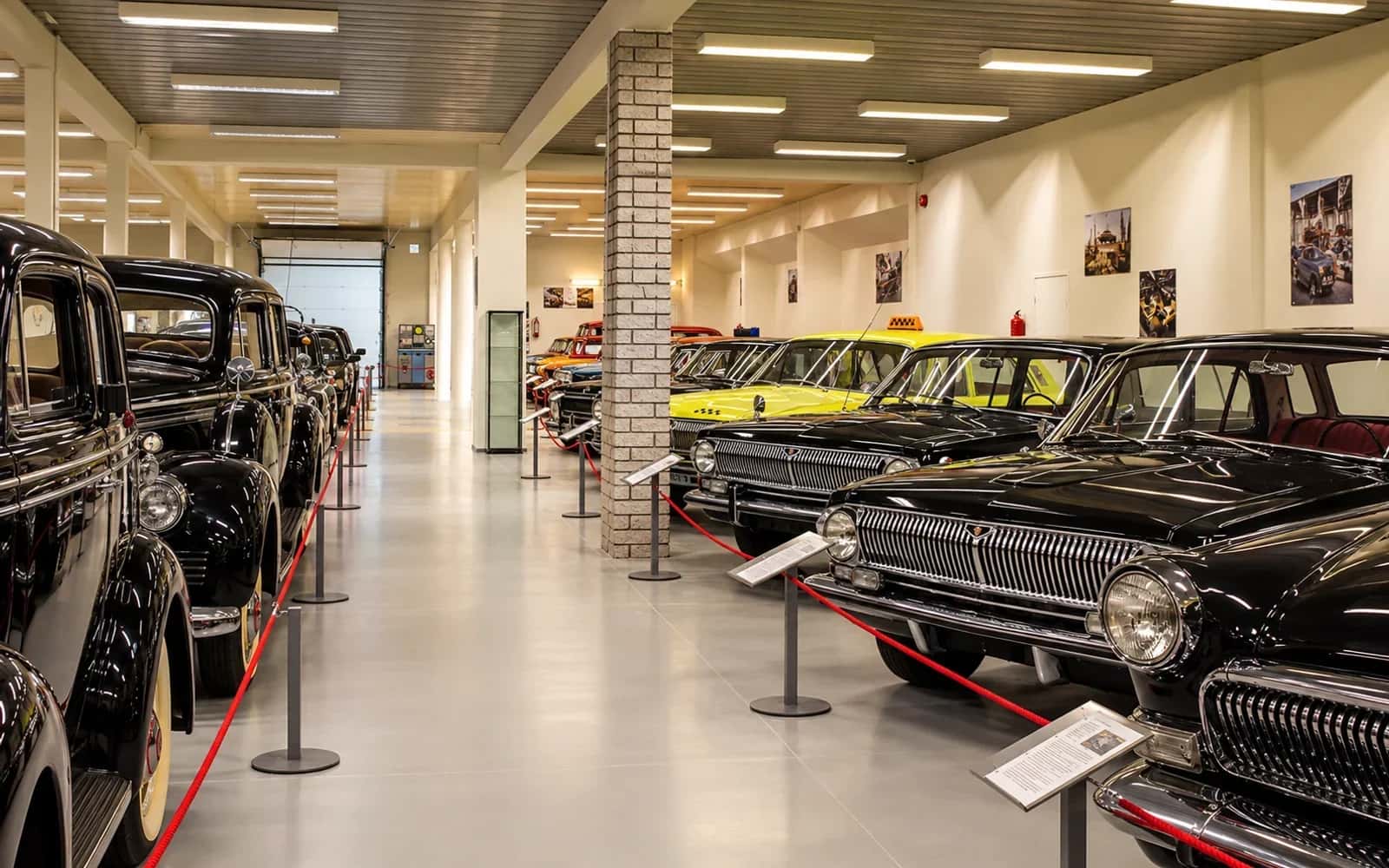
Car Museum
The Car Museum is a technology museum in Loomse village beside the Via Baltica highway, focusing on the history of cars in Estonia and the world. The Halinga museum’s exhibition features more than 80 vehicles from different manufacturers: cars driven in Estonia during the Soviet era, European and American classics and pre-war rarities. There is also a separate collection of model cars, and the museum’s collection keeps growing. A 1963 Rambler on display is linked to Paul Keres. The museum is at kilometre 103 of the Tallinn–Pärnu road and makes a good independent stop in Pärnu County.
Muuseumi, Loomse küla, Põhja-Pärnumaa vald, Pärnu maakond
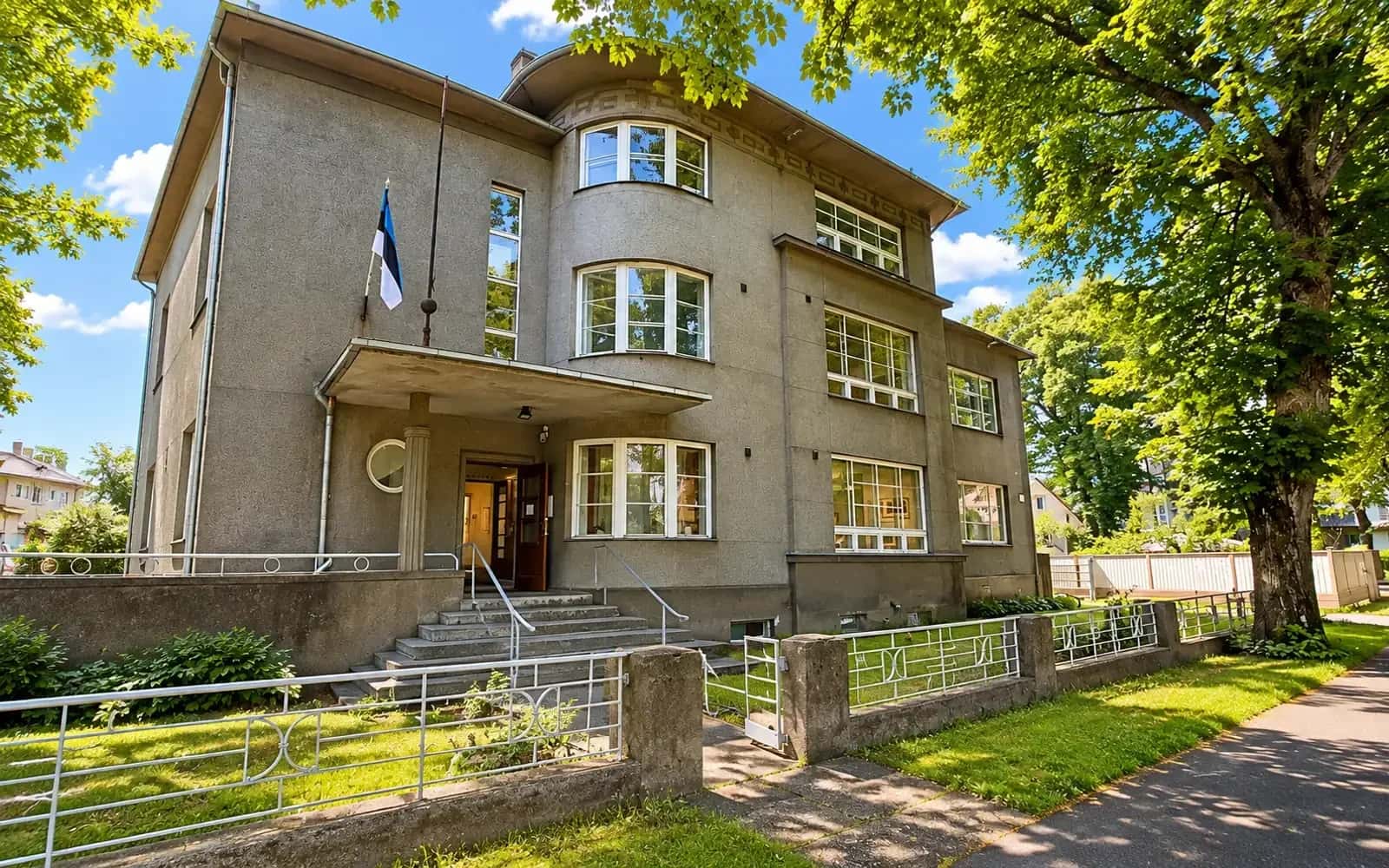
Pärnu City Gallery — Artists’ House
Pärnu City Gallery — Artists’ House is a contemporary art exhibition and creative centre on Nikolai Street in Pärnu Old Town. A functionalist villa from the 1930s houses an exhibition hall, a project space, artists’ studios and residency rooms. The gallery programme changes throughout the year, and besides exhibitions the house hosts cultural events and courses. At one address, visitors can see exhibitions curated by Pärnu City Gallery and get to know a building that has been a permanent home for local art life since 2006.
Nikolai 27, Pärnu 80014
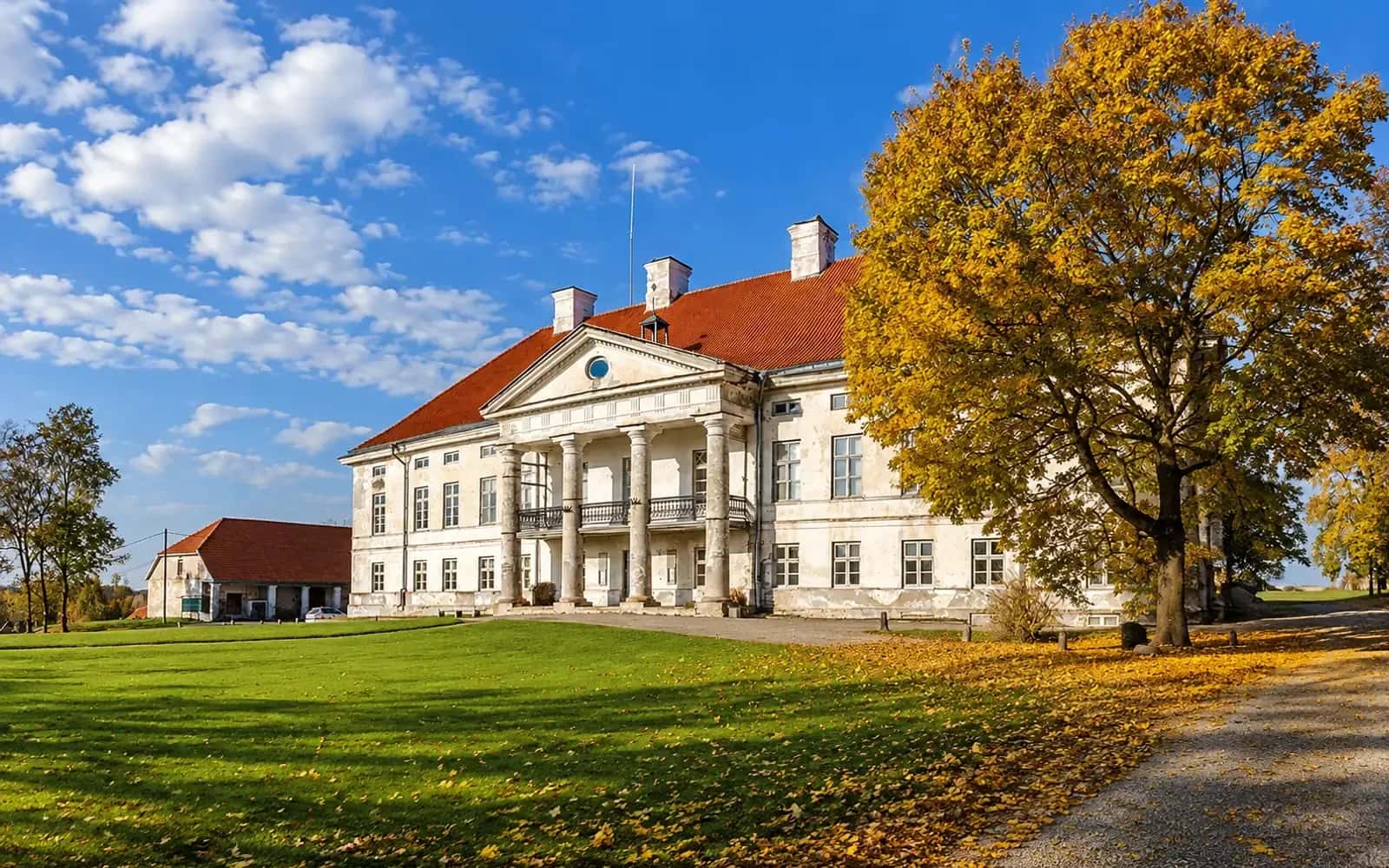
Lihula Museum
Lihula Museum is housed in the main building of Lihula manor on Linnuse tee and presents the history of Lihula and southern Lääne County. The permanent exhibitions cover Baltic German cultural history, local folk costumes and floral embroidery, Lihula’s silversmiths and people connected with the area; the museum also covers archaeological research at Lihula castle. Completed in 1840, the manor house provides a distinctive setting for the history exhibitions, and together with the nearby castle hill the museum makes a rewarding stop in Lihula’s historic centre.
Lihula mõis, Linnuse tee 1, Lihula linn, Lääneranna vald, 90303 Pärnu maakond
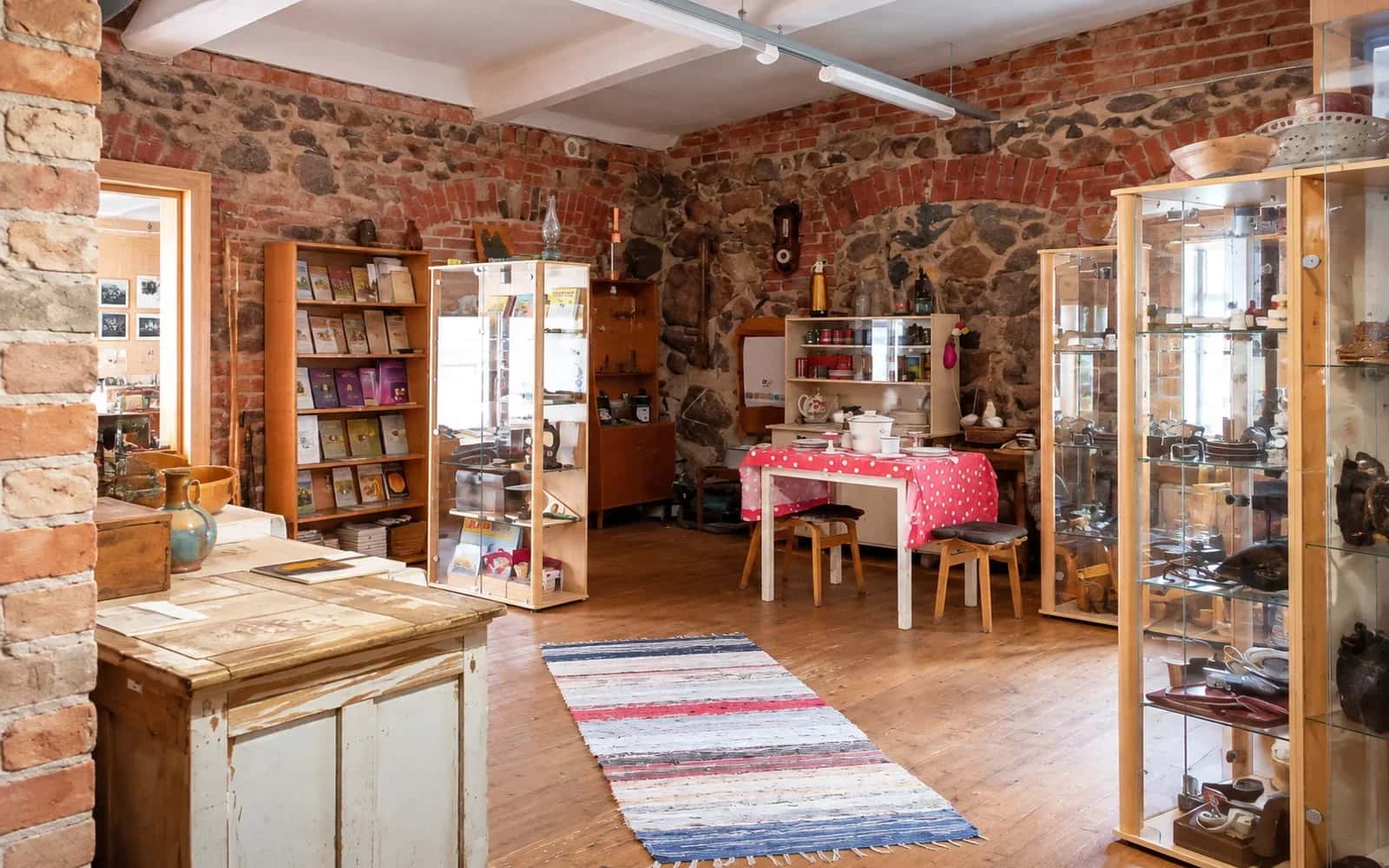
Seljametsa Museum
Seljametsa Museum is a local history museum in the former Pustuski dairy in Seljametsa village, presenting the history and cultural heritage of the Paikuse area. The collections and exhibitions of the museum, founded in 2001, include work and household tools, furniture, everyday objects, school textbooks, books and local handicrafts. The museum has also received items from people in the surrounding area, so the exhibition is closely tied to the story of the local community. In addition to regular visits, guided tours and museum lessons with workshops are offered.
Seljametsa kool/3, Seljametsa küla 86601, Pärnu linn
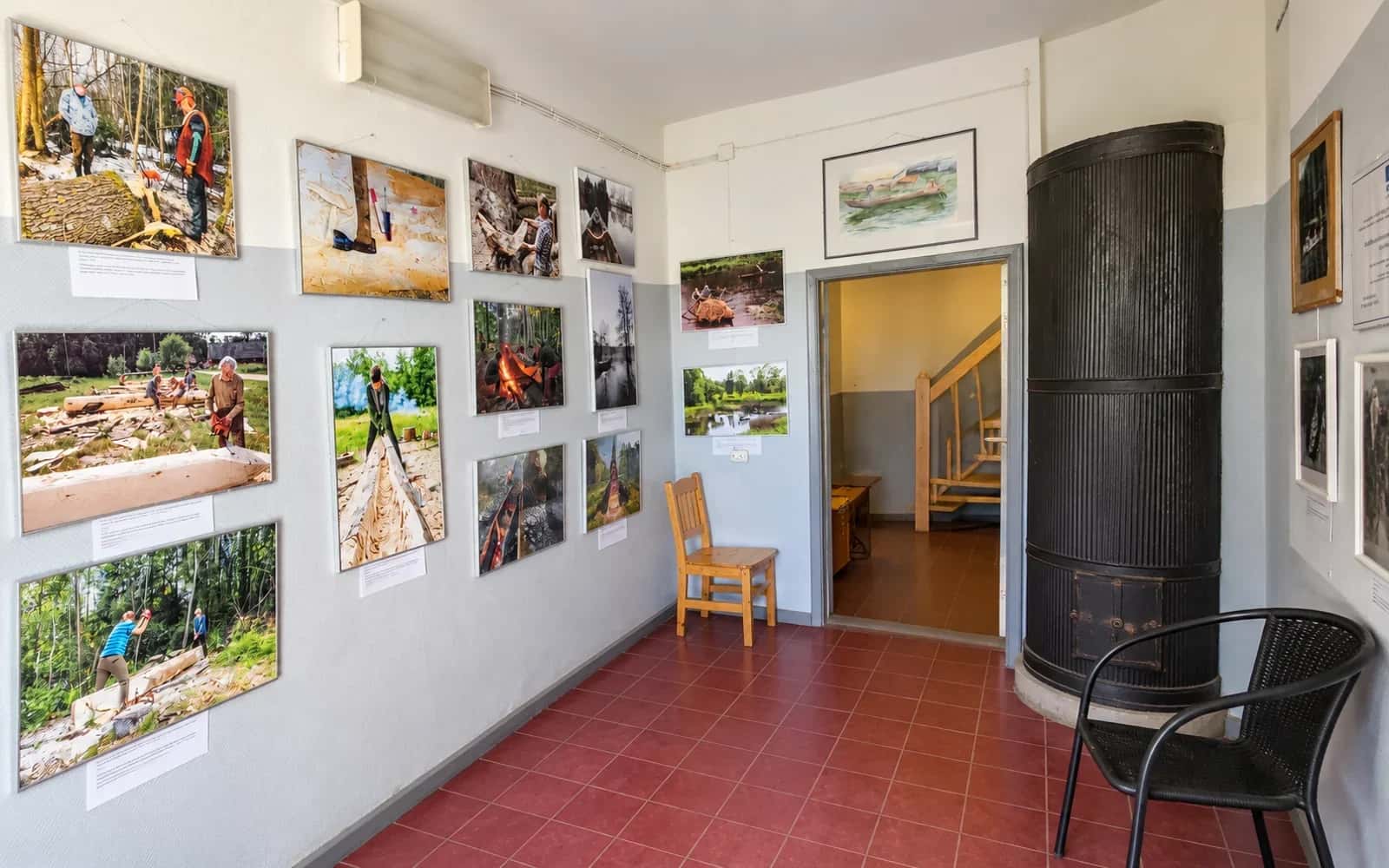
Haabjakoda — Dugout Canoe Centre
Haabjakoda is a heritage centre in Tori small borough on the Pärnu River that introduces the building and use of the dugout canoe, or haabjas. Housed in the historic fire brigade society building, the exhibition explores the links between dugout culture, the Soomaa cultural space, the Pärnu River basin and UNESCO intangible cultural heritage. A visit introduces the boatbuilding tradition and its continuation today; group programmes, workshops and dugout trips on the Tori river can be arranged separately. In autumn, winter and spring, visits take place by prior arrangement.
Oore tee 6, Tori alevik, Tori vald, Pärnu maakond
Explore Pärnu
Restaurants & cafés
Discover the best restaurants, cafés and bars in Pärnu.
All restaurants in Pärnu →Apartments & stays
Discover apartments, hotels and boutique stays across the city.
All places to stay in Pärnu →SPA
Discover massage studios, saunas, salons and wellness centres across the city.
All spas in Pärnu →Shops
Discover the best shopping in Pärnu — boutiques, local stores and unique finds.
No live listings yet in this category — be the first to join MOST here.
All shops in Pärnu →Local services
Find trusted local specialists — from electricians and tutors to photographers and vets.
No live listings yet in this category — be the first to join MOST here.
All local services in Pärnu →Events & festivals
Everything happening in town in one place — today's events, weekend festivals, family outings and activities for kids.
All events in Pärnu →Tours & Travel
Ready-made package tours from local tour operators and travel agencies — destinations, hotels and dates in one place.
All package tours from Estonia →Upcoming in Pärnu
- Oct 9Magical Forest — International Illustration Exhibition
- Oct 9EÕM60 – 60 years of the student construction brigade in Estonia and Pärnu County
- Nov 154th Kadri Run
Practical information
- Currency
- Euro (€)
- Language
- Estonian — English is widely spoken in shops, hotels and restaurants
- Emergency number
- 112 — police, fire and ambulance, free and nationwide
- Time zone
- Eastern European Time (EET/EEST)